
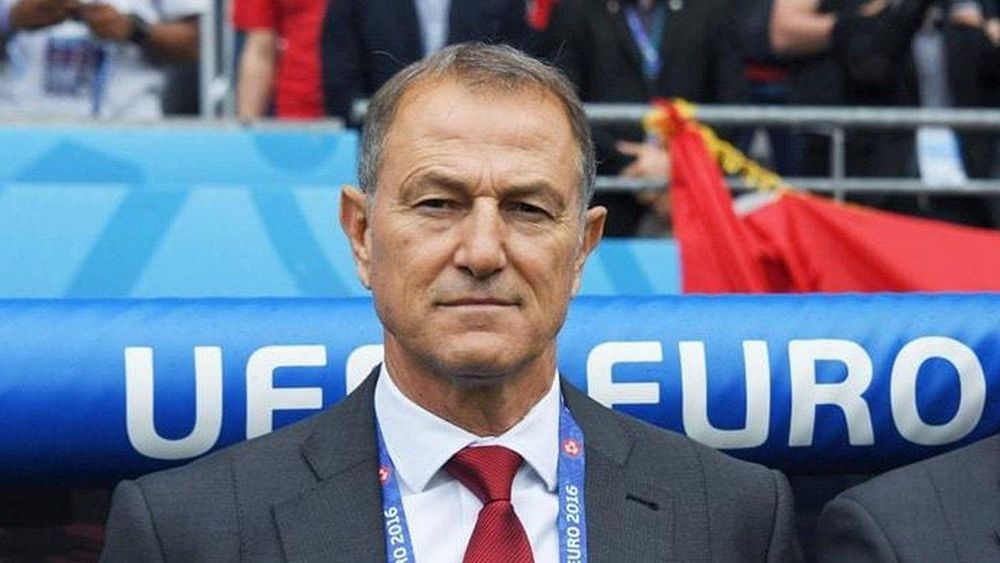
His time at Udinese was brief, yet its impact on his career was significant. Rather than simply viewing it as a disappointing spell, De Biasi saw the experience as a moment that forced him to reconsider what he wanted from a club.
“My experience at Udinese taught me that when you join a club but are not listened to, it is very difficult for things to work,” De Biasi told Football Presse.
It was a blunt assessment of the relationship between a coach and the people running a club. For De Biasi, having responsibility without having his ideas heard made it almost impossible to build something properly.
The experience did not simply make him cautious about choosing his next job. It changed his approach to Italian football altogether.
“I have to say thank you to Udinese because, after that experience, I decided that I would no longer work in Italy.”
It was a striking decision for a coach whose career had been built largely in the Italian game. De Biasi had already experienced the pressures and rewards of working in Serie A, as well as the different demands of Serie B and the lower divisions.
But by this stage, he had also learned that the conditions surrounding a coaching position could be just as important as the club itself.
That lesson was reflected elsewhere in his career. De Biasi believes one of the recurring problems in football comes when the coach and the club are effectively working towards different objectives.
“Very often, however, the coach and the club speak different languages. This is one of the problems that is frequently at the root of unsuccessful experiences.”
For a manager, that disconnect can affect everything from recruitment to training and the way a team is expected to play. De Biasi's experience at Udinese appears to have made that issue decisive rather than theoretical.
It also helps explain why he became increasingly willing to look beyond Italy.
His experiences abroad with Levante and Alavés in Spain, followed later by international assignments, gave him opportunities to work in environments where he could approach the game differently.
The Levante experience, despite its difficulties, remained a particularly positive memory.
“The experience at Levante was, despite everything, a very positive one. Even today, when I return to Valencia, there are many people there who still have great respect for me.”
Alavés was more complicated. De Biasi does not place all of the responsibility for that experience elsewhere, instead acknowledging that his own communication could have been better.
“With Alavés, things were different. Probably, I made a mistake at the beginning by not making certain things clear enough.”
That willingness to accept responsibility is also part of De Biasi's broader assessment of his career. He does not believe every professional decision he made was necessarily the correct one, particularly because coaches are often forced to make major choices without having enough time to understand every consequence.
“Yes, I would change more than one,” he said when asked whether he would alter any of his career decisions.
“You only understand certain things afterwards. Often, you have to make decisions in a very short period of time and don't have enough time to consider and evaluate the situation as a whole. That, too, is part of gaining experience.”
The decision to leave Italian football was therefore not simply about one difficult spell. It was the conclusion De Biasi drew from an experience that clarified what he needed from a club and from the people around him.
He had already learned the importance of having everyone working towards the same objective. His most successful projects had depended on that alignment, while Udinese showed him what could happen when it was missing.
That made leaving Italy less a rejection of the country or its football and more a decision about how he wanted to work.
“I believe leaving was the only sensible decision at those moments,” De Biasi said when reflecting on the occasions when he chose to walk away from clubs and international positions.
“When you reach the top, you have to try to continue growing, but the conditions to do so have to be there.”
For a coach who would go on to build an international career across Spain, Albania and Azerbaijan, the decision to leave Italy ultimately became another turning point.
The Udinese experience may have been short, but its lesson stayed with De Biasi: ambition alone is not enough for a coaching project to work. The environment, the trust and the willingness to listen have to exist alongside it.