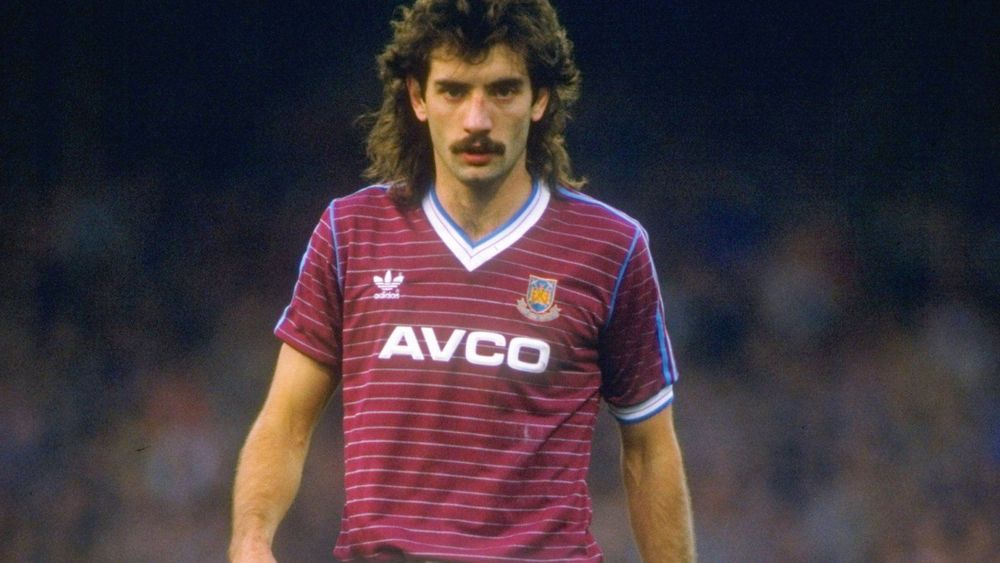
At West Ham United, however, there was one player who stood above the rest in his estimation.
Asked to identify the best footballer he played with at each of his three principal clubs, Gale had no hesitation in selecting Alan Devonshire for the Hammers.
Gale told Football Presse, “Yeah, I say that I played at three clubs, so I was only at Palace for three games, but it was Fulham, West Ham, Blackburn. So Fulham, it was George Best, who I mentioned. West Ham, it was Alan Devonshire. And then at Blackburn Rovers, it was Alan Shearer.
“So, okay, three totally different players, but three world-class players, you know, real top talents in different respects.”
It was a remarkable collection of talent, but Gale's admiration for Devonshire went beyond the winger's reputation among West Ham supporters. He believed the England international possessed the ability to compete with the best players of any generation.
Asked whether Devonshire, at his peak, would get into West Ham's midfield today, Gale's answer was emphatic.
“Oh, in his prime? Oh, he'd be the best player in the West Ham midfield, easy.”
Gale's assessment carries particular weight because he played alongside Devonshire during a period when the midfielder was already an established figure at the club. He knew what made him special, having seen his ability at close quarters rather than simply remembering the highlights.
The pair also shared an important responsibility within the dressing room. When Paul Ince attracted interest from Manchester United, the young midfielder approached Gale and Devonshire for advice about whether to leave West Ham. Both recommended that he remain at Upton Park for another season and establish himself further.
Ince ultimately ignored their advice, but the episode illustrates the standing Devonshire enjoyed among his teammates. He was not simply an exceptionally gifted footballer but somebody younger players respected.
Liam Brady: the class and the character
Gale's admiration for Devonshire was matched by his appreciation of another technically gifted midfielder who joined West Ham towards the end of the 1980s.
Liam Brady had already enjoyed a distinguished career with Arsenal and Juventus before returning to London. By the time he arrived at West Ham in 1987, he was in his thirties, something Gale recognised when assessing the player he had been fortunate enough to play alongside.
“Liam was past his best when he came to West Ham, if I'm honest, but he was still a great player. And I just wish I played with Liam when he was a little bit younger because he came to us in his thirties.
“So he'd lost that little bit of pace that he maybe had, but he was a great passer of the ball, could still beat people with skill, but he was a great passer of the ball.”
There was no suggestion that Brady's diminished pace had taken away the qualities which made him such a special footballer. Gale had spent years watching players who could influence a match through technical ability, and Brady's passing and capacity to beat opponents remained exceptional.
But it was the personal relationship between the two that Gale also wanted to remember.
“And a real good man, good man, Liam. Because he was a year or two older than me, I struck up an instant relationship with him. He loved playing a game of cards on the coach. He was one of the lads. Really good player, really good player.”
It was an easy relationship between two players who were close in age and shared an appreciation of the lighter side of dressing-room life. Brady's standing in football was considerable, yet Gale remembers somebody who fitted naturally into the group.
Indeed, the combination of Brady and Devonshire gave West Ham an extraordinary amount of experience and ability on either side of the midfield.
“In that side, we had Devonshire on one side who was 33, and Liam was 33 on the other side. Two of the best players you could ever wish to play with. Brilliant players.”
Gale's assessment of their quality also came through when he discussed the change in management following John Lyall's departure. His criticism of Lou Macari's training methods was rooted partly in the feeling that West Ham already possessed players whose technical abilities should have been encouraged.
“When you've got world-class players like Brady and Devonshire and Alvin Martin and that, everybody was looking a little bit nonplussed.”
It was a recurring frustration for Gale: the club had players capable of producing outstanding football, but he felt the approach under Macari did not make sufficient use of their qualities.
Billy Bonds: the footballer behind the hard man
While Devonshire and Brady provided the technical excellence, Billy Bonds represented another kind of greatness.
Bonds was West Ham's record appearance-maker, spending more than two decades with the club as a player and later returning as manager. He captained the Hammers to FA Cup victories in 1975 and 1980, becoming one of the most important figures in their history. Bonds died in November 2025, aged 79.
Gale's memories of him are particularly revealing because he believes the former captain's reputation as a tough competitor sometimes obscured just how complete a footballer he was.
Asked what Bonds might be worth in today's transfer market, Gale's response was that he would be impossible to prise away from West Ham.
“You wouldn't be able to buy him, would you? He was just — he wouldn't leave West Ham anyway, would he? You won't be able to buy him because he loved West Ham.
“But yeah, he wasn't a money person, Jacob, wasn't a money person. So he wouldn't go, I don't know, to one of the Arsenals or Manchester Citys. He wouldn't go there for the sake of it. If he was enjoying his football, he'd stay at the club that he was with.”
For Gale, that loyalty was part of what made Bonds so valuable. He was not somebody who needed to be persuaded by bigger contracts or the attraction of moving to a more fashionable club. If he was happy where he was, he wanted to remain there.
But it was Bonds' physical qualities and versatility that particularly impressed Gale.
“And if he was with West Ham, oh, blimey, you've got to put him right up there because he was a super athlete, as good an athlete as anyone in the Premier League now.
“And because he was a hard man, people forget how good a player he was as well. Right-back, centre-back, holding midfield, attacking midfield, you could play Billy anywhere. He was that good, really good player.”
It is an important distinction. Bonds was celebrated for his commitment, physical strength and willingness to put himself on the line, but Gale insists that those characteristics should never have been allowed to define him exclusively. His ability to operate in so many different positions was evidence of his footballing intelligence and technical capability.
Gale also recognised a different set of strengths when Bonds moved into management. Discussing the transition after Macari's departure, he acknowledged that Bonds was not particularly strong in the transfer market, but identified his ability to motivate and understand the players already at his disposal.
“He was a good motivational man, so he already knew those players.”
It was another illustration of Bonds' connection with West Ham. He understood the club, knew its footballers and had spent years experiencing what it meant to represent the Hammers.
Three different kinds of greatness
Devonshire, Brady and Bonds were very different footballers, but Gale's recollections reveal why each commanded such admiration.
Devonshire was the player he considered the best he played alongside at West Ham. Brady brought a remarkable combination of technical ability, experience and personality. Bonds offered athleticism, versatility and a loyalty to the club that Gale believes would be difficult to find in modern football.
They were also part of a West Ham generation whose qualities Gale remains enormously proud of. His admiration is not simply rooted in nostalgia for former teammates, but in the conviction that footballers of that calibre deserve to be remembered for their complete ability rather than one particular attribute.
For Gale, the hard man was also an outstanding footballer, the ageing playmaker was still capable of producing moments of brilliance, and the winger he rated above all his West Ham teammates was good enough to walk into the modern side.
Those memories have lost none of their force.
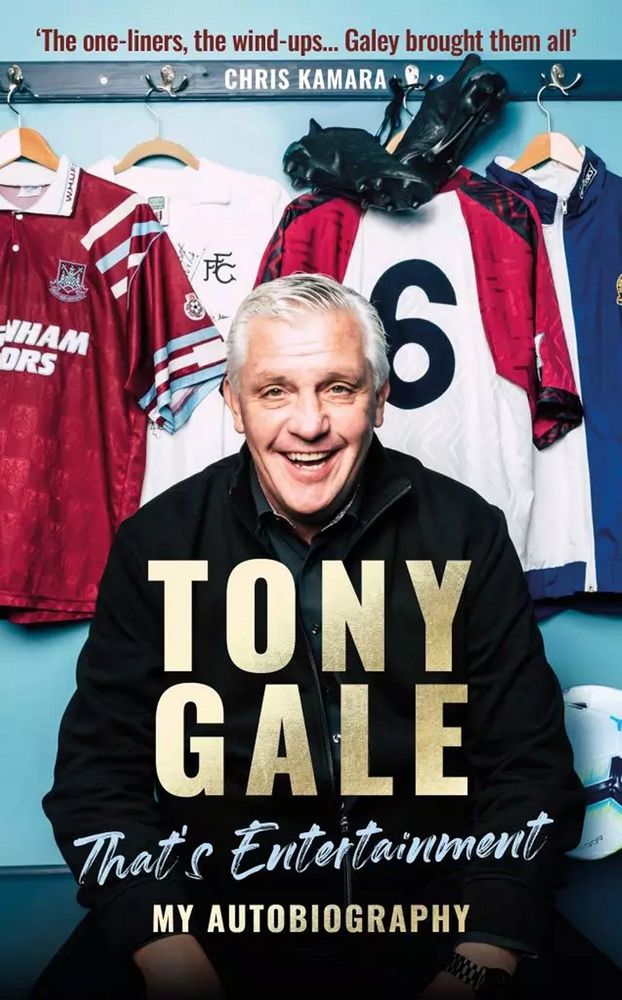
Tony Gale's book "That’s Entertainment" is from Reach Sport - which is available here.