
Marco Lanna came up against plenty during his career. A product of Sampdoria's youth system, he established himself during the club's extraordinary late-1980s and early-1990s period before playing for Roma, Salamanca and Real Zaragoza. His opponents included some of the outstanding forwards of Italian football.
But when asked to identify the striker who caused him the greatest problems, there is no hesitation.
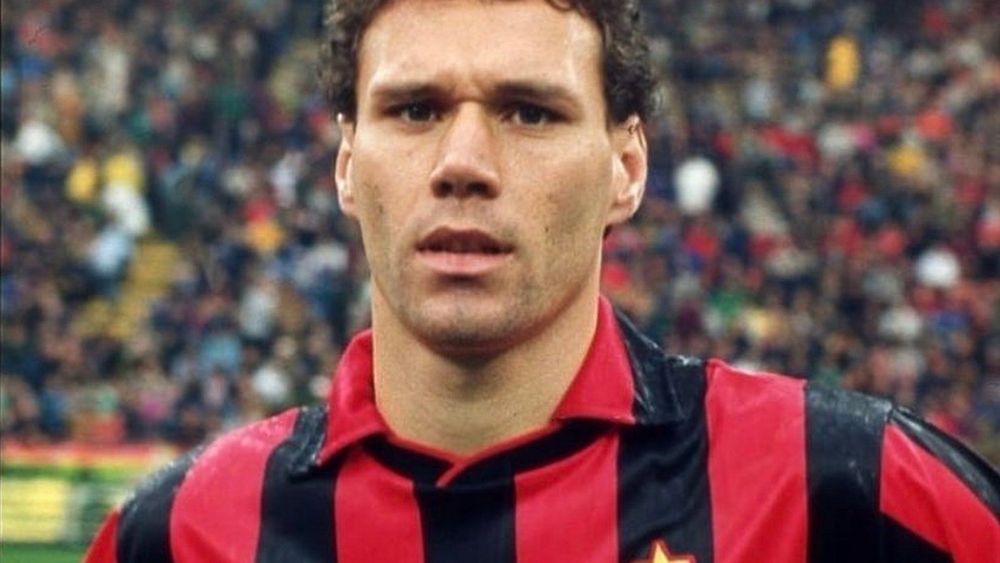
Marco van Basten.
The Dutchman was the leading forward of Arrigo Sacchi's great AC Milan side, winning three Ballon d'Or awards and three Serie A titles during his time in Italy. For Lanna, however, the difficulty of defending against him came down to something more specific: he possessed almost every quality a centre-forward could possibly need.
“There were many. The one I found most difficult, partly because it was in the first years of my career and I was still inexperienced, was Van Basten," Lanna told Football Presse.
“Perhaps he was one of the first modern forwards in history. He was very tall. But in those days, when I marked tall forwards, they were usually players who were strong in the air but did not have great technical ability. They were physically difficult to deal with and to mark.
“Van Basten combined his physical presence with speed and technique. He had everything. There are several players like that now, but in the 1990s it was difficult to find a striker so complete.”
It was that combination that separated Van Basten from the conventional centre-forward of the period. Defenders could prepare for an opponent who relied on physical strength, aerial ability or speed, but the Milan striker offered all three alongside extraordinary technical quality.
Lanna was still developing as a first-team footballer when he encountered him. One documented meeting came on 28 October 1990, when Sampdoria travelled to San Siro and defeated Milan 1-0. Lanna started in defence, with Van Basten in the opposing line-up. Toninho Cerezo scored the only goal.
The result belonged to Sampdoria, but Lanna's assessment of the individual he was facing has never changed.
“I had some difficulties with him, partly because of my age, because I was a young lad. But I also believe Van Basten was one of the strongest forwards there have ever been in world football.”
Careca and another kind of challenge
Van Basten was not the only outstanding striker Lanna had to deal with during those years. Napoli possessed an attack that offered an entirely different set of problems, with Brazilian forward Careca playing alongside Diego Maradona and Andrea Carnevale.
For Lanna, Careca presented a particular challenge because of his pace. The defender was more accustomed to marking physically imposing forwards who could dominate in the air, but Careca offered a different threat.
“We also had Careca to mark when he was at Napoli. It was partly because of the difference in pace. Napoli had Carnevale as the physically powerful forward, and then they had Careca and Maradona.
“When I marked Careca, I struggled a little, but more than anything because he had a different pace from mine. I was more accustomed to marking a different type of forward.
“In those days, you played against the centre-forward who was strong in the air. Inter had Aldo Serena.”
The distinction is interesting because Lanna is describing the demands placed on defenders by different types of attacker, rather than simply comparing their reputations.
Careca's acceleration required a different approach, while the traditional centre-forward presented a more familiar physical contest. Both could make life difficult, but for different reasons.
The changing role of the number nine
Lanna's observations also provide an opportunity to look at how the centre-forward position has evolved. He believes the game of the 1990s was noticeably different from today's football, although he sees signs that the traditional powerful striker is returning.
“Generally, football in the 1990s was a little different from today, although there is now a bit of a return to having a physically strong striker: someone who holds the ball, is strong in the air and helps the team move up the pitch.
“But there are many teams that still play with a false nine, an attacker who is a forward but not necessarily someone you can use as an outlet to bring the team out.”
It is an explanation rooted in a defender's understanding of how a team functions. A powerful centre-forward can provide an escape route when a side is under pressure, holding possession and allowing teammates to advance up the pitch.
The false nine presents another problem. Rather than providing that traditional reference point, the player can move into different areas, forcing defenders to make decisions about whether to follow or maintain their positions.
For Lanna, the evolution of the role has made the demands on defenders different, but it has not necessarily made the position any less important.
There is also a reason he still singles out Van Basten. The Dutchman combined the physical qualities of the traditional number nine with the speed and technical ability that would become increasingly important in modern football.
He was not simply a tall striker who could win headers, nor was he a technically gifted forward who needed others to provide the physical presence.
He could do both, and much more.
After facing so many exceptional attackers throughout his career, Lanna is left with one definitive answer when asked who troubled him most.
“Van Basten was certainly the one I had the most difficulty against.”