Before the England cap, the trophies at Rangers and Liverpool, and the career that carried him across the country, there was simply a young Villa supporter trying to get close enough to watch his heroes.
Walters recalled to Football Presse, “I used to go there with my friends and sneak into the ground and fortunately they used to lift the gates up so we didn't have to pay, and watched them, the games, as an eight, nine year old. So it was good times.”
His route into professional football came through Villa connections. A man involved with a Sunday team told Walters that if he trained with them, he could help him get into Aston Villa. There was one significant obstacle: Walters’ mother was deeply religious and normally would not allow her children to miss church on a Sunday.
“He came to my mother's house and explained the situation that I had a good chance of becoming a professional footballer. Really she didn't really want to because my other brothers weren't allowed to miss church on a Sunday. She allowed me to go on a Sunday and then the rest is history.”
Walters was fortunate to have role models who showed him that a Black boy from Birmingham could make it as a professional footballer. Cyrille Regis was particularly important. Walters had grown up with very few Black footballers to look up to, and seeing Regis deal with racism while continuing to perform gave him a model for how to respond.
“When I saw him doing it, I thought, ‘Yeah, I could be able to do it.’ And then I remember watching him when I was about 11, 12, as a guest of Aston Villa and seeing all the things that he went through, the racist chants and the abuse that he went through.”
“Unlike some of my friends who couldn't take it, he was still thriving. He was still playing well. He never let him affect him at all. So I thought, ‘Well, that's obviously the way to do it. Carry on playing, enjoy the game, and score as many goals and be positive if you can.’”
Walters also admired Laurie Cunningham, although it was Regis who became the more immediate influence because of the way he interacted with him as a young fan.
“Laurie was that flamboyant player and he was a brilliant player. But as I said, he wasn't as approachable as Cyrille was. Cyrille was very comfortable speaking to me and consequently I had more in common with Cyrille.”
At Villa, Brian Little became another major influence, while Keith Leonard helped shape Walters through the advice he gave him as a young player. Andy Gray was another senior figure Walters remembers fondly.
“Brian Little was a big, big influence on me. I liked the way he played football. And when I joined the club, a guy called Keith Leonard was the youth coach when he got injured. He was a big influence as well, just for what he said, not the way he played, but the way, the information he gave to me.”
Walters’ emergence came at a club that had recently reached the summit of European football. For a teenager who had watched Villa’s stars on television, suddenly training alongside them was surreal.
“It was very daunting because, you've got to remember, two or three years before that I used to watch these guys on the TV. They had a football competition or TV programme rather, called Star Soccer. So it was fantastic, me watching these players, and then a year later I'm actually training with them and playing in the team.”
One of the people who helped Walters settle was Gordon Cowans. Walters remembers him not only as a brilliant player but as someone willing to protect a young teammate who was still finding his way.
“Gordon Cowans was very approachable. He was very kind to me as well because at that stage I don't think I passed very often. So he took a bit of stick for not passing, so he was very comforting to me, saying, ‘No, don't worry. Don't listen to them. Just do your thing, and pass when you can. And obviously do your thing, what you're good at, when you can as well.’”
Walters also believes the great Villa side of that period was an example of a team being greater than the sum of its parts. Players such as Gary Shaw, Dennis Mortimer, Tony Morley and Des Bremner formed a collective that could compete at the highest level.
“Individually they were great players, but together they made a great team, without a doubt. And they all worked hard for each other.”
“Des Bremner probably the hardest worker in the team, but didn't get the actual accolades in my opinion, that he deserved. But Des Bremner was a fantastic player.”
His own first-team breakthrough was uncomplicated. Tony Barton gave him his league debut against Leeds United, but there was no grand ceremony afterwards. Walters was 17, lived around 500 metres from Villa Park and had arrived at the ground expecting to be on the bench.
“I walked to the stadium because I couldn't legally drive at the time, not expecting to play. Told me I was on the bench. Actually made my debut against Leeds United. I think we lost 3-1 in the end.”
Afterwards, the senior players went out as usual, but Walters was too young to join them.
“No one gave me a lift home or anything, or a lift to the nightclubs where they were going because I was only 17. So I had to walk all the way back home. So I just made my league debut, or debut full stop for Aston Villa, and I've had to walk back home to my house 500 metres away. I don't think that would happen nowadays for sure.”
By the time Walters left Villa for Rangers in 1987, the club had changed dramatically. The team that had conquered Europe was gone, and Walters felt the club was becoming increasingly ordinary. His disagreement with chairman Doug Ellis over his wages played a significant role in his decision to leave.
“I'd been there since I was 10 years of age, and I think I deserved not a wage cut, but if anything, a rise.”
His choice eventually came down largely to Rangers and Everton, with the prospect of European football helping Rangers gain the advantage.
“The thing why I ended up going to Glasgow Rangers was because unfortunately the English teams were banned from Europe. And all my beginning of my career at Aston Villa, the European scene was absolutely fantastic. I really enjoyed playing in Europe.”
Once he actually visited Ibrox, the decision became much easier.
“When I did speak to Glasgow Rangers, there was no other choice because it's such a massive club, fantastic club. I remember walking through the marble halls there they have and going up the stairs and realizing, ‘Wow, what a club this is.’”
Rangers gave Walters the environment he wanted. He was surrounded by players of international and world-class quality, and he believes that standard pushed his own game forward.
“We had some world-class players, as you say. Richard Gough, Terry Butcher. Goalkeeper was world-class in my opinion, Chris Woods. Trevor Steven was coming there, and there were some world-class players there. And it was always going to help me become a better player.”
The move also exposed Walters to some of the worst racism of his career. His debut at Celtic Park was particularly difficult, and the abuse continued throughout his time in Scotland. Walters says he dealt with it at the time by suppressing much of what was happening.
“If I'm really honest with myself, I think I did suppress it.”
“When I did this documentary, all the things came back and there's certain things that happened in certain games that 30 years later, I still remember. And I remember saying to myself, ‘If it didn't bother me, I wouldn't remember.’ So it must have bothered me.”
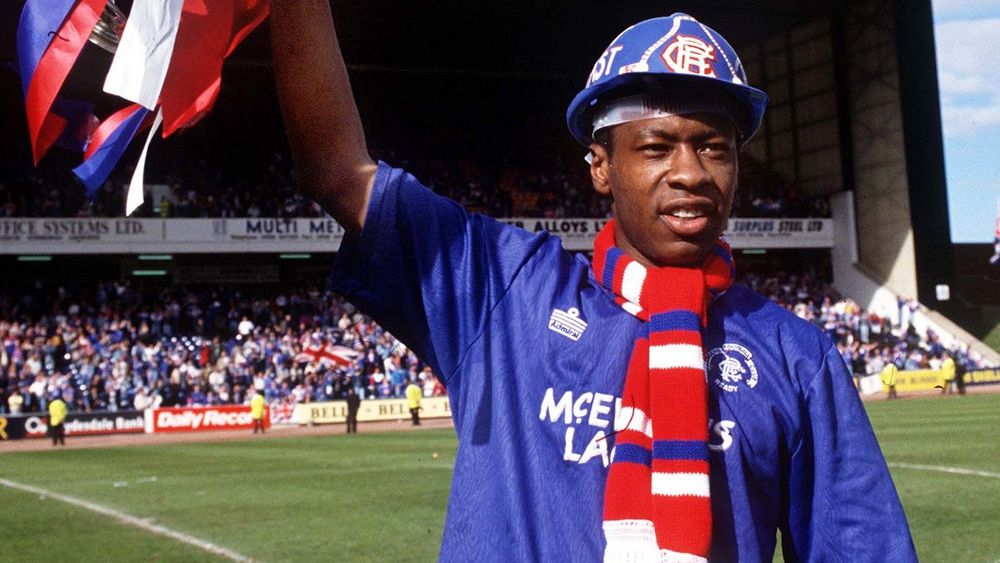
Despite that, Rangers became one of the great periods of his career. Walters won three league titles and two League Cups, and remembers the camaraderie of the team as much as the medals.
“We won everything possible bar the European Cup. Some great times and some great games, and it was a magic time to be at Glasgow Rangers, not only outside the club, but inside the club.”
“When anything happened, any skirmishes happened, we'd all be there to back up the other player. So it was great times.”
Walters particularly treasures the Old Firm games, and remembers the atmosphere at Ibrox as unlike anything else he experienced.
“The games were special, special entity completely. When you have the majority of the fans on your side, your first 20 minutes is very hectic. But once the game settles down and you can play a bit of football and people get a little bit tired, that's when the good football, even in those games, can be played.”
Among his Rangers teammates, Davie Cooper left a particularly strong impression. Walters admired his extraordinary touch and the work that went into maintaining it.
“As great a touch as he had, he was probably the first one in training and the last one to leave. So that made me realize it's not only natural gift he had, but he had to work hard as his talent as well.”
Walters ranks Cooper among the best players he played alongside, although John Barnes sits at the top of his personal list.
“The best player I think I played with is John Barnes. I thought he was a fantastic player. Gordon Cowans is in there, but Davie's in the top five, without a doubt.”
In 1991, Walters followed Graeme Souness to Liverpool. It was another huge club and another opportunity to push his career further, particularly with England in his sights.
“It was basically because of Graeme Souness's draw that I'm, I went. I'd been there three and a half seasons. We had problems with European competition and bits and pieces and it was just the right time to leave in my opinion.”
At Liverpool, however, things never developed as Walters had hoped. He arrived during a period of significant change, with Souness reshaping the squad and a new generation of players emerging.
“The team was in a transitional period. The team that won the league the year before, literally Graeme brought that team up, so it was a lot of new players coming in, the likes of Robbie Fowler, Steve McManaman, and he bought some other players as well.”
“In my opinion, that's the reason why we didn't hit the ground running. Took a bit of time. Unfortunately, in football you don't get time.”
Walters believes Liverpool changed too much, too quickly, at a moment when the Premier League itself was transforming.
“I honestly believe it was just too many changes too quickly. I do believe if it was a gradual thing, because I always believe if you strengthen the squad when it's strong, as opposed to when you're trying and trial and error, it's difficult.”
He still believes that Liverpool had enough individual talent to become a much more successful side. The group that included Barnes, Fowler, McManaman and Jamie Redknapp had the ability, but never quite developed into the team Walters expected.
“They should've. They should've because, as you say, these were good players, very good players. Potentially easily good enough to win the league.”
Walters eventually left Liverpool without achieving what he had hoped when he moved there. He won the FA Cup and League Cup, but his comparison with Rangers remained unavoidable.
“In hindsight, yeah, you have a good point. Obviously I only won a League Cup and the FA Cup at Liverpool, which really should be standard at a club like Liverpool. The win at Liverpool is the league. That's where you get judged on, by winning the Premier League.”
Looking back, he still wonders whether leaving Rangers was the right move from a purely footballing perspective.
“Yes, as in winning things, for sure. Because when you go to Liverpool, unless you win the league, you're not classed as you've done anything. And that was a big disappointment for me.”
Walters’ career ultimately took him through Southampton, Swindon Town and Bristol Rovers, where the pressure of playing for trophies and European competition disappeared. He found a different kind of satisfaction in simply enjoying football again.
“There was no pressure about winning medals, about being in Europe and stuff. It was just about enjoyment, and it was a very therapeutic time in my life.”
From a Villa boy sneaking into Villa Park to a Rangers champion, Liverpool player and England international, Walters’ career was shaped by three very different footballing worlds. At each club, though, the memories remain rooted in the people around him, the football he played and the opportunities he had to test himself.
And for all the trophies and major clubs, it is perhaps telling that when Walters looks back, he still sounds like the local boy who simply wanted to play.
“I really enjoyed playing till as long as I could, which I did to those 38, I believe. So yeah, I had a great end of my career in my mind anyway.”
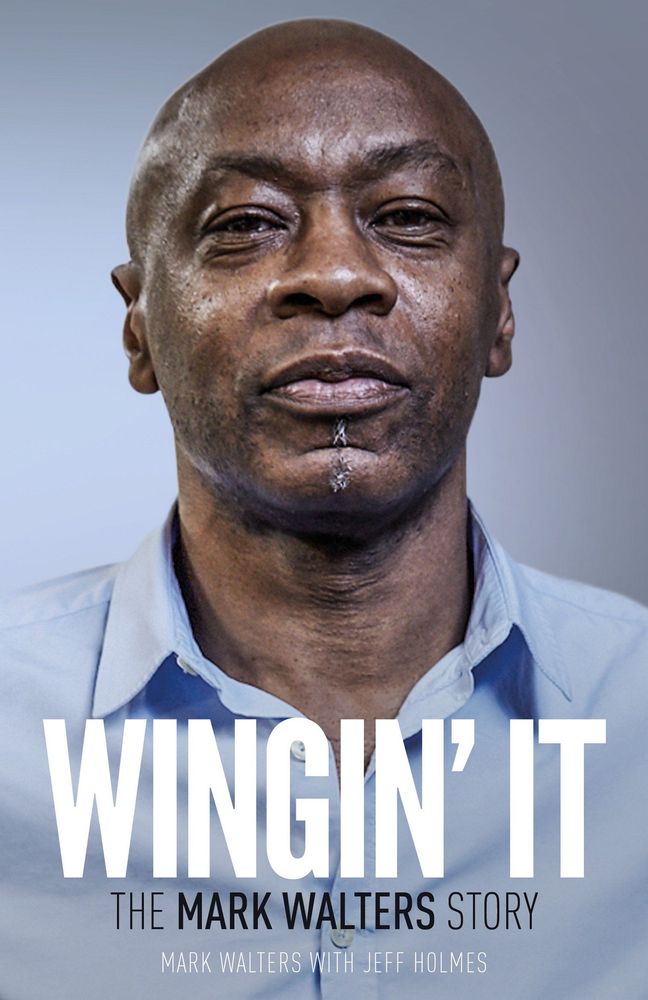
Mark Walters' book "Wingin' It: The Mark Walters Story" is from Pitch Publishing - which is available here.