Geoff Twentyman played more than 400 professional games, but one coach changed the way he understood football more than anyone else.
Gerry Francis did it without laptops, video analysis or the technology that now surrounds the professional game.
For Twentyman, Francis was effectively a football analyst before football analysts existed.
“I think what happened with Gerry, I mean, he was the first football coach who taught me how to play football,” Twentyman told Football Presse.
“I mean, that sounds a bizarre thing to say, because I played under lots of managers and lots of coaches. But he could—he was like a football analyst that they have nowadays, before analysts were a thing.”
Francis had been a distinguished England international and captain, but Twentyman's admiration is rooted less in what he achieved as a player than in what he could teach others.
“He didn't record the match and break it down on a computer or a laptop. He just did it all in his head,” Twentyman explained.
“And his attention to detail and ability to remember aspects of a game for all of us was scary at times, but his ability to improve all of us as individual players, and thereby the collective improved, again was quite staggering, really.”
It was not simply about telling players what they had done wrong.
Francis could explain precisely why something had gone wrong and, crucially, what the player should do differently the next time.
Twentyman remembers one Bristol derby in particular.
Bristol Rovers drew 3-3 with Bristol City at Ashton Gate and Twentyman felt he had played well. On the following Monday, Francis complimented him — before immediately identifying a mistake.
“He said, ‘You played well Saturday, well done.’ I said, ‘Oh, thanks, Gerry.’ He said, ‘But you got done on the third goal, didn't you?’”
Twentyman initially could not see what Francis meant.
“He said, ‘Your body shape was so closed that when the ball came from the left-back, Joe Jordan had pulled off your shoulder and you didn't know where he was. He headed the ball across and David Moyes scored.’”
Francis did not leave it there.
“So I went, ‘Yeah, yeah, I see what you mean now.’ So what Gerry was brilliant at, he could work out why a goal was conceded, but he could also tell you how to stop it next time.”
That lesson became part of Twentyman's footballing education.
“What you need to do, your body position's got to be in such a way that you can see where the ball's coming from and you can see the man you're marking,” he recalled Francis telling him.
“Because if he moves two paces back to get a run on you, you move two paces back to negate that.”
Francis then took the analysis one stage further.
“There were three points that goal could have been stopped,” Twentyman said.
“When the ball's being crossed on the wide man, why weren't we pressing onto it to stop it? We've discussed your body shape, so that's another point you could have been stopped. And the third point, David Moyes ran in unopposed to score. Someone should have been marking him.”
The lesson stayed with Twentyman for the rest of his career.
“There were three points of where that goal could have been stopped,” he said.
“Eighty percent of goals — and I watch football now, and most of the time I see it — there are points, at least three points where it could be stopped.”
There are exceptions, Twentyman accepts.
“Sometimes an absolute world-class goal that you can't stop, I admit that. But 80%.”
That way of seeing the game remains with him today.
“I’m now like—it's like a forensic investigation when I watch a goal being scored, because he taught me 80% of goals, there are three stages of that goal where it could be stopped.”
Francis was equally effective at making individual players better.
Twentyman remembers him working with every part of the team, from defenders to midfielders and wingers, while also possessing the ability to demonstrate exactly what he wanted.
He recalls Ian Holloway struggling to deliver a free-kick properly during training.
“Gerry would just say, ‘Out the way.’ He'd pull his quad muscle, little stretch, little bit of this,” Twentyman laughed.
“He'd have a tracksuit on, padded, not even studs in his boots. He'd put the ball down on a terrible playing surface, really, on our training ground, and he just clipped it and he put it right on the striker's head.”
The reaction was inevitable.
“Everyone would go, ‘Oh wow, fair enough.’”
Francis' coaching ability extended to goalkeepers, too.
Nigel Martyn arrived at Bristol Rovers on trial from an amateur club in Cornwall after working delivering sofas for a local furniture company.
Twentyman remembers Martyn earning £100 a week when he signed, compared with his own £275 basic wage as one of Rovers' senior players.
“And Gerry said, ‘Do you want to be a footballer?’ And Nigel said, ‘Yeah, I really do.’ So Gerry said, ‘OK, I'll give you £100 a week.’”
Martyn did not hesitate.
“Nigel said, ‘Where's the contract? I'll sign it now.’”
Two years later, Martyn became the first £1 million goalkeeper when he moved to Crystal Palace.
Francis, Twentyman says, had coached him with the same obsessive attention to detail.
“He could coach goalkeepers,” he said.
One training-ground incident demonstrated just how uncompromising Francis could be about the details.
Martyn returned from England duty and took up a position in a different place to the one Francis expected during a corner-defending exercise.
“Someone clips the ball in, Gerry stops it. ‘Whoa, whoa, whoa!’”
Francis wanted to know why Martyn was not positioned centrally.
“Nigel went, ‘Because England, they told me to be there.’ Gerry's like—he's saying that England, he said, ‘Who's the coach of England?’”
The exchange ended with Martyn retreating towards the middle of his goal.
“Like, Nigel quickly retreated back to the middle of his goal.”
For Twentyman, that obsessive attention to the fundamentals explains why Francis remained relevant even as football evolved.
“He was just an amazing football coach who made a right-back a better full-back, a left winger a better left winger, centre midfield player, but all of us were improved.”
They spent hours working on those details.
“It's interesting, Jacob, because the game has evolved and the game has changed over the decades, but there are certain aspects of the game that won't change.”
Defending is one of them.
“If you're marking a player, you've got to mark them on the right side. The little tricks of the trade that Gerry taught me that will prevail forever, really.”
That, Twentyman believes, was Francis' greatest strength.
It also explains why he could continue contributing to elite football long after his spell as a manager ended, later working alongside Tony Pulis as a defensive coach.
“That's why Gerry was able to coach into the modern game with Tony Pulis, because the basics of what he delivered and taught us were sensational.”
Francis ultimately left management in 2001, but Twentyman does not regard his career as a failure because he did not remain a number-one manager.
Indeed, he believes his coaching intelligence was greater than his managerial record suggests.
“He was amazing, amazing football, amazing football brain,” Twentyman said.
“He learned from Terry Venables and Dave Sexton, and then he was able to pass it on.”
Francis' time at Tottenham Hotspur did not work out as either man might have hoped, but Twentyman suspects the problem was partly cultural.
“I'm not sure his style of football was the Tottenham way. They play with a bit of panache, don't they?”
Francis' football was built on defensive security.
“The most fundamental thing with Gerry was the defence,” Twentyman said.
“If we didn't concede, we had every chance of winning.”
At Bristol Rovers, though, the formula worked.
“We spent hours on the training ground doing it.”
Rovers improved season after season and, in 1989-90, won the third tier title.
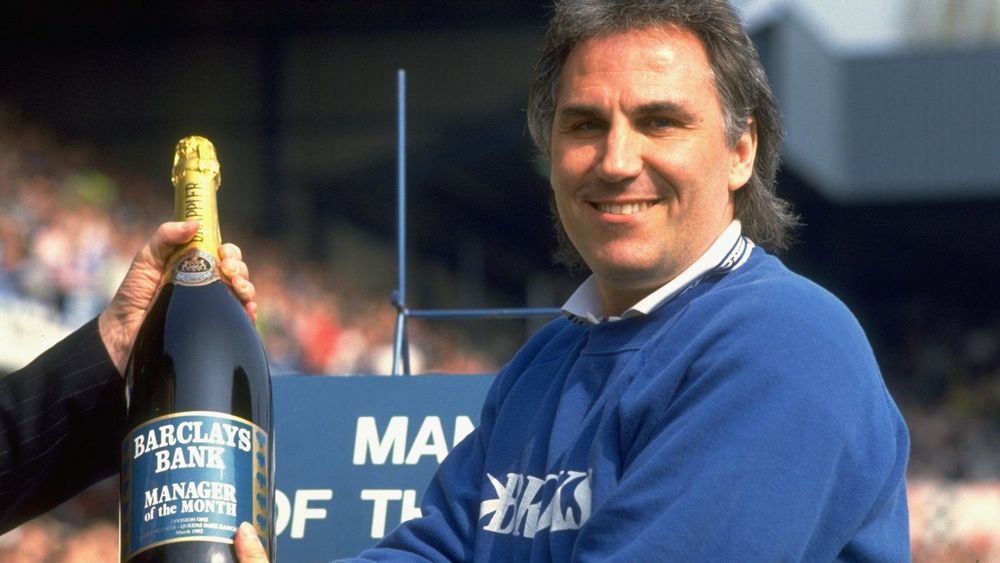
Francis then moved to Queens Park Rangers, where he immediately demonstrated that his coaching principles could translate to a higher level.
“For two seasons Queens Park Rangers were the top team in London,” Twentyman said. “So they finished higher than Arsenal, Tottenham, West Ham, and Gerry's very proud of that, quite rightly.”
Looking back, Twentyman has one regret.
“I said in the book, I wish I'd played for him earlier in my career,” he said.
His own peak came between 28 and 31, when experience and physical maturity combined.
“Had I met Gerry a bit earlier, who knows? But it was great to play under him.”
For Twentyman, that is the enduring legacy of Francis: not the managerial appointments or the years away from the dugout, but the ability to make footballers understand the game.
“He was incredible, ahead of his time.”
And perhaps that is why Twentyman still watches football through Francis' eyes.
A goal is rarely just a goal.
It is a sequence of decisions, positioning errors and missed opportunities — and, somewhere before the ball reaches the net, there is usually something that could have been done differently.
Geoff Twentyman is author of "Top Man: The Geoff Twentyman Story" from Pitch Publishing - which is available here.