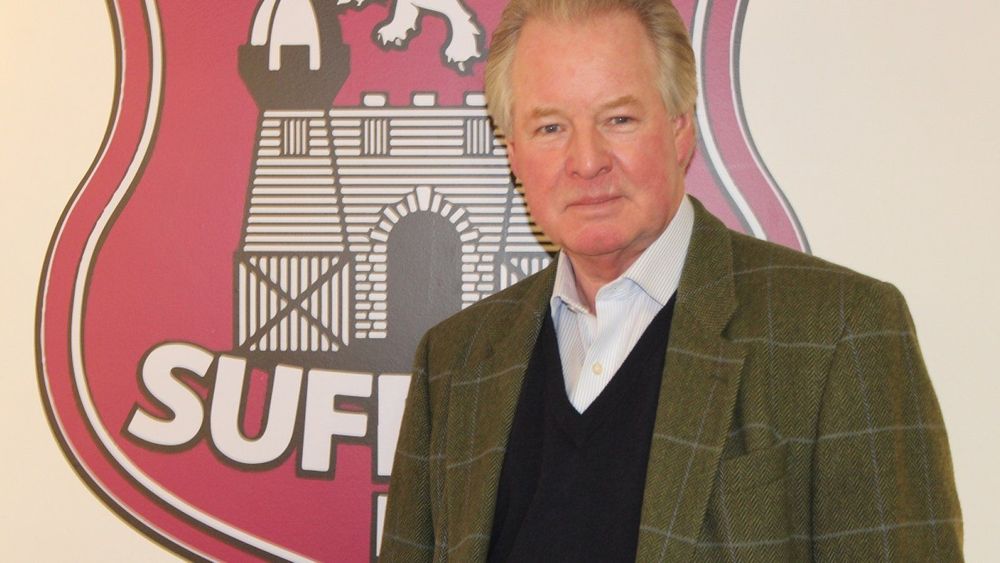
His journey has taken him from the terraces at Portman Road during Sir Bobby Robson's golden years to the Ipswich Town boardroom, where he helped guide his beloved club back to the Premier League. It later led to some of the Football Association's most influential committees, overseeing England's national teams and spearheading the creation of St George's Park – a project that has become the heartbeat of English football.
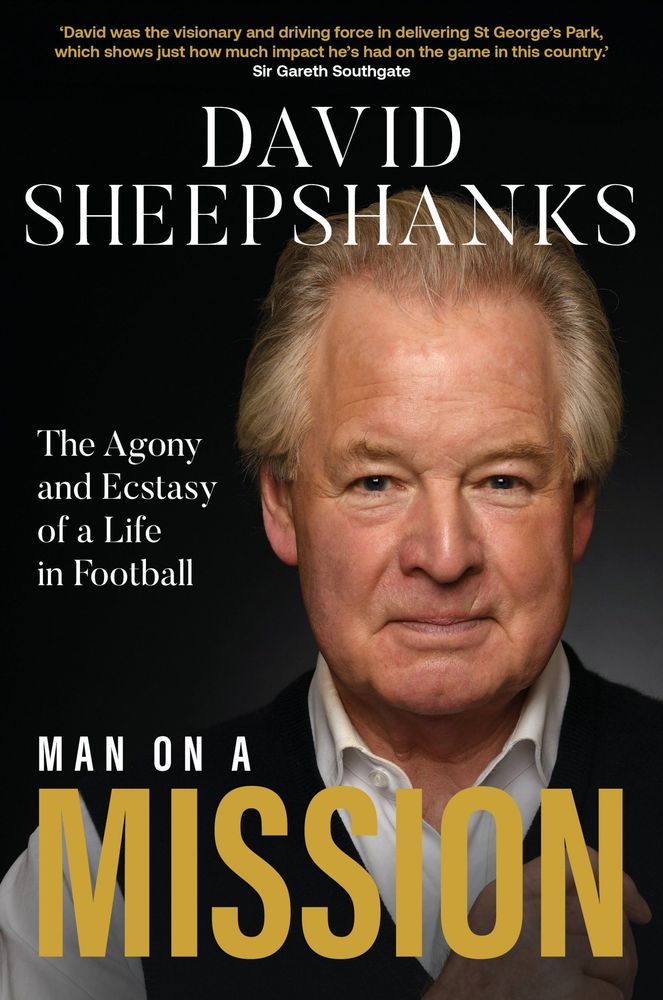
Now, after more than half a century immersed in the game, Sheepshanks has reflected on that remarkable journey in his new book.
Throughout an extensive interview with Football Presse, one phrase kept surfacing whenever another fascinating anecdote emerged.
"It's in the book."
Whether discussing Bobby Robson, Gareth Southgate, Thomas Tuchel, Kieran McKenna or the creation of St George's Park, Sheepshanks continually returned to the stories and lessons that have shaped both his career and English football itself.
The book, he says, is not simply a collection of memories. It is a reflection on leadership, lifelong learning and the culture needed to build successful football clubs and national teams.
One of those ambitions was realised in the Staffordshire countryside when St George's Park officially opened in 2012.
While many supporters simply know it as England's training base, Sheepshanks explains the project was always designed to be something much bigger.
"I had a vision and it's in my book," he said with a smile.
"My dream was that eventually St George's Park would be kind of the Oxford and Cambridge – or the Harvard, whichever example you want to use – of coach education.
"If you wanted to get to the very top, you made sure that you did your qualifications at St George's Park because if you had a UEFA Pro Licence from St George's Park, it was worth even more than anywhere else you could go.
"That's a bit utopian, but you've got to start with a big dream."
It is a recurring theme throughout his football life. Sheepshanks has always believed that meaningful progress begins with ambitious thinking before attention turns to the countless small improvements needed to make those ambitions reality.
Looking back more than a decade after the national football centre first opened its doors, he believes one half of that vision has already been fulfilled.
"The first reason for building it was a home for England teams," he explained.
"I would say that has largely been ticked because we are regularly now getting to finals and semi-finals.
"The women's team have won the Euros twice. The Under-21s have won twice under Lee Carsley. It's really fantastic."
England's rise over the past decade gives Sheepshanks particular satisfaction because he witnessed so much of that development from inside the Football Association.
His most recent role saw him chair the FA's England performance advisory board, working alongside Gareth Southgate before later supporting Thomas Tuchel and England Women's manager Sarina Wiegman. Before that, he played a central role in shaping the long-term strategy that eventually led to St George's Park becoming the home of every England team.
Yet, despite those achievements, he insists one important objective remains unfinished.
"The second reason was to be a home of coach education," he said.
"We always knew this would take much longer. It would be a generational thing.
"We haven't ticked that box yet.
"We're making great progress... but we don't have enough English managers."
That admission perhaps explains why Sheepshanks has been one of the strongest advocates for appointing Tuchel despite criticism that England should always be led by an English coach.
Having worked closely with the German since his appointment, Sheepshanks sees the issue very differently.
"I think the FA are right," he said.
"I've been an FA man for many years and worked very closely with the FA. My last big job finished last year when I chaired the subsidiary board for the England teams.
"I got to work with Thomas for a little bit and Anthony Barry.
"He's one of the best.
"He has tremendous intelligence, wit and acuity. He's a really sharp mind.
"I've got no doubt. I think it's a great appointment."
For Sheepshanks, nationality should never outweigh quality.
"One day it would be preferable to have an English manager and it would be lovely.
"But does it have to be today?
"No, in my opinion."
His optimism about England's future has not diminished despite the disappointment of another World Cup ending short of the ultimate prize.
Instead, he continues to view football through the philosophy that has underpinned much of his career.
"I buy into the Kaizen thinking," he explained.
"Incremental marginal gains, lifelong improvement, whatever you want to call it.
"By definition, one day you're going to get there.
"I believe passionately that we are going to get there."
That emphasis on constant learning surfaces repeatedly during conversation.
Asked whether there was anything he would have changed at St George's Park, Sheepshanks immediately returned to another chapter from his book.
"I actually mention that in my book," he said.
"I always wanted St George's Park to be a place of learning."
His ambition stretched beyond football pitches and classrooms. He wanted stronger links with universities, business schools and sports science, creating an environment where coaches, players and leaders could constantly challenge themselves to improve.
"For me, every day is a learning day," he said.
"I'm going to go on learning until the day I drop.
"It does require a certain hunger to want to go on learning."
Those values became embedded within the culture he hoped would define the national football centre.
"We came up in the early days with our values," he recalled.
"We wanted it to be accessible and aspirational.
"But the other key words were educational, stimulating and rewarding.
"I wanted people to leave thinking, 'That was good. I learned something. I made new friendships.'
"I wanted St George's Park to be a place of learning."
It is a philosophy that extends well beyond football.
Today, alongside his various football commitments, Sheepshanks coaches senior business leaders, drawing on many of the same principles that helped shape England's modern football infrastructure.
That crossover between sport, leadership and lifelong improvement runs through every page of his book and every chapter of his remarkable career.
Over the coming week, Football Presse will delve deeper into those chapters. From growing up watching Sir Bobby Robson transform Ipswich Town into one of Europe's finest sides, to building the Tractor Boys' promotion-winning team under George Burley, the creation of St George's Park and his assessment of Ipswich Town's return to the Premier League and the club's new era under Gary O'Neil, Sheepshanks offers a unique perspective on English football from one of its most influential architects.
As he reminded us more than once during our conversation, the details are all there.
"It's in the book."
Look out for our 5-part series with David Sheepshanks this week as part of the promotion for his new book, 'Man on a Mission'. Available here.