David Sheepshanks experienced that responsibility during his time as Ipswich Town chairman, working with George Burley, Joe Royle and Jim Magilton, three men whose managerial spells at Portman Road eventually came to an end.
Burley was dismissed in 2002, Royle and the club parted company by mutual consent in 2006, and Magilton was dismissed in 2009. But Sheepshanks insists the professional decisions never erased the personal relationships.
"Sacking a manager is one of the hardest things you ever have to do when you really respect them," Sheepshanks told Football Presse. "And like them. And Jim Magilton, I mean, they're all, you know, I would say they probably hated me the day that, you know, we had to make a change. I would say all three of them we consider ourselves great friends."
The relationship with Burley carried a particular significance for Sheepshanks. Long before becoming chairman, he had watched the Scot play for Ipswich under Bobby Robson, regarding him as one of the club's heroes. To later become his chairman, and ultimately have to make the decision to remove him as manager, was a very different experience from being a supporter in the stands.
"10-15 years earlier, I'd been in the stands watching George Burley play, revering him, revering him as a hero. And he still is a hero to me, actually. I mean, I think, you know, he's been through the sort of cancer journey that I've just been through, but he, he had it, you know, he's happily really well and doing great. But we remain very close friends to this day, as indeed, as indeed do I with Joe, Joe Royle, you know."
Burley had been one of Robson's key players in the late 1970s and early 1980s before returning to Portman Road as manager. He led Ipswich back into the Premier League in 2000 and then to fifth place in their first season back in the top flight. His departure in October 2002 followed relegation and a difficult start to the subsequent campaign.
Sheepshanks's relationship with the managers was shaped by a clear understanding of where his own responsibilities ended. He wanted to be accessible to the players and involved in the club, but never at the expense of the manager's authority.
"I would go and see the players at the training ground and talk to them and maybe update them on things that were going on, or, and they would know me and I was accessible and so forth. But I never got in the way of the head coach, whether it was George Burley or Joe Royle or Jim Magilton. It's just for me, it was anathema. I would never do that."
That approach extended to the dressing room. Sheepshanks says he rarely entered it, even during some of the biggest moments in the club's history. His recollection of the 2000 Wembley victory provides a glimpse of the relationship he enjoyed with the players, particularly Magilton.
"I think I went in the dressing room twice in my whole career. One was when we won at Wembley and Jim Magilton threw a bottle of something over me. And after, after he'd thrown the referee in the, in the players' bath when he just put his suit on."
The other occasion came after Ipswich's League Cup semi-final defeat away to Birmingham City in 2001. Sheepshanks remembered the condition of the pitch and the disappointment of the players, explaining why he went in to offer his support.
"We lost away at Birmingham in the semifinal of the League Cup in 2001, and the pitch was a travesty, and it was just so— and we were, we were winning, and anyway, we lost the game, and I was so miserable for them, I went in to, you know, commiserate. But otherwise, I've never, I've never used to go in the dressing room."
Royle's time at Ipswich followed Burley's departure. He took the club into the Championship play-offs twice, but the relationship ended differently, with the two parties agreeing to part company in May 2006. Sheepshanks's affection for the former Everton manager remains evident when he talks about their contact away from football.
"Joe Royle has not been too well lately, but he's— I spoke to him, he rang me out of the blue about a month ago. And we had a laugh. We always have a laugh."
Magilton had been a significant player for Ipswich before becoming manager. Sheepshanks remembers his determination during the club's promotion-winning campaign, particularly the play-off semi-final against Bolton Wanderers, when Magilton scored a hat-trick despite missing a penalty.
"Jim Magilton was a big signing. We won the play-off semi-final against Bolton thanks to, I mean, Jim Magilton's sheer bloody-mindedness, determination. He scored a hat-trick that night and missed a penalty. And I mean, you know, he was just over his dead body we were going to Wembley, you know, were they going to beat us? And that was when Sam Allardyce was manager of Bolton. And he was one unhappy man when we won."
Magilton eventually succeeded Royle as manager in 2006, but his own spell in charge ended when Ipswich dismissed him in April 2009. Sheepshanks, however, says the former midfielder remains in contact and regularly comes back to the club.
"And Jim Magilton likewise, spoke to him a little while ago. He often comes over, but he's a manager in Northern Ireland. And yeah, they're great people."
The former chairman sees those relationships as part of a wider bond that connects generations of people who have represented or worked for Ipswich. The club's annual ex-players' dinner is one expression of that connection, bringing former players and staff together long after their careers at Portman Road have ended.
"I think what I do love, I think many clubs are like this, probably Bromby are, you know, we have an ex-players dinner every year. And yeah, there's a tremendous fellowship between people who played for the club and worked for the club in yesteryear, and they all—we all get together, and we—it's a very, it's, it's a very, yeah, special bond."
For Sheepshanks, the end of a manager's tenure does not have to mean the end of a friendship. The decisions made in football can be painful, particularly when they involve people he respects, but his memories of Burley, Royle and Magilton are not defined by the days their managerial spells ended.
"They're great people."
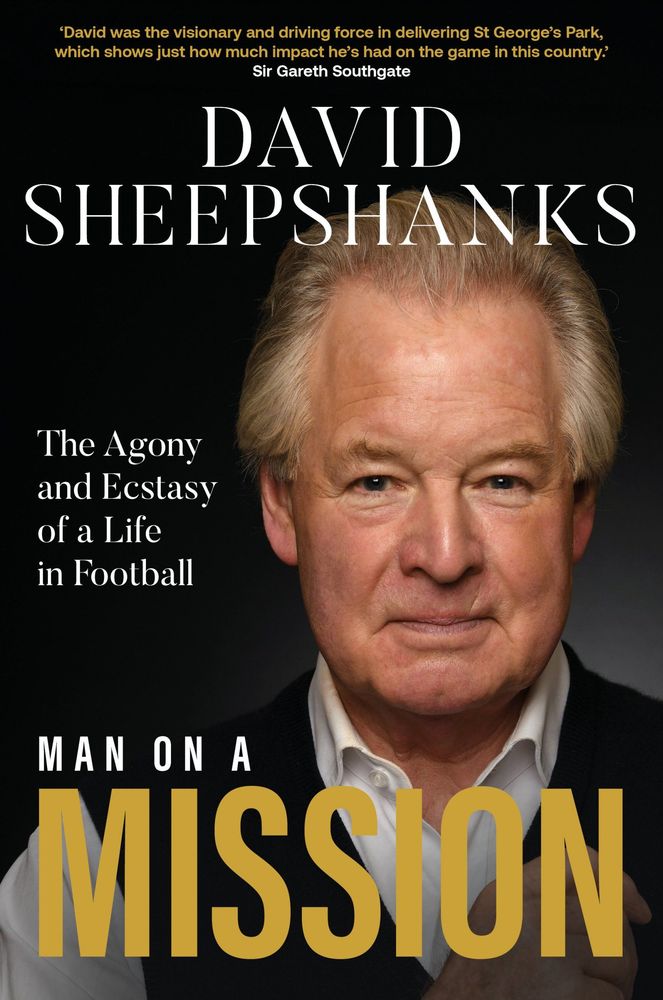
David Sheepshanks' new book, 'Man on a Mission', is from Pitch Publishing and is available here.