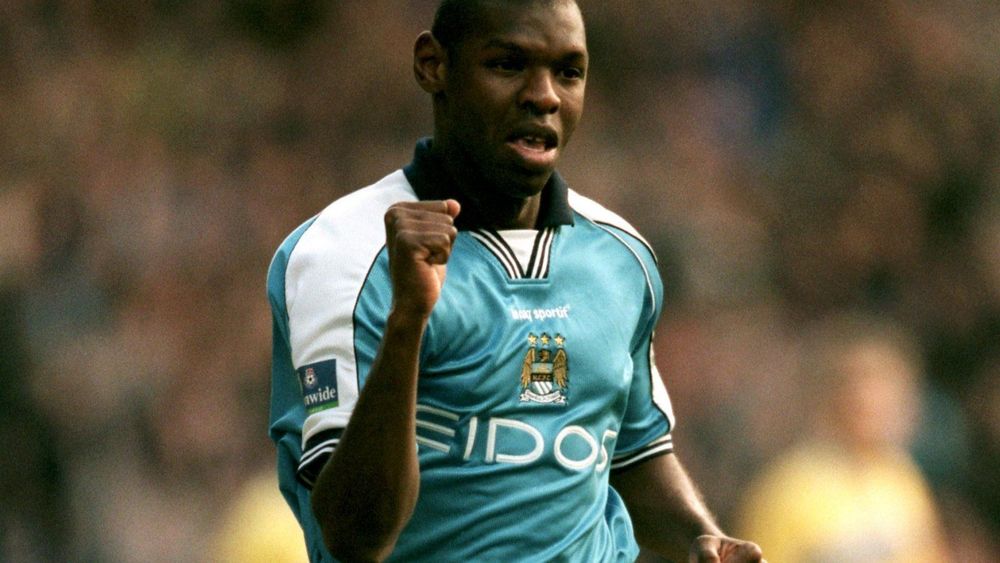
One arrived at Maine Road as a global superstar, the only African winner of the Ballon d’Or and FIFA World Player of the Year.
The other arrived for £400,000 from Bristol City, carrying the rather less glamorous reputation of a striker who had spent much of his career outside the top flight.
Yet both became part of the extraordinary transition from the Manchester City of the late 1990s to the club supporters know today.
David Bernstein, City's chairman at the time, remembers both — although his assessment of their respective importance is revealing.
“George Weah was obviously one of the world's great, great players,” Bernstein told Football Presse.
“He was obviously at the end of his career. We saw it as an opportunity to bring in someone who probably would not be a 90-minute player, you know, for every match at that stage of his career.”
Weah had already lived a football career that was almost impossible to comprehend.
Born in Monrovia, he rose through Liberian football before moving to Cameroon and then Monaco in 1988, where Arsène Wenger brought him to European football. He subsequently became a star at Paris Saint-Germain and AC Milan, winning Serie A twice with Milan and becoming the first — and still only — African player to win the Ballon d’Or. He also won FIFA World Player of the Year in 1995.
His move to Chelsea in January 2000 was followed by an FA Cup triumph. Then came the extraordinary sight of the former European superstar turning up at Maine Road.
City signed Weah on a free transfer from Milan on 1 August 2000. For Bernstein, it was partly football and partly theatre.
“He had the talent and so on to work alongside the sort of Paolo Wanchope and Shaun Goater that we had,” he said. “And it worked okay. But I can't say it was an outstanding success.”
Weah scored four goals in 11 appearances for City, including a Premier League goal at Liverpool and three against Gillingham in the League Cup. His spell lasted less than three months before he left after becoming unhappy with his lack of starts.
Bernstein remembers one particular image.
“I remember early on, I think we played a match at Gillingham. I mean, can you imagine George Weah playing at Gillingham?”
Then there was the extraordinary sight of Weah and Wanchope attacking together.
“On one side of the match, George Weah and Wanchope breaking into the other side's half — it looked dramatic and powerful and it was very exciting.”
But Bernstein is clear that Weah was never one of the foundations of the team.
“He wasn't a core signing,” he said. “He was a glamorous signing, but not one of the most important signings.”
That distinction belongs much more naturally to Goater.
When the Bermudian arrived from Bristol City in March 1998, City were fighting for survival in the second tier. A year later, his goals would help drive them back into the First Division; the following season they would win another promotion into the Premier League.
Goater eventually scored 103 goals in 212 appearances for City, becoming one of the defining players of the Maine Road era. Bernstein remembers the signing of a player who became something far greater than his initial reputation suggested.
“Take Shaun Goater, the Goat,” he said.
“When he came in, I remember we signed him at the last minute before transfer deadline. It was all like about a minute before, maybe even a minute after. I'm not sure.”
There were reasonable expectations. But then Goater started scoring.
“He really was outstanding and he grew with the club and he was a great personality.”
The supporters responded in their own way.
“All the stuff about ‘Feed the Goat’ and so on, the fans really, really loved him.”
Goater became the unlikely hero of City's recovery.
“And he's been a bit of an unlikely hero,” Bernstein said. “But I think when people look back on that time, Shaun Goater will be one of the — he's one of the heroes with Paul Dickov and others, you know, who will stand the test of time.”
That is the crucial difference between the two strikers.
Weah arrived with a Ballon d’Or on his CV. Goater helped City earn their way back into the Premier League.
Weah's career after City continued with Marseille and Al Jazira before he retired in 2003. He subsequently became a politician, serving as Liberia's president from 2018 until 2024. Today, he remains an international football figure, including as honorary captain of FIFA's Players’ Voice Panel, where he has campaigned against racism. He was also a keynote speaker at the 2026 Oxford Africa Conference.
His son Tim Weah has meanwhile followed him into elite football, representing the United States at the 2026 World Cup. George spoke recently about the importance of giving young players opportunities, reflecting on his own role in helping Tim's development.
Goater's post-playing career has been rather closer to the football pitch.
After leaving City in 2003, he played for Reading, Coventry City and Southend United before returning to Bermuda. He eventually moved into coaching, managing North Village Rams and later working with Ilkeston, Macclesfield Town and Manchester City. He also spent time on the coaching staff of City Women and then Aston Villa Women.
Today, Goater is looking for his next coaching opportunity after leaving Aston Villa Women in March. He had taken over as caretaker manager in December 2024, winning three and drawing one of his four matches before returning to the assistant role when Natalia Arroyo was appointed.
But his City legacy was established long before that.
He was there when City were rebuilding themselves. He was there when they escaped the third tier. He was there when they returned to the Premier League.
And, fittingly, he scored his 100th City goal in the final Manchester derby at Maine Road — the same stadium where the supporters had once sung “Feed the Goat and he will score.”
Bernstein's verdict therefore feels almost perfect.
Weah was the glamour.
Goater was the substance.
“George Weah was a glamorous signing,” Bernstein said.
“But Shaun Goater will be one of the heroes who will stand the test of time.”
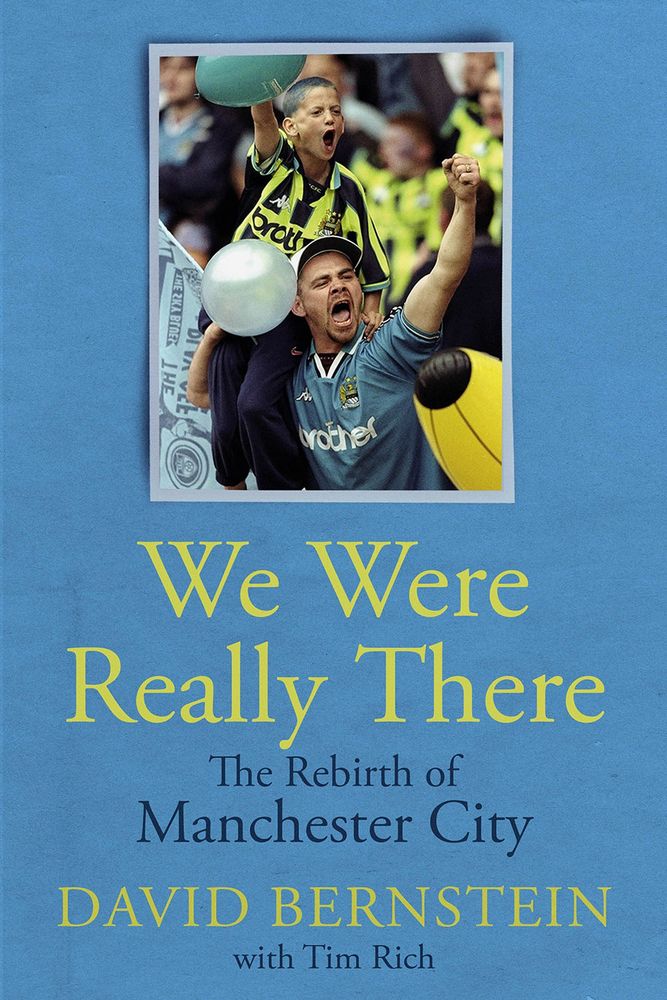
David Bernstein's book "We were really there: The Rebirth of Manchester City" is from Pitch Publishing - which is available here.