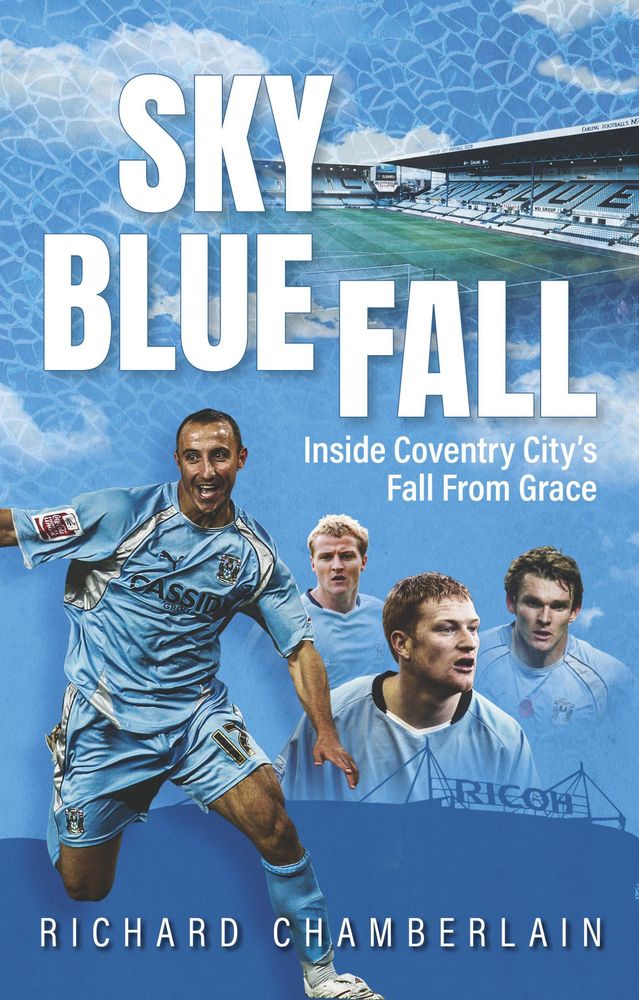
It is a story of financial problems, ownership battles, stadium chaos and, above all, a succession of managers who rarely had the chance to build anything.
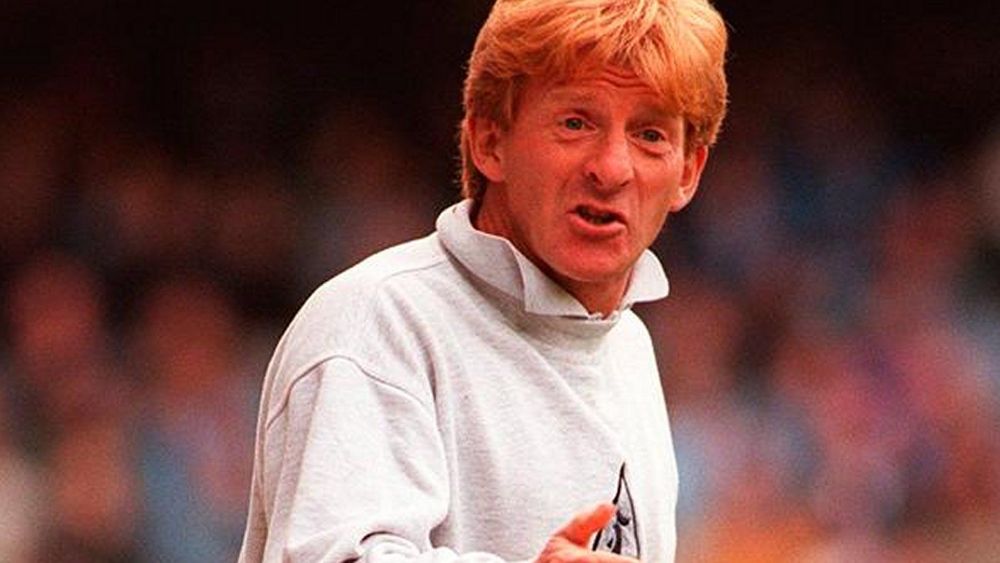
For Chamberlain, the sequence of Gordon Strachan, Roland Nilsson, Gary McAllister and Eric Black perfectly captures Coventry's problem.
"I think this is the thing with those years. It was just this constant sacking of managers, and we didn't ever seem to learn from it," Chamberlain told Football Presse.
"Strachan goes just five games into that season in the Championship where you think, well, if we were going to sack him, maybe sack him during the Premier League season or at the end of that season, to let him have the pre-season to sign players.
"And then to sack him so early in the season, it does seem crazy. Obviously we were banking on that we were just going to walk the league and we were going to be top after five games and there'd be no problem.
"I think it came to a point where it got quite ugly with the fans towards Strachan and Bryan Richardson when they both went.
"So it just got to this point where it had to happen, but it should have happened probably earlier, which is not really on Strachan, but he shouldn't have been going this early in the season."
Strachan's Coventry had been exciting at times, but the manager was constantly forced to rebuild.
"I really liked Gordon Strachan," Chamberlain said.
"He put together the problem that he had was he had to keep rebuilding the team.
"So he put together a team when he was first there where he had Dion Dublin and Darren Huckerby up front, and it was really exciting, a really exciting team to watch.
"But then Dion Dublin is sold. So then we have to go again, and he puts together this team with Robbie Keane up front, Mustapha Hadji, Gary McAllister, who'd been there kind of all the way through.
"And again, he puts together this really exciting team.
"But then Robbie Keane is sold. So he has to go again."
The problem went beyond losing good players.
"We lost a lot of the big characters and the leaders in the dressing room," Chamberlain said.
"You're Dion Dublin, Steve Ogrizovic had retired, Gary McAllister went to Liverpool.
"And from doing the book, this is something talking to the players, you hear so much about how important the spirit was, the team spirit, and those big leaders in the dressing room.
"Certainly for me, when I was thinking back to those Premier League years when I was younger, you think, look, we've got good players, just get the good players on the pitch, and it's as simple as that.
"But you hear about what guys like Dion Dublin and Gary McAllister would do and the influence they had, and they knew what to say and when to say it, and we'd lost all of that."
Strachan was replaced by Roland Nilsson, but the cycle continued.
"I love Roland Nilsson, fantastic player," Chamberlain said.
"But he hadn't had a pre-season. He was there already on the coaching staff, but he hadn't had a pre-season as a manager with the club.
"So he makes a fantastic start, and we are right up towards the top of the table come February, March time.
"And then we hit this awful run, and we don't even finish in the play-offs.
"And then Nilsson is sacked before the last game of the season.
"So again, we've brought someone in. He hasn't had a pre-season. We've done really well. We've then had a huge slip. Then he's sacked before the end of the season.
"So again, we're constantly starting again."
Then came Gary McAllister.
And Chamberlain's research for the book has convinced him that McAllister was perhaps one of the most interesting managers Coventry had during this period.
"McAllister loved the club. As a player, he was brilliant," he said.
"Then he goes to Liverpool. I mean, he's in his mid to late 30s at this point.
"I think some of the players in the club thought, well, he might sign on for another year. He might drop down to the Championship for a year because he's 35, and he goes and signs for Liverpool.
"And they're a bit — they can't believe it that he's gone to Liverpool.
"He has two fantastic years at Liverpool. And then I think from what a few people have said, the board saw this opportunity that we can get McAllister back as a player-manager.
"He can still, and he did still do a good job as a player for us as well, even at 37, 38.
"So he comes in, the players, yeah, the players love him."
Chamberlain discovered that McAllister's influence was felt in the smallest details.
"Lee Mills, who came in as a striker for us, and he'd kind of played around the lower leagues for a lot of his career.
"He talks about playing for Coventry. He says, you know, like it's coming to a five-star hotel after being a dodgy bed and breakfast kind of thing for all my career.
"And he's absolutely lovely in the way he was saying, you know, McAllister was doing things like we were training at this time, we would be playing on a match day, you know, these little things.
"You get used to it. And we'd train for 45 minutes, then we'd stop, and then we'd train for another 45 minutes."
There was also a tactical change.
"It's easy to forget with all of the advances that there's been over the last 20 years or so. But in England, especially, everyone played 4-4-2, even in 2001, 2002.
"And McAllister got us playing this 4-3-3, where we'd have someone like Lee Mills, a big physical striker, but then you'd have kind of fast wingers around him.
"A lot of loads of teams have done in the last few years, you know, with that 4-3-3.
"And became quite exciting to watch."
But McAllister was trying to introduce new ideas while Coventry's finances were collapsing.
"The problem McAllister had was there was no money," Chamberlain said.
"He came in to the club knowing that there were some restrictions. And then in that pre-season, he was told, actually, things are worse than we thought.
"We don't have any money to bring people in.
"And he had to play a lot of youth players. He had to bring players in on loan and really take a gamble on players.
"So he never really had a fair crack at it."
There was also a deeply personal reason why McAllister's time in charge became increasingly difficult.
"His wife sadly became seriously ill as well while he was manager, and he had to have a bit of time away, rightly so, around that time.
"So he was dealing with that off the pitch.
"The club was probably in its worst financial state that it had been for many, many years with what was going on within the club.
"He was almost set up to fail from the start, really. He didn't have the opportunity to succeed.
"And eventually, yeah, he goes. And there was a lot of, yeah, a lot of the players were upset about that, wanting him to stay.
"I just think it was an impossible job at that point because of all of the restrictions."
McAllister's departure brought Eric Black into the dugout.
And, for a brief period, Coventry looked as though they might finally have found some momentum.
"His assistant, Eric Black, then takes over. And he does a great job.
"He really gets us firing again.
"We go and thrash Gillingham in his last game, and he's called in afterwards.
"We beat Gillingham 5-2, and the chairman, you know, Gillingham staged a little bit of a comeback in that game, and then we score some late goals, and it completely — they're not in it.
"But the chairman kind of says to him, 'Well, I thought at one point I thought they were going to come back and equalise', so he was sacked.
"He was sacked after winning this game, and that was the one, I think, that the fans were really upset about because he'd kind of given us a bit of hope back.
"We were playing really exciting football, scoring a lot of goals. It was right towards the end of the season, so we were thinking what was going to happen next."
Black also offered something different in recruitment.
"He'd played out in France, Eric Black, in his playing career, and he'd seemed to have a lot of contacts kind of in different places.
"We weren't just looking for the same old players. He had contacts in Europe who could bring us in some different players, and it was quite exciting.
"And then he was sacked."
Instead, Coventry turned to Peter Reid.
For Chamberlain, it was another example of the club changing direction without thinking about whether the new manager fitted what had gone before.
"It was typical Coventry for this period because we bring in Peter Reid, who had had a great time as Sunderland manager, doing really well with Sunderland in the Premier League, but just didn't fit and just did not fit at all with what we're doing.
"We would sack a manager, bring a new manager in with no thought about, does this new manager suit the players that we've got or does he suit what we've done before?
"So he came in and he was off. The fans weren't on his side from the beginning because we just sacked Black, who was very popular."
Chamberlain says the difference between Reid and his predecessors was particularly noticeable around the club.
"I don't think it's being disrespectful to Peter Reid to say that I don't think his heart was particularly in it.
"He was one of these — I think he wasn't there at the training a great deal.
"And he got a lot of stick because fans would jump on the fact that he didn't go to the youth team games or the reserve games.
"He wasn't seen.
"Whereas someone like McAllister, Eric Black, Ian Dowie, who we had later on, would always be at everything.
"Would be, you know, in every little aspect of the club would be there, whereas Peter Reid was a bit more detached.
"And it didn't work out for him at all.
"And then we go through the same cycle again, sacking another manager."
That cycle, Chamberlain believes, became more damaging with every repetition.
"We always had a new manager, you know, so you always get that optimism and you think, oh, maybe under this manager we might do something.
"And we'd get a new manager and we would always start well.
"So you very quickly buy into it and think, oh no, this is different.
"But yeah, within six months, we were back to square one again."
And the problem was not just managerial instability.
Chamberlain believes Coventry had developed a mentality that made promotion increasingly difficult.
"I also think Coventry, the city, the football club, we had a losing mentality for many, many, many years.
"Going back to even in the Premier League, we were always up against it, battling to survive.
"So I didn't realise it at the time. But then when you come down, it's difficult to switch that to a winning mentality.
"And I don't think we ever did that until Mark Robins came in and definitely under Frank Lampard.
"Lampard is somebody who has won way more games than he's ever lost as a player.
"You can see from what he does as a manager, and he goes to win games, whereas for a long time, fans, we would think of it as, well, let's not lose.
"And I think we were stuck with that mentality for a very, very long time."
For all the criticism of Strachan's eventual departure, Chamberlain believes the former Scotland manager's contribution is easily forgotten.
"I think a lot of people, even now when he gets mentioned, speak quite negatively of his time with Coventry.
"But actually, look at what he did over five years.
"He put together two really exciting teams.
"So yes, I think it was time."
And that perhaps captures the tragedy of the period better than anything.
Coventry did have good players.
They did have managers capable of producing exciting football.
They did have supporters who were desperate to believe.
But every time something began to take shape, the club seemed to pull itself apart.
"We'd get a new manager, we'd start well, they'd fade, we'd sack the manager, we'd get a new manager, you know.
"And it was just this, I suppose, a lot of clubs did the same.
"But because of the finances, when we came out of the Premier League, there weren't the parachute payments that teams get now.
"So financially, it was a huge, huge problem for us.
"We were constantly starting again."
Richard Chamberlain is author of "Sky Blue Fall: Inside Coventry City’s Fall From Grace" from Pitch Publishing - which is available here.