
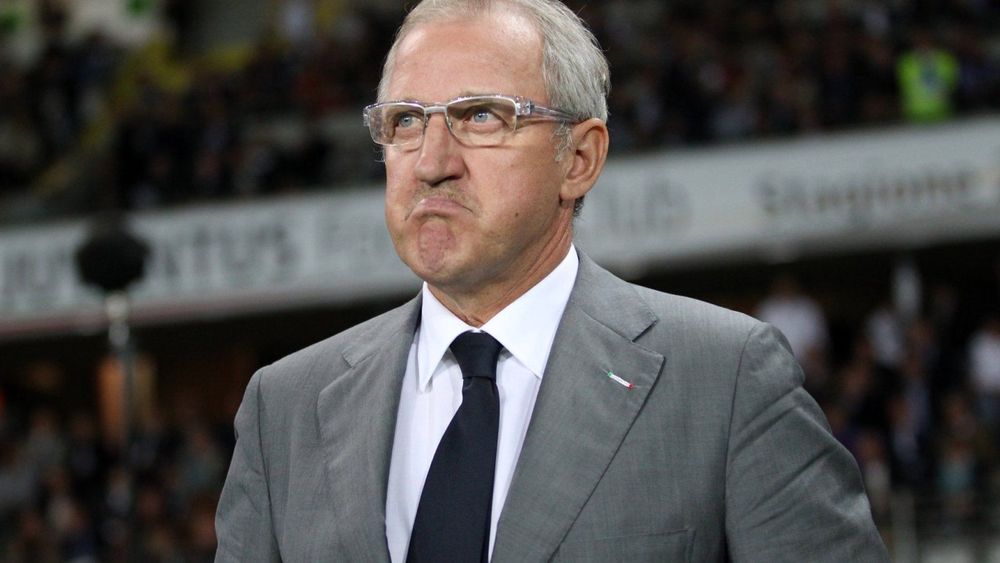
It was where the former winger finally found an environment in which he could express himself, where Luigi Delneri built a team capable of challenging Italy’s established powers, and where a group of players achieved something few thought possible.
Today, Chievo are rebuilding after the financial collapse that brought their remarkable story to an end in 2021. Manfredini knows the road back will be long, but he refuses to rule out another rise.
“Before arriving at Chievo, I had moved around quite a few teams that Juventus sent me to on loan," Manfredini tells Football Presse. "Then, finally, I found this environment in Verona, at Chievo, which helped me express myself at the highest level.
“I remember a healthy environment, a peaceful environment, a wonderful city, as beautiful as Verona. I remember so many good things. I remember a fantastic coach who helped us grow enormously, not just me but all of us, technically and tactically, and also in terms of personality.
“I also remember a president who was a wonderful person, who helped us and made us feel very welcome. Chievo was a fantastic period for me, an experience that I still carry in my heart.”
For Manfredini, the importance of Chievo went beyond the football. After several loan spells following his time in the Juventus youth system, he had found somewhere he could settle, develop and demonstrate his ability. The club provided the conditions for him to flourish, while Delneri gave the team a clear identity.
Together, they became part of one of the most extraordinary underdog stories in modern Italian football.
The Delneri revolution that took Chievo to fifth
Chievo’s rise was built on more than enthusiasm. Under Delneri, the club developed an attacking system that demanded exceptional work from its players, particularly those operating out wide.
Manfredini remembers a team that had to learn how to balance attacking ambition with defensive responsibility, with training sessions designed to give the players the physical capacity to sustain that approach throughout matches.
“The coach had developed an attacking idea of football, with two wingers playing alongside two forwards. We could help the strikers score goals, but at the same time, when the team was defending, we had to get back into the defensive line.
“That meant we had to train to be able to put this idea of football into practice. We trained enormously hard to develop the athletic strength needed to play that way.
“Through all that work, we gradually began to understand his ideas. Match after match, he convinced us, and we also convinced ourselves that we could make it work. In the end, we enjoyed ourselves enormously, but we also ran a lot. We managed to put everything together.”
The results transformed Chievo's standing. A club from a small district of Verona, operating with considerably fewer resources than the giants of Italian football, was competing with the strongest sides in the country.
Manfredini acknowledges that Chievo were not necessarily the most talented team in the division. Their achievement came from making the most of their strengths, following the coach's instructions and believing that the collective could overcome the individual advantages of their opponents.
“We managed to compete with the strongest teams in Italy. In my opinion, they were much stronger than us, but we did our job, finishing fifth in the Italian championship.
“For Chievo, that was a wonderful result. It was a magnificent achievement for the club.”
That fifth-place finish in 2001-02 remains a defining moment in Chievo's history. The club had reached Serie A for the first time and immediately established itself among the country's leading sides, turning the so-called Flying Donkeys into one of European football's most unlikely success stories.
The achievement also helped open the next chapter of Manfredini's career. His performances attracted interest from bigger clubs, and Lazio eventually offered him the opportunity to play at the Stadio Olimpico and test himself alongside more established names.
Yet moving on did not diminish his attachment to the club that had helped him reach that level. Chievo had given him the platform to grow, and the memories of that period remained with him long after he left Verona.
How Chievo lost its place in professional football
The club's subsequent decline was a painful contrast to those remarkable years. After spending 17 seasons in Serie A across its top-flight era, Chievo were relegated in 2019. They continued in Serie B, but financial problems ultimately brought the original club's professional existence to an end.
In 2021, Chievo were excluded from Serie B because they could not satisfy the financial requirements for registration, including outstanding tax obligations. Appeals failed to reverse the decision, and the club was later declared bankrupt.
The collapse ended the original organisation's run in professional football, leaving supporters to confront the loss of a club that had once competed against Italy's biggest names and reached European competition.
But the Chievo story did not end there.
Former captain Sergio Pellissier established FC Clivense in 2021 with the aim of bringing football back under the Chievo banner. Starting from the lower reaches of the Italian pyramid, the new club worked its way up through the amateur divisions.
In May 2024, the club acquired the historic ChievoVerona name and brand, allowing it to resume that identity. It returned to Serie D for the 2024-25 season, beginning the difficult process of rebuilding a presence in Italian football.
The distinction matters: the modern club has revived Chievo's name and sporting ambitions, but its climb back towards Serie A is a new undertaking rather than a continuation of the old club's professional status.
Can Chievo rise again?
Manfredini understands the scale of the challenge. He does not suggest that the club can simply recreate the achievements of the early 2000s, and he recognises that returning to those heights will require patience, careful recruitment and sustained work.
But he also points to Chievo's own history as evidence that an extraordinary rise is possible.
“To return to the levels of the 2000s, I believe it will be very complicated, but nothing is impossible. Everything can be done. The important thing is to work and try, year after year, to bring better and more important players into the team.
“We must not forget that Chievo started out in the Interregionale, with the Chievo of the Campedelli era around 2000, and little by little managed to reach Serie A.
“Now Chievo find themselves in Serie D, so why not? It could happen again. But I believe several years will have to pass before that happens.”
His assessment is realistic rather than romantic. Reaching Serie A again would require Chievo to progress through multiple divisions, build a sustainable structure and assemble squads capable of competing at each new level. The achievements of the past provide inspiration, but they cannot guarantee the future.
Nevertheless, the club has already demonstrated that its name retains considerable significance. Its revival has brought back an identity that supporters feared had disappeared for good, while the climb through the amateur game offers a route towards professional football once again.
The challenge now is to turn that renewed identity into lasting progress.
For Manfredini, the emotional connection remains undiminished. He remembers the people, the atmosphere and the collective achievement of a team that exceeded expectations. Asked to describe his time at Chievo, he returns to the same word that began his recollection.
“My time at Chievo, like the experience of all the players from that era around 2000, can be summed up in just one adjective: fantastic.
“That is enough. There is no need to add anything else.”
For a player who experienced the club at the height of its powers, that affection says as much as any account of tactics or league positions. Chievo gave Manfredini a place to flourish, and he was part of a team that made the impossible seem achievable.
The new Chievo have a very different journey ahead. Their return to the professional game is far from assured, and the heights reached under Delneri remain a distant ambition. But the club's history shows how far it can travel when the right people, players and ideas come together.
Manfredini has seen that transformation once before. He knows it will take time to happen again, but he is not prepared to say it cannot.