
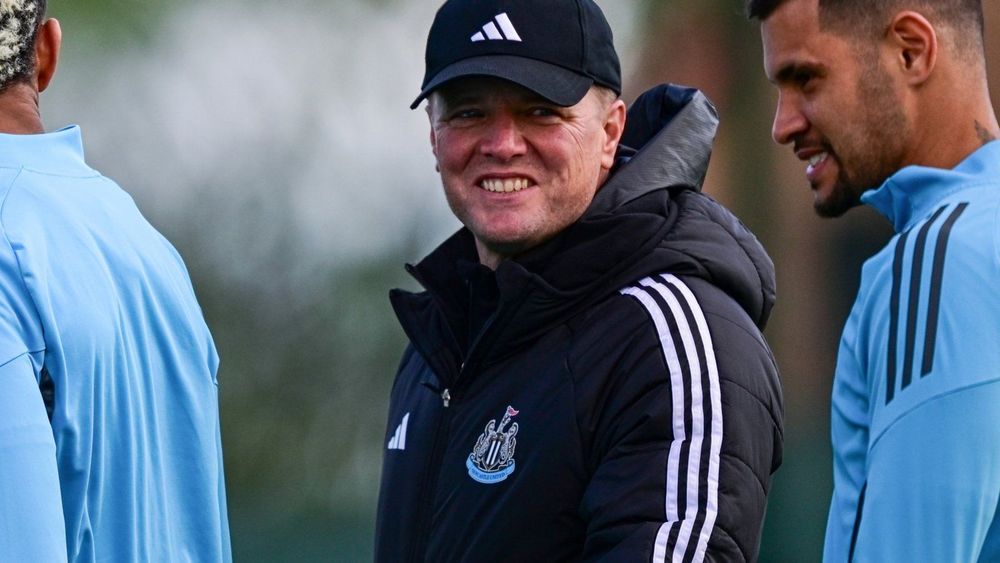
That background gives particular weight to his praise for Joe Roach, whose years of work with Bournemouth’s young players helped lay foundations for the club’s rise, and Eddie Howe, the manager who took the Cherries from the Championship into the Premier League.
“I’m very pleased to see Bournemouth doing so well," Rwanda coach Constantine told Football Presse. "They have a great youth academy. Joe Roach was at Bournemouth for many years. I think he laid the foundations for this process, and I think a lot of good work has been done at Bournemouth FC.
“You cannot not pay attention to the academies wherever you are in the world.
"They are the life and soul of any club, and obviously the development process is very important. So they are fantastic.”
Joe Roach: the man Constantine credits with laying the foundations
Constantine’s praise for Bournemouth is closely tied to Joe Roach, the academy figure whose work he believes helped lay the foundations for the club’s development. Having worked at Bournemouth himself, Constantine is speaking about a club he knows, and he specifically identifies Roach as an important part of its progress.
“Joe Roach was at Bournemouth for many years. I think he laid the foundations for this process. I think a lot of good work has been done at Bournemouth FC.
“You cannot not pay attention to the academies wherever you are in the world. They are the life and soul of any club, and obviously the development process is very important. So they are fantastic.”
It is a clear endorsement of Roach’s long-term contribution. Constantine does not simply praise the players Bournemouth have produced; he points to the person who helped establish the process behind their development. His wider point is that an academy’s influence extends beyond the individuals who eventually reach the first team. It is about creating an environment in which young players can improve and giving a club foundations on which to build.
Roach spent more than 22 years working within Bournemouth’s academy, taking on roles including head of youth, academy manager and head of coaching. He helped revive the club’s youth team in 2001 through a programme based at Brockenhurst College, combining football development with education and career pathways. The programme helped produce players who went on to play professionally, including Brett Pitman, Danny Ings and Sam Vokes, while Roach also supported former players and staff moving into coaching and management, including Eddie Howe and Jason Tindall.
That history gives substance to Constantine’s choice of words. He credits Roach with laying the foundations, then broadens the point beyond Bournemouth: for him, clubs cannot neglect the work that develops young players and the people responsible for coaching them.
Eddie Howe’s role in the Cherries’ success
Constantine also has enormous admiration for Howe, who returned to Bournemouth as manager in 2012 and guided the club into the Premier League in 2015. For a club that had been playing in the fourth tier only a few years earlier, reaching the top flight was a remarkable achievement.
“For me, one of the most underrated coaches is Eddie Howe. I think Eddie Howe played a massive part in getting Bournemouth out of the Championship. For me, the Championship is the most difficult championship in the world, very difficult.
“So Eddie Howe got them into the Premier League and established them as a solid Premier League side. And it’s great that this work is being continued. I’m very happy for them.”
Howe’s contribution was clear, but Constantine’s comments place it within the wider story of the club. A successful manager needs more than a good first team: the recruitment, coaching, academy and culture around the squad all matter. Bournemouth’s progress reflected years of work at different levels of the club, with Howe turning that progress into results on the pitch.
Howe left Newcastle United at the end of last season, bringing an end to almost five years in charge. He led Newcastle to the League Cup in 2025 and Champions League qualification during his tenure. More recently, he turned down an opportunity to manage French club Lens, choosing to take time away from football.
Bournemouth, meanwhile, continues to invest in its young players. Ethan Sills, a midfielder who joined the club as a seven-year-old, signed his first professional contract late last season after progressing through the academy. He had already made his under-18s debut at 14 and gone on to feature for the development squad.
The pathway from academy football to the first team is never guaranteed, but cases like Sills show why that structure matters. Young players need coaching and competitive opportunities, as well as a club prepared to help them make the transition from promising prospect to senior professional.
What other countries can learn from Bournemouth
For Constantine, the importance of that process becomes clearer when Bournemouth is considered alongside the other footballing environments in which he has worked. His international coaching career has taken him through Asia and Africa, including roles with India, Pakistan, Nepal, Rwanda, Malawi and Sudan. Those experiences have given him a broad view of the different challenges facing national associations and clubs.
His criticism of Indian football, for example, has centred on the gap between the talent available and the systems needed to develop it. He has argued that investment in a professional league cannot, by itself, solve the problem if coach education and player development are not given equal attention.
“I think the main issue is that we are not developing the coaches,” Constantine said. “So for me, if I had all the money in the world, it would be about developing Indian coaches to develop Indian players, better players, better coaches, better players. That’s not happening.”
The point is not that every country can simply copy an English academy. Football systems differ in their resources, facilities and opportunities, and the challenges Constantine encountered abroad were not identical. But his experience has reinforced the importance of building the people and structures that allow young players to improve over time.
At Bournemouth, he saw an example of that process during his own time in the academy. Roach’s work helped establish a development pathway, while Howe’s achievements demonstrated what could happen when a club’s wider progress translated into first-team success.
Roach left his academy director role at Wimborne Town in September 2025, having taken the position after his long Bournemouth career. He has continued to be associated with the club in a football consultancy capacity. His work at Bournemouth, however, remains an important part of the story Constantine is describing.
The former academy coach is not simply looking back at a club he admires from afar. He spent time inside its development system and saw the importance of the work taking place away from the first-team spotlight.
For Constantine, the lesson is straightforward: clubs need to develop coaches as well as players, give young footballers a genuine pathway and maintain that commitment over many years. Bournemouth’s rise under Howe may have provided the headline moments, but the foundations were being laid long before the club reached the Premier League.