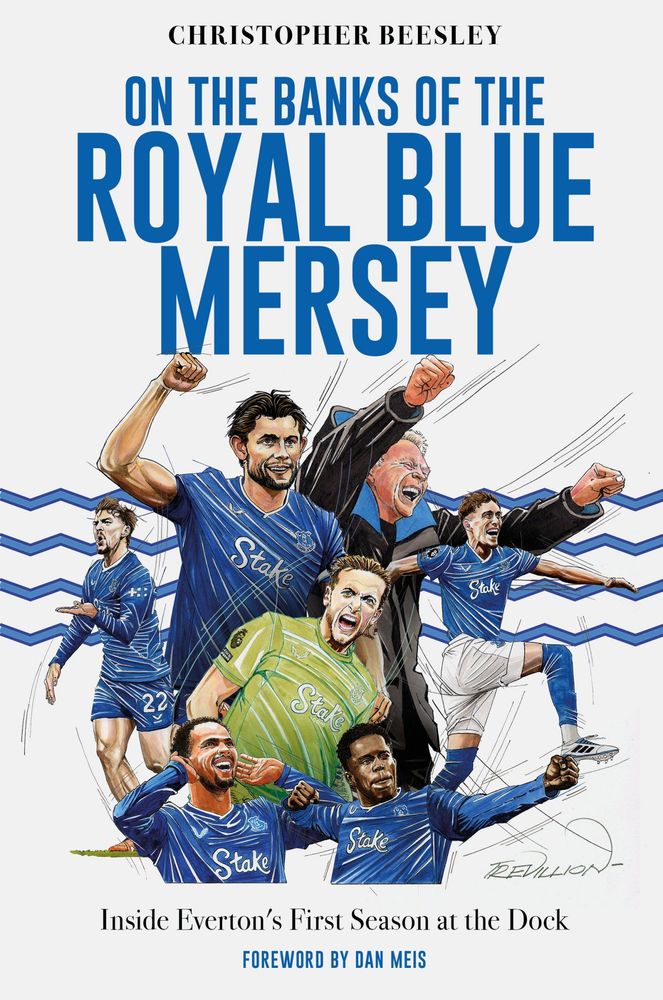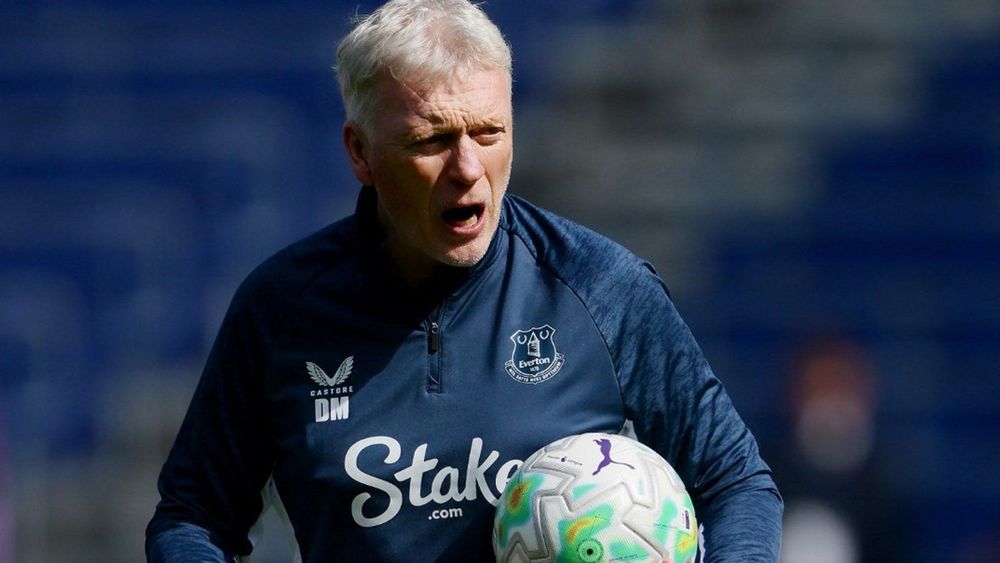
The Liverpool Echo journalist has followed Moyes across two spells at Everton, from his arrival as a young manager in 2002 to his return in January 2025. In that time, he has seen a manager adapt to different generations of players, endure difficult experiences elsewhere and establish a record of longevity that deserves greater recognition.
Moyes also has a personal connection with Beesley, who has covered him for much of his Everton career. Their relationship has produced a few running jokes, including one about the journalist’s clothes that dates back to when he was a young reporter.
But behind the humour, Beesley has a serious argument about Moyes’s place in Everton’s history. The Scot has repeatedly provided stability in difficult circumstances, yet the absence of a major trophy remains the obvious gap in his record.
For Beesley, ending Everton’s long wait for silverware would elevate Moyes beyond the manager who helped the club through its most challenging modern period.
“I think if he's backed properly, definitely,” Beesley told Football Presse when asked whether Moyes could rebuild Everton into a team that opponents genuinely fear visiting again.
“He wasn't backed properly in the summer, leaving him with one striker, one right-back, one left-back and only 18 outfield players in the Premier League, when we're in the five-substitute era. Every game, you can change half your outfield players. That's not backing him. He's started working with one arm behind his back.
“But if he is backed properly and the new owner comes in who is willing to offer him that, my only issue is that he's 63. I wish he was 43 again.”
That age question is an understandable one, but Beesley believes Moyes has improved as a manager through the experiences he has accumulated since leaving Everton for Manchester United in 2013.
“He says he doesn't feel old, and he delegates a lot of tasks. He has changed. He's mellowed since his first spell, and I think he's a better all-round manager because of the experiences, good and bad, that he's had.
“After Everton, first time around, he went to Manchester United, coached abroad at Real Sociedad in Spain, had the bad experience at Sunderland where he got relegated, and then had his two spells at West Ham and won their first trophy in 43 years.
“I think that's the one thing missing for him.”
Why Moyes deserves greater recognition
Moyes’s record at Everton has often been assessed through the absence of trophies, but Beesley believes that overlooks the difficulty of maintaining a competitive team over such a long period.
When Moyes first arrived in 2002, Everton were in trouble. He helped turn them into regular challengers for European qualification, most notably taking them into the Champions League in 2005, despite working with considerably fewer resources than the Premier League’s wealthiest clubs.
His return came under different circumstances, with Everton facing financial difficulties and the challenge of moving into Hill Dickinson Stadium. Nevertheless, Beesley sees a common thread between the two spells: Moyes has repeatedly been asked to make the best of difficult situations.
“I think he's proven — I'd go as far as saying that Moyes is the only man in the modern period, which I'll say is the Premier League era, who can do a good job at Everton on a long-term basis.
“Roberto Martinez did really well in his first season. I think it was Everton's highest-ever Premier League points total, but then things fell off quite badly over the next two years. And he had better players as well.
“Moyes has always struggled to get a real top-class centre-forward, a striker, but Martinez benefited from having Romelu Lukaku, who for me is head and shoulders Everton's best striker of the Premier League era, but then couldn't get the results.
“So Moyes is in a class of his own in that respect.”
Beesley also points to Moyes’s record in the Premier League more broadly. At the time of the interview, he noted that only Sir Alex Ferguson and Arsène Wenger had accumulated more Premier League points, with all three having passed the 1,000-point mark.
That statistic reflects not just longevity but the challenge of remaining effective across different clubs, squads and eras.
“It's about that longevity, and doing a job in difficult circumstances over a very long period.”
From Howard Kendall to a different generation
Comparing Moyes with Howard Kendall is inevitable at Everton. Kendall remains the club's most successful manager, having led them to league titles and European glory during the 1980s.
Beesley is clear that Kendall's achievements place him in a category of his own, particularly during his first spell in charge. However, the journalist also believes it is important to recognise how much the game has changed since Kendall's time.
“I used to speak to Howard for his column. He was very much a man of his era. I don't think Howard Kendall's methods would work now with different generations of players.
“It was all about the socialising as well, at a time when football teams were big on the drinking culture, certainly in England. Howard Kendall was Everton's most successful manager, and he was excellent, certainly in his first spell at the club.”
Beesley recalled one particularly revealing difference between Kendall and today's managers. When Everton and Liverpool trained at Bellefield and Melwood, respectively, the two grounds were so close that journalists could visit both clubs on the same day.
Kendall would often prefer to speak to the press after the Liverpool manager, because he wanted to hear what had been said and make sure Everton got the better story.
“The journalists would go and see one after the other. Howard would always want to go second because he'd want to hear what the Liverpool manager said first. It'd probably be Kenny Dalglish most of the time, and he'd want to top that. He'd want to give you a better line, a better story, so Everton would be the back-page lead rather than Liverpool.
“Whereas now, I'm not saying it's just David Moyes, it's the whole of football. You want to say as little as possible in terms of giving anything away to anybody. Howard Kendall would try and give you something to promote the club.”
It is a small detail, but one that illustrates how the relationship between football clubs and the media has changed. Kendall was prepared to use journalists to promote Everton; modern managers are generally much more guarded.
Beesley believes Moyes has had to adapt to those changing expectations while also managing players whose experiences and attitudes differ markedly from those of the footballers he worked with in the early 2000s.
“Both came to Everton at a very young age. Howard Kendall was only 35 when he became Everton manager, and he was still a player-manager when he started. Moyes was only 38, and he was the youngest manager in the Premier League when he started in 2002. He's now the oldest manager in the Premier League at 63.
“What he's done is span a generation of players. He came in and had Paul Gascoigne and David Ginola. They were both out the door pretty quickly, and they weren't much younger than him.
“Now he's having to work with a completely different generation of players. He's moved on a generation himself, gone from being a father figure to almost a grandfather figure. That can't be easy in terms of what you could say to those guys back then and what you can do now.
“I think you need a lot more carrot than the stick now in terms of what young people respond to.”
For Beesley, that ability to adapt is one of the most important parts of Moyes's career. The manager has experienced football in different countries, survived the pressures of Manchester United and Sunderland, and won a major European trophy with West Ham.
Those experiences have shaped a more rounded manager than the one who first arrived at Goodison Park.
The Manchester United poisoned chalice
Moyes's time at Manchester United remains one of the defining episodes of his career. Handpicked by Ferguson to succeed him in 2013, he was given a six-year contract but dismissed before completing his first season.
Beesley believes the scale of Ferguson's achievements made the job exceptionally difficult, particularly because the departing manager had left a squad that needed renewal.
“I think it was a poisoned chalice going after Alex Ferguson. You've got to remember that Ferguson won more in his time at Manchester United than Manchester United won in the previous 100 years.
“He did more in 20 years than United won in the previous 100. That was tough going. We've seen that since he's gone, haven't we? They haven't even won the Premier League again since Ferguson left.”
Beesley also believes Ferguson's final title-winning side was not necessarily built for the long term. The Scot had spent much of his United career rebuilding teams and introducing younger players, but his final campaign was different.
“Throughout his career, Ferguson had recycled the team and brought through younger players. But as he was coming towards retirement, he thought, 'I'll build a team for right now, for this moment.'
“Players like Robin van Persie were 29. They could be great for a year or two, but then they'd be past their best. I think Ferguson did a bit of that just to get that last title, that last Premier League trophy for him. And then it was kind of like, 'Well, over to you.'
“At the time, it was, 'Alex Ferguson has handpicked him.' But looking back, I think that was tough for Moyes.”
Beesley also offered an interesting comparison between Liverpool and Manchester United. Even as an Evertonian, he believes Liverpool's success under a succession of managers contrasts with United's dependence on Ferguson and, before him, Matt Busby.
That history helps explain why succeeding Ferguson was so difficult. Moyes was not simply taking over a successful team; he was being asked to follow a manager whose influence had defined an entire era.
The experience did not end Moyes's managerial career, however. His subsequent work at West Ham, culminating in the Europa Conference League triumph in 2023, demonstrated that he could still build a successful team.
For Everton, that experience offers encouragement. Moyes has already shown he can recover from a difficult spell and deliver silverware elsewhere. Beesley believes the challenge now is to do the same at the club with which he is most closely associated.
The tartan glasses case — and the “dad's suit” joke
For all the discussion of tactics, trophies and managerial longevity, Beesley also has a few personal details that Everton supporters might not know about Moyes.
One is a tartan glasses case. It is hardly the sort of revelation that changes the way anyone assesses a football manager, but it offers a glimpse of the person behind the touchline figure.
“I think I mentioned in the book he's got a tartan glasses case. You don't often see him wearing his glasses. He just wears them for reading.
“He's a proud Scot. He's never actually worked in Scotland as a coach; he's spent his entire coaching career elsewhere, predominantly in England. But he is a proud patriot.
“It's quite red, actually, which won't maybe endear him to Evertonians! But it's certainly some sort of tartan design on his glasses case. And you very seldom see him wearing his glasses, never mind see what his glasses case is.”
It is a charmingly ordinary observation about a manager whose public image is usually dominated by football.
There is also the running joke about Beesley's clothes, which dates back to the journalist's first time working alongside Moyes at Everton.
“I was only in my twenties when I first started working alongside him at Everton. He's always had this long-running joke with me. I say it's my day off today, but if I'm wearing my shirt and tie, he'll ask me if I'm wearing my dad's suit.
“That was kind of a joke, which he always says to you. So maybe some people have heard that one before. But yeah, that and his glasses, and his tartan glasses case.”
The anecdote adds a personal dimension to Beesley's assessment. He has known Moyes across a significant part of the manager's career, watching him evolve from a young coach into one of the most experienced figures in English football.
The fact that the joke has endured also hints at a familiarity built over years of covering Everton, even as the relationship between managers and journalists has become more guarded.
The trophy that could define his legacy
Ultimately, Beesley believes Moyes's Everton legacy remains unfinished.
The manager has already helped the club through two difficult periods and has the distinction of leading Everton out of Goodison Park and into their new stadium. His longevity, adaptability and ability to work in challenging circumstances make him a significant figure in the club's modern history.
But winning a trophy with Everton would give his second spell a different meaning.
“When he retires, you'll naturally associate David Moyes more with Everton than West Ham. But he's won a trophy with West Ham, and their supporters will revere him for that.
“Unless he goes and wins a cup with Everton, that's the one thing missing for him. He always says getting back into Europe is his ambition, but for me, it would totally revolutionise his legacy if he could get a trophy at Everton and be the man to end the longest-ever trophy drought.”
Asked if such an achievement would warrant a statue at the new stadium, Beesley agreed.
For Everton, the task is to provide Moyes with the squad and support required to turn that possibility into reality. The new stadium offers a platform, but a modern home cannot deliver success on its own.
Moyes has already demonstrated his ability to rebuild Everton, and Beesley believes he remains capable of doing so again. The manager's experience has given him a broader perspective, while his understanding of the club makes him well placed to appreciate what supporters want.
A trophy would not erase the difficult years or place him alongside Kendall's achievements overnight. But it would finally give Moyes the major Everton honour that has eluded him throughout his career at the club.
And if that happens, Beesley's verdict is clear: the man with the tartan glasses case and the long-running joke about the journalist's suit might just deserve a statue after all.
Christopher Beesley is author of "On the Banks of the Royal Blue Mersey: The Inside Story of Everton's First Season at Bramley Moore Dock" from Pitch Publishing - which is available here.