
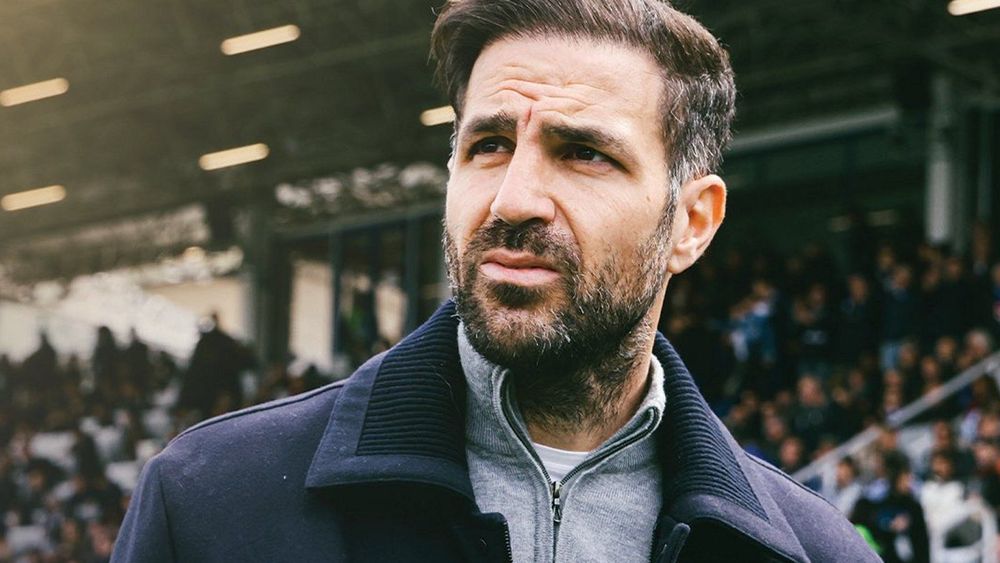
Fàbregas said his decision to join Como after Monaco was an instinctive one, despite initially knowing little about the club.
“It started in a strange way, I did not know what to do after Monaco. Sometimes you make decisions more from the heart than the head, and this was one of them. I used to go to Como many times with my family, but I did not know there was a football team.”
That decision has since developed into an ambitious project. Fàbregas believes attractive football was central to the original vision of Como president Mirwan Suwarso, while the coach has helped build a squad around players who share his ideas.
“The idea you have, you have to carry forward with great conviction. The president initially thought about the structural side of the club, he wanted to bring more tourism and to do that he needed attractive football.
"The more beautiful the football, the more people like coming. That was discussed in the first conversation with the president. Then I brought people into the staff and the right players to follow our idea.”
Como’s rise has brought Fàbregas increasing attention, but he has resisted the temptation to move elsewhere. He revealed that Italian clubs including Inter had shown interest, yet his attachment to the players he has developed at Como convinced him to stay.
“I am a thinker, I analyse things a lot. I know that at the end of their careers the best coaches are counted by their trophies, and rightly so. But we were talking about Da Cunha: for me, as a coach, he is worth more than a trophy.”
Fàbregas believes the trust shown by his players creates an obligation to remain with them.
“A lot of boys came to Como because of me. I do not say that arrogantly. They believed in me. Nico Paz came here from Real Castilla, and now people are talking about giving him Messi’s number 10. Two years ago his father put all his trust in me. I can say the same about Alex Valle, Perrone, Da Cunha and many others.”
He sees time as one of the most valuable commodities available to a coach.
“In football today, every two or three matches everything is thrown away. The thing that is worth most for a coach is time. Look at Arteta: in his first three years he finished eighth, then eighth again, then fifth. Now everyone sees that he has won the Premier League, but Arsenal had the patience and the strength to keep him and wait for him.”
That philosophy also extends to recruitment. Fàbregas wants players with hunger and believes mentality can outweigh reputation.
“I prefer someone with less talent but an incredible hunger to make a career to someone who arrives with a great past and has already made money. That is what Como needs.”
His academy is being built around the same principle. Fàbregas wants intelligent players who understand space, movement and timing, rather than simply talented individuals.
“I like working with intelligent players. Riccardo Cassano is an example. He had never even played for the Primavera, he trained with us and on the second day I called Roberts and told him I wanted to see him more every day. We discovered a player.”
For Fàbregas, that process is ultimately what coaching is about. Results matter, but the relationships and development of players remain central to how he measures success.
“When you look back at your career, I do not remember what I won. I remember the dressing-room moments, when you travelled, when the manager had ‘killed’ you and a teammate came to console you. These are my victories in life.”
That is the philosophy behind Fàbregas’s decision to continue building at Como rather than searching for a faster route to the biggest clubs.