
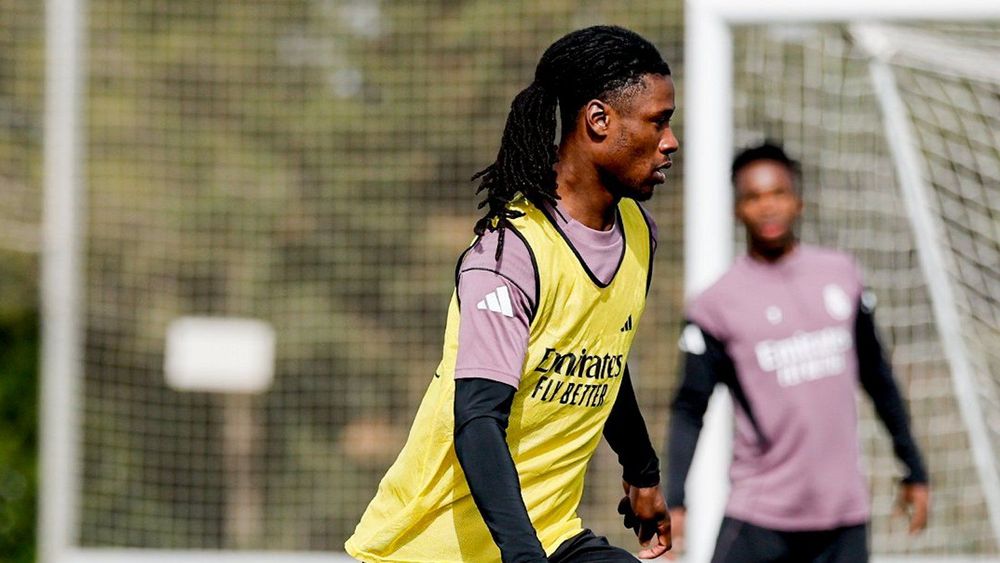
Camavinga came through Rennes' academy before becoming one of the most highly rated young midfielders in Europe, eventually joining Real Madrid in 2020. He has since established himself as a versatile option for the Spanish giants, although Stanger believes his progress has been interrupted by physical problems.
"I still think it has been the injuries and the lack of continuity," he told Marca.
Stanger, who worked with Camavinga during his development at Rennes, remembers a teenager who was unusually receptive to coaching and eager to improve.
"He was a boy who always listened, willing to do everything."
One particular episode has stayed with him. Camavinga was only 15 when Stanger showed him a video before a match, explaining that he could push further forward and become more dangerous around the opposition penalty area.
"I remember before a game, when he was still only 15, I showed him a video to explain that he could get further forward and be more dangerous, that he had the qualities to do it."
The response was immediate.
"He scored three goals afterwards in the match."
Camavinga's preferred position has generally been at the base of midfield, and Stanger believes that remains the role where he is most comfortable. But he also sees qualities that could make him effective higher up the pitch.
"I know he prefers to play as a six, as a pivot, but I think he can also be very good as an eight, further forward."
That versatility has been one of Camavinga's defining characteristics since leaving Rennes. At Real Madrid, he has been used in midfield and at left-back, while his athleticism and ability to carry the ball have made him useful in different tactical situations.
Stanger's memories also provide a reminder of just how early Camavinga's potential was visible at Rennes.
The club has continued to produce elite players from its academy, with Camavinga part of a generation that also included Ousmane Dembélé and Désiré Doué. Rennes' current academy continues to develop players who have gone on to feature at the highest level.
For Stanger, however, Camavinga was never simply another talented youngster.
The qualities were already there at 15. What he needed was the continuity to allow them to flourish.