
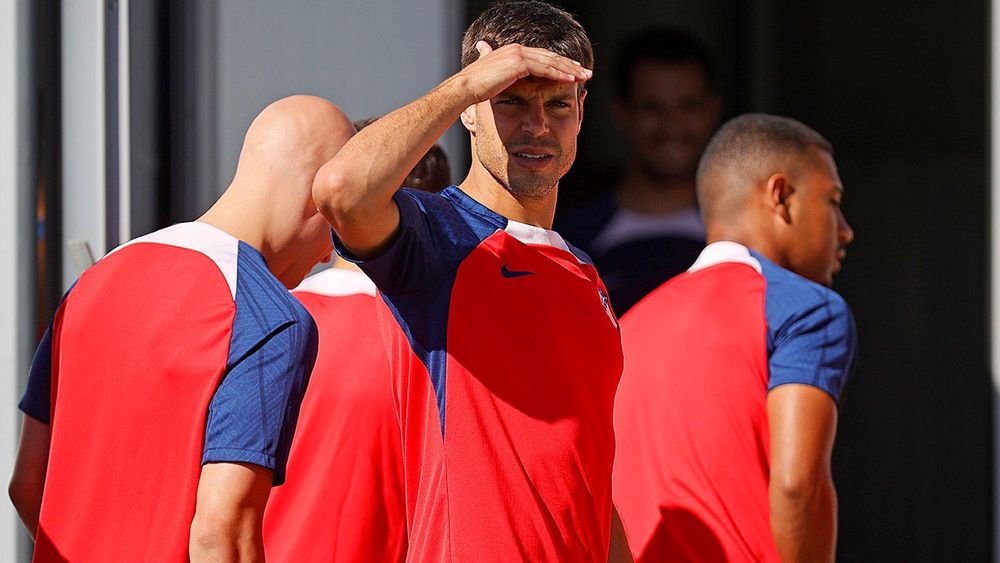
He was 16 when he first wore the Osasuna shirt. He was 36 when he walked off the pitch for the last time as a Sevilla player, helping the club secure LaLiga survival in the penultimate round of matches after a season spent in the kind of tension he had largely avoided during the prime of his career.
"I've fought for relegation too," he said this week. "At Osasuna we had to survive on the last day. Here we managed it with a game to spare."
The tone throughout his extended reflections on Radio Marca Sevilla was characteristically measured. Azpilicueta is not a man given to dramatics. He came to Sevilla last August, on his birthday, because the club were honest with him. When he asked Matías Almeyda — then Sevilla's coach — what his role would be, the answer was frank: nobody knew who else would be in the squad. Azpilicueta found that reassuring.
"He was very sincere," he said. "He called me at eleven at night and I said, it seems I can help. He gave me a good feeling. I knew what I was coming to."
The season's low point came in Pamplona, where Osasuna scored twice in the final seconds to overturn Sevilla's lead and leave the dressing room in a state of devastation. Azpilicueta described players on the floor, staff crying on the bench, the sense that everything had collapsed.
"It seemed like the season had ended," he said. "But it hadn't. And touching bottom at that decisive moment made everyone give even more."
The response that followed — wins against Real Sociedad, Espanyol and Villarreal, driven by a stadium that filled with belief when the team needed it most — confirmed what he had come to believe about the supporters.
"A large part of the objective belongs, of course, to the fans."
He also spoke about the injury problems that dogged the season — a first muscular issue in nearly two years of professional football, a soleus problem sustained after a rest period, and the consequences he managed with quiet stubbornness. He played 90 minutes in the Seville derby despite knowing his body was not right.
"I ended the game having never hurt so much in my life," he said. "But I wouldn't change the decisions. You try from the heart and with the desire to do the best."
He reserved warmth for two of the young defenders who emerged during Sevilla's survival run — Andres Castrín and Kike Salas, who he described as capable of forming an important partnership in the club's future, provided they are surrounded by experienced players in the difficult moments that a full season always brings.
And he spoke at length about the manager who shaped him most decisively — José Mourinho, who found him unsettled and questioning his future at Chelsea during the summer of 2013 after arriving late to pre-season from the Confederations Cup and finding himself outside the squad.
"He took me aside at the end and said: 'You're not going anywhere — I trust you.'"
Azpilicueta had Ashley Cole at left-back and Branislav Ivanovic at right-back. He had not played left-back in his life. He ended up playing there for two and a half years, winning titles.
His Chelsea career spanned eleven years, 526 appearances and a trophy cabinet that included two Premier League titles, the Champions League, two Europa Leagues and the FA Cup. He won 44 caps for Spain and represented the country at three World Cups.
He carried none of that lightly. And he leaves none of it behind.
"From the heart," he said, "and with the desire to do the best."
That was always enough.