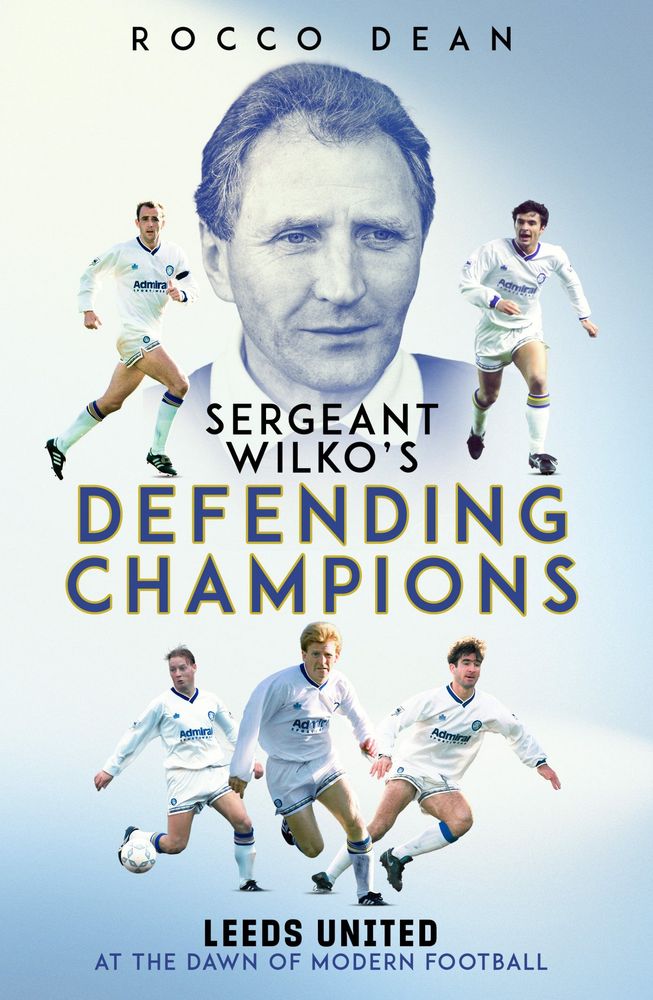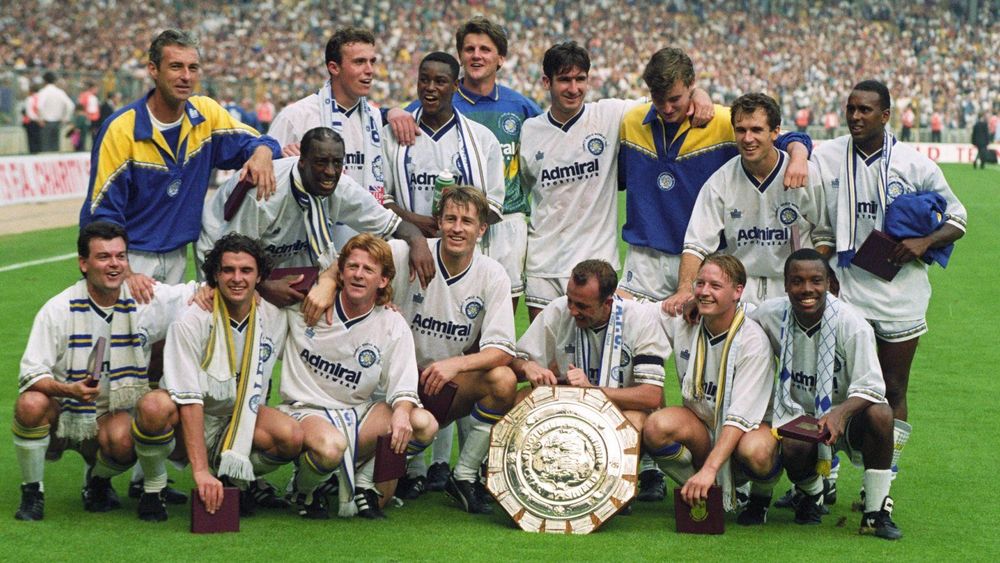
For all the mythology surrounding Eric Cantona's move from Leeds United to Manchester United, the decision to sell him was not quite as simple as Howard Wilkinson deciding he did not want the Frenchman in his team.
According to Leeds author Rocco Dean, the relationship between Cantona and Wilkinson had become so toxic that Leeds feared the striker would simply walk away from the club — leaving them with a player they could neither rely on nor afford to keep.
That makes the eventual destination and transfer fee all the more extraordinary.
Cantona had arrived at Leeds in January 1992 and played a supporting role in the club's title triumph, scoring three goals in the league. His influence was far greater at the beginning of the following season, when Wilkinson experimented with a 4-3-3 formation after Gordon Strachan underwent back surgery.
“Strachan had had a really serious back injury. He'd had a back operation. So Strachan wasn't in the team and Cantona was his replacement,” Dean told Football Presse.
“They were playing with three up front, Wallace and Chapman and Cantona. It started off well. Cantona scored eight goals in the first five games.”
But the experiment did not last.
As Strachan recovered, Cantona's relationship with Wilkinson deteriorated and the Frenchman became increasingly unhappy. Dean believes that was more significant than the argument over whether Cantona fitted Wilkinson's preferred style of football.
“I feel like it was more of a personal thing than a style of play,” Dean said.
“The relationship between the two had become toxic. Cantona wasn't happy at Leeds. They went out the Champions League. It felt like there was nothing else left for him there.”
Dean says Cantona's attitude in training also became a problem, leaving Wilkinson increasingly unwilling to select him.
“He wasn't putting the effort in in training. And then, for that reason, he wasn't getting selected.”
There was also a financial complication that made the situation even more urgent.
Leeds were due to pay the next instalment of more than £500,000 on Cantona's transfer shortly afterwards. With the club fearing that the increasingly unhappy player might simply disappear, selling him suddenly became a way of avoiding that payment while bringing money into the club.
“The club at that point, the relationship was so toxic that they thought that Cantona was just going to up and leave,” Dean said.
“He'd half retired previously, and they thought he was going to do what he did when he came to Leeds, but Leeds would be on the receiving end this time.”
From that perspective, Dean can understand why Leeds acted.
“To not have to pay that £500,000 and to get some money in for him, when you look at it without the benefit of hindsight, it's a bit of a no-brainer really. He just had to go.”
But the hindsight problem is impossible to escape.
Leeds were selling a 26-year-old French international who had been one of the Premier League's leading forwards and was arguably their best striker. Worse still, they were selling him to Manchester United, the club that would go on to dominate English football.
The fee was around £1m — an extraordinary figure when compared with the market at the time.
“Man U had bid £3 million for David Hirst a few weeks earlier,” Dean said.
“And this is a French international, 26 years old, one of the top scorers in the Premier League, Leeds' best striker. To sell him for £1 million and to your main rivals, not just historic rivals or rivals like they are today, but actual rivals at the top for the title.”
That was what really angered Leeds supporters.
Dean remembers the reaction clearly.
“It was baffling that we'd sold him, full stop. And then, obviously, the fee itself made it worse and the fact that it was to them even worse still.”
There was even an unconfirmed story that Leeds tried to soften the blow by persuading Manchester United to report a higher fee.
“There was talk of protests and things like that,” Dean said. “There was the old story, we don't know for sure, but it was said that Leeds asked Manchester United to report a higher fee in the press so that it appeased the Leeds fans.”
According to the story, the actual fee was around £900,000 but was reported as £1.1m.
For all the anger, Dean believes there was another dimension to Cantona's departure. The Frenchman had become a cult hero at Elland Road despite not being a regular starter during the title-winning campaign.
“I remember that feeling of deflation. You're watching the same old players. I want to see Cantona, because you never know what he's going to do.”
That unpredictability was part of his appeal. Dean does not believe Cantona won Leeds the title, but he believes his presence mattered.
“He was a big part of it. And I think he gave everyone a lift at a time when they were floundering.”
His departure therefore became symbolic of a much bigger problem.
Leeds had won the title in 1992 but failed to strengthen sufficiently afterwards. They lost Cantona, struggled to replace him and eventually finished 17th, while Cantona transformed Manchester United's attack and helped launch the era of dominance that followed.
For Leeds supporters, the bitter irony remains that the player they could no longer accommodate became one of the defining figures of their greatest rival's history.
Dean's research suggests the decision was more understandable than it appears with hindsight. Leeds feared Cantona would leave anyway, money was already tied up in the deal and the relationship with Wilkinson had broken down.
But that does not make the outcome any less painful.
Leeds did not simply sell Cantona. They sold him to the club they were trying to catch, for a fee that looked increasingly absurd, just as English football was entering a new era.
And, as Dean puts it, that is what still stings.
Rocco Dean's book "Sgt Wilko's defending champions" is from Pitch Publishing - which is available here.