
The country that once developed technically gifted all-round midfielders began producing physically imposing centre-backs and attacking players instead. For Vickery, the reasons go deep into the structure of Brazilian football.
“Brazil has always produced centre-backs and strikers,” Vickery tells Football Presse. “But you've got a problem with the central midfield. And you've got a problem with full-backs as well.
“The centre-back thing is interesting because the youth football system has become very results-driven. You've got youth coaches who aren't paid very much, and they're trying to win promotions, so what do they do? They pick height.
“You get these enormous centre-backs, these monsters, who can score from set pieces, but they can't really play. And then you never hear of them again.”
Marquinhos is one example of the other side of that equation. Vickery believes Brazil’s obsession with physical characteristics can also push aside players who do not fit the conventional template.
“Marquinhos is a wonderful example,” he says. “He had to go abroad because in Brazil he was considered too small to be a centre-back. And I think he's actually underrated.
“I would like to see him playing in a position where he has to defend more, because he's got the ability to read the game and use the ball. But the Brazilian system was looking at his height and saying, ‘He's too small.’”
The midfield problem has an even longer history.
Vickery traces it back to Brazil’s extraordinary run of three consecutive World Cup finals between 1994 and 2002. Those teams were successful, but their tactical structure also became a template that Brazilian football copied too faithfully.
“The success of those teams had a curious effect,” he says. “Almost everybody was playing 4-4-2, with two defensive midfielders and two attacking midfielders. So you stopped producing the all-round midfielder.
“1982 is probably the last Brazil side where you could say, ‘These are the De Bruynes.’ They had players who could play in both directions, who could receive the ball, pass it, make things happen and also work.
“Look at Belgium in 2018. They had Lukaku and De Bruyne. Brazil didn't have those equivalents in the middle of the pitch. Brazil had good players, but it was strong in certain positions and weak in others.”
The problem was compounded by the way Brazilian football develops and sells young players.
“The rest of the world has learned how to produce talent,” Vickery says. “That was one of Brazil's great advantages. Now Western Europe has learned how to do it as well.
“In many successful national teams, the federation has a project for producing players. Brazil hasn't really had that. It's been left to the clubs.
“And the clubs have a different interest. They are thinking about producing players they can sell. The wide striker is the easiest one to sell. He's got acceleration, he can play one against one and European clubs want him.
“The central midfielder is more difficult to sell. So the market itself starts influencing what kind of footballer gets developed.”
That makes Jorginho an especially revealing case.
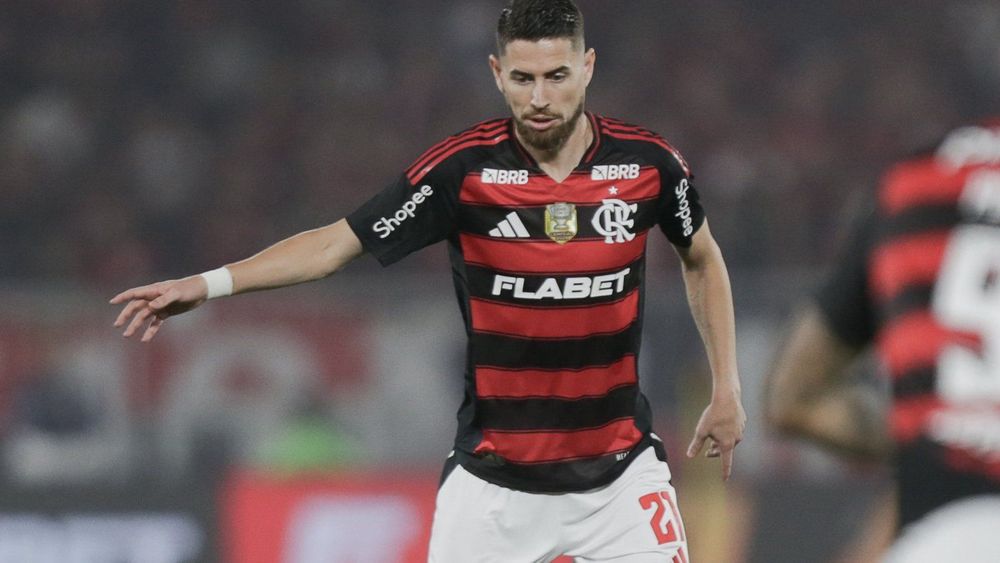
Born in Brazil, Jorginho moved to Italy as a teenager and developed through Hellas Verona before becoming a key midfielder for Napoli, Chelsea and Arsenal. He chose to represent Italy internationally, winning Euro 2020, before returning to Brazilian football with Flamengo in 2025.
For Vickery, his career demonstrates what Brazil’s development system was failing to recognise.
“Jorginho is another one,” he says. “Brazil would not have played him. He's not particularly fast, he's not particularly strong, but he has a wonderful passing range.
“He developed in Italy because Brazil wouldn't really play that kind of midfielder. He wasn't what they were looking for. And that's the first thing: what are you looking for?
“Nobody in Brazil was really looking for his characteristics. So he had to go abroad, and then he becomes an Italian international.”
His return to Brazil creates an obvious irony. The player who had to leave the country to find an environment that valued his qualities is now back in the domestic game, bringing that experience with him.
“That's why I hope the Portuguese coaches have broadened the mindset in Brazil,” Vickery says. “Because if you can produce another Casemiro, for example, who can also pass, that's much more valuable.
“Casemiro himself had to fight Brazilian football because he wanted to pass. He was another player who went abroad because he didn't quite fit the domestic expectations.”
Vickery traces that attitude towards the holding midfielder back much further than the modern game.
“The Brazilian idea was that the defensive midfielder was there to destroy,” he says. “That goes back much further. I found a quote from Zizinho in my 1985 book where he was already warning about this.
“He was saying that Brazil was transforming the holding midfielder from somebody constructive into a destroyer. The holding midfielder should be somebody like Rodri. He should be able to build the game. But because coaches are terrified of losing their jobs, they go for the player who won't make a mistake.”
That pressure starts in youth football.
“If you lose three games, you're out,” Vickery says. “So the coach thinks, ‘How do I avoid losing?’ And the easiest way is to have somebody who destroys rather than somebody who risks something with the ball.
“That's how you end up with the giant centre-backs and the destroyer midfielders. You are selecting for the immediate result rather than asking what kind of senior footballer this boy could become.”
The full-back position tells a similar story of Brazilian football struggling to adapt to changes it helped create.
“Full-backs became wingers,” Vickery says. “And then the wingers came back. So now you've got wingers again, and the question is: what is the full-back for?
“Brazil hasn't really worked that out. It's another position where the old solution doesn't necessarily work any more.”
The wider challenge is that Brazil no longer enjoys the exclusive advantage it once had in developing technically gifted players.
“Brazil still has technical talent,” Vickery says. “Of course it does. Estevão is a wonderful, wonderful player. Fabulous talent.
“But the rest of the world has caught up. So Brazil has to think about what it's doing. It can't simply say, ‘We're Brazil, we'll produce the players.’ You have to decide what you're producing and why.”
For Vickery, Jorginho’s career provides a neat illustration of the consequences when that question is not properly answered.
“The first thing is the idea,” he says. “What are you looking for?
“If you don't know what you're looking for, then you won't recognise it when it comes along. And I think that's happened in Brazilian football with midfielders.
“Jorginho is an example of somebody who had to go somewhere else to become the player that he could have been in Brazil.”
Now he is back, playing in Brazil and offering a living example of what the domestic system once overlooked.
The challenge for Brazilian football is to recognise the next Jorginho before he has to leave to become one.
Tim Vickery's book "Mundials: A South American History of the World Cup" is from Pitch Publishing - which is available here.
