
The USA's player-release problem
The 2026 FIFA U-20 Women’s World Cup in Poland provides a fascinating insight into the difficulties national team coaches face when trying to assemble their best squad outside a FIFA international window.
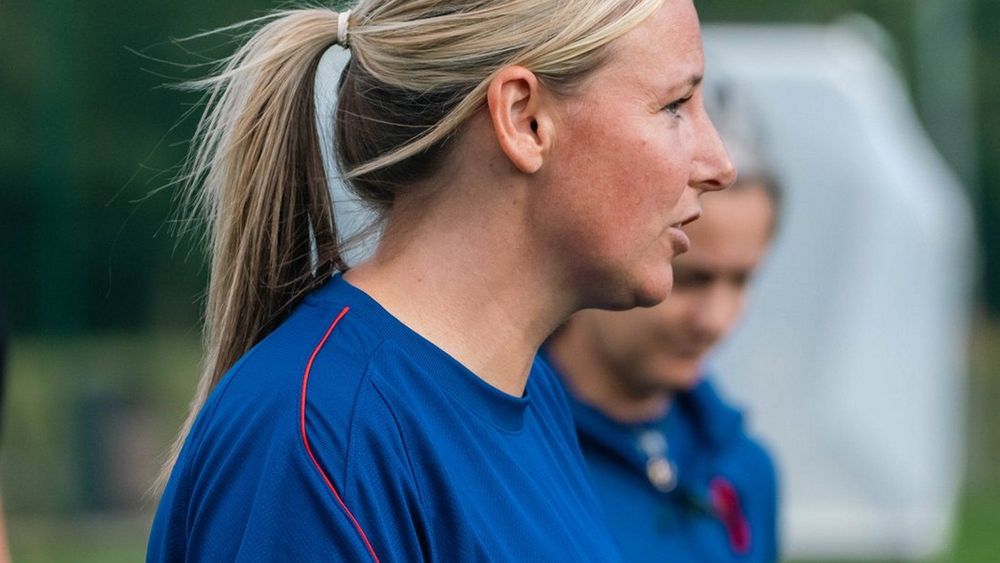
U.S. U-20 head coach Vicky Jepson selected 21 players from a provisional list of 55, but six players she wanted were ultimately unavailable because their clubs would not release them — five from the NWSL and one, Lily Yohannes, from OL Lyonnes in France.
FIFA-affiliated clubs are required to release players during international windows, but the U-20 and U-17 Women’s World Cups have not traditionally fallen within those windows.
That creates an increasingly awkward situation as professional women’s football becomes more competitive and clubs invest heavily in young players.
San Diego Wave retained Melanie Barcenas and Kimmi Ascanio, while Bay FC kept Onyeka Gamero and Claire Hutton. Seattle Reign released three players, including Emeri Adames, Ainsley McCammon and goalkeeper Evan O’Steen.
Jepson was particularly open about the impact on the players.
“It’s sad sometimes when a player is desperate to represent their country and they are not being released; that is something we cannot control,” she said.
“We can’t force a club to release a player.”
The coach also stressed that the players themselves should not be blamed.
“If they were not released, we have a conversation with the player, saying: ‘You were selected for the U-20 Women’s World Cup but unfortunately the club is not releasing you. We respect the decision in a way that we will still continue to support you and monitor you as a federation — we will not hold this against you because this is not your decision.’”
For Jepson, the player should ultimately remain at the centre of the decision.
“The athlete should always have the say because it is their career, not ours; we are here to support it.”
Not every club said no
Jepson was equally keen to point out that the story was not entirely negative.
She praised clubs such as Racing Louisville and Houston Dash for releasing Audrey McKeen and Linda Ullmark, despite both players being important parts of their professional teams.
“There’s a negative narrative around non-releases, I know that, I feel it, I feel sorry for the players but there are also positive stories here with some clubs who have been fantastic with their relationship and know what it means to the athlete to represent their country at this level.”
That distinction is important as the women's professional game continues to expand.
Why youth World Cups still matter
The absence of Yohannes is particularly interesting because Jepson believes these tournaments provide experiences that cannot simply be replicated at club level.
“We wanted anyone who was a ‘06, ‘07 and ‘08 because it is something that Emma [Hayes] is a big believer in, exposing players to World Cup experiences.”
Jepson believes the benefits extend beyond football.
“I think it is so important that they have that exposure to being away from home with their teammates for that amount of time, playing that amount of games for that tournament durability; you’re not just physically but mentally being away; being exposed to so many different tactical challenges.”
Players encounter different styles, environments and pressures at a World Cup that they may not experience domestically.
“You don’t get that just by playing in your club environment — you get that by going to these World Cups.”
Spain provides the clearest example of the philosophy. Their success across youth levels has helped create a pathway into the senior team, culminating in their 2023 World Cup triumph.
Hayes has also pointed to the disparity in youth international exposure, saying that Spanish players receive significantly more high-level international experience than players in the United States.
The USA squad still has plenty of experience
Despite the absences, the U.S. squad has an impressive youth pedigree.
Eight players are already professionals in the NWSL, while 13 come from eight NCAA programmes. Stanford and North Carolina each supply three players, with Penn State providing two.
Several have extensive youth international experience.
Evan O’Steen played in two U-17 World Cups and won the Golden Glove at the 2024 tournament. Kennedy Fuller won the Silver Boot at the same competition with four goals and three assists.
Four members of the current squad played at last year's U-17 World Cup in Morocco, while goalkeeper Caroline Birkel and forward Emeri Adames return from the U.S. team that finished third at the 2024 U-20 World Cup in Colombia.
Adames started all seven matches at that tournament and supplied four assists.
Jepson also highlighted the tactical flexibility available to her, particularly in midfield.
“Kennedy [Fuller] can play the 10 or the 6, Nyanya [Touray] the 10 or the 6, Linda [Ullmark] can play a 10 or a 9.”
Ullmark arrives in Poland in particularly good form after scoring a hat-trick in a 5-0 win over France during the June camp.
A truly global tournament
The Poland tournament features 24 teams divided into six groups, with the top two in each group and the four best third-placed teams progressing to the Round of 16.
Six nations — Benin, Ecuador, New Caledonia, Poland, Portugal and Tanzania — will make their U-20 Women’s World Cup debuts.
The tournament also illustrates the increasingly global nature of player development.
Canada's squad contains 16 players based at U.S. colleges, while England has players in the U.S., Sweden and Scotland. Japan has a Liverpool-based forward, Meo Itamura, while New Zealand also draws players from American colleges and Australia.
At the other end of the scale, several nations remain almost entirely domestic. Tanzania, China, New Caledonia and DPR Korea are examples.
That contrast makes the U-20 World Cup an important snapshot of how women's football is developing across different countries.
The next World Cup places
The tournament also comes with a wider qualification story.
FIFA has established an inter-confederation play-off process for the final three places at the 2027 Women's World Cup.
Uzbekistan, Papua New Guinea, Chinese Taipei, South Africa, Ghana and Ecuador will contest the preliminary stage between November 24 and December 5, with the top two advancing to the final phase.
They will be joined by two CONCACAF teams, Venezuela from CONMEBOL and one UEFA representative, with three World Cup places available.
For the players arriving in Poland, however, the immediate focus is much simpler.
They have a chance to experience a FIFA World Cup, test themselves against the best players of their generation and take another step towards senior international football.
For those left behind because their clubs said no, that opportunity will have to wait.
And as women's football continues to professionalise, the question of who ultimately controls a young player's international career is unlikely to disappear.
- Read the full version at Tim Grainey's Substack. His latest book is Beyond Bend it Like Beckham on the global game of women’s football. Get your copy today. Follow Tim on Twitter: @TimGrainey