They needed a striker.
Instead, they spent £2 million on David Rocastle, £800,000 on Scott Sellars and eventually £250,000 on Norwegian forward Frank Strandli. Then, in November, Eric Cantona left for Manchester United for £1.2 million.
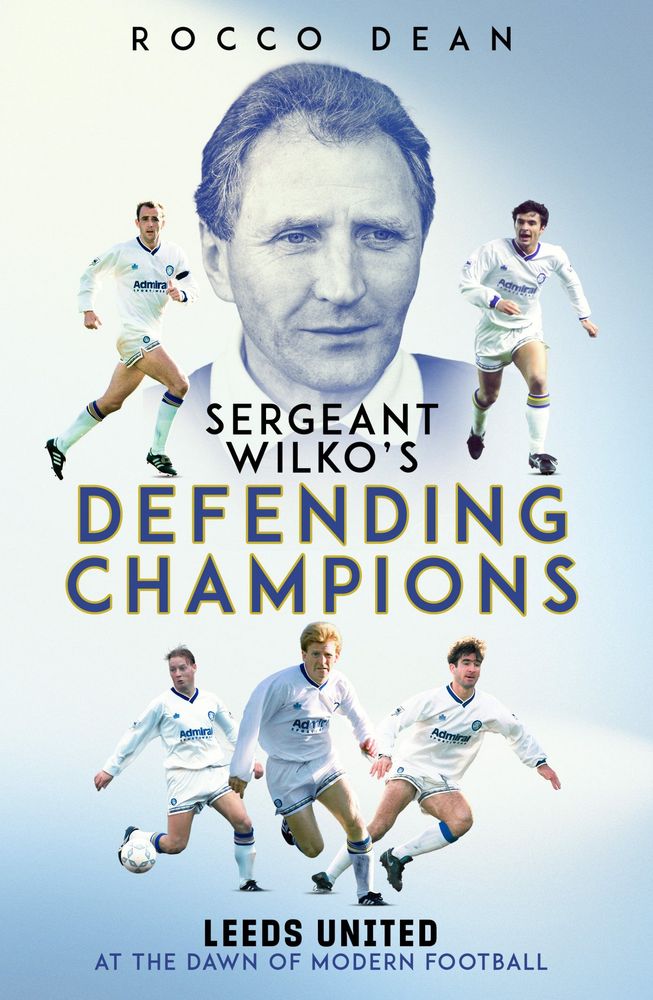
For Rocco Dean, author of a book on Leeds United's extraordinary 1992-93 season, the recruitment failure was one of the reasons the champions ended up 17th.
"They knew they needed a striker," Dean told Football Presse. "They'd lost Cantona, they'd lost Bobby Davison, and they didn't really replace them."
The problem was not simply that Cantona had gone. Leeds had been warned about the need for more firepower before the Frenchman eventually departed.
Dean recalls a transfer market in which Leeds were linked with a string of established forwards, but could not get the deal done.
"They were looking at Duncan Ferguson, they were looking at Chris Waddle, they were looking at Martin Dahlin, they were looking at Faustino Asprilla," he said.
"And you look at some of those names and think, if they'd got one of those players, it might have changed things."
Instead, Leeds' biggest summer signing was Rocastle, a magnificent player but one whose position did not fit neatly into the team Wilkinson had already built.
That left Lee Chapman and Rod Wallace carrying much of the attacking burden, while Cantona's departure removed another option from an attack that had already become heavily dependent on its established players.
Leeds did eventually sign Strandli from IK Start in January 1993, but the Norwegian was hardly the established Premier League goalscorer Wilkinson needed. He made his debut against Middlesbrough on January 30 and scored, but finished the season with just one league goal.
Dean believes the timing was symptomatic of a club caught between ambition and financial reality.
"They'd spent all that money on the East Stand, which was about £5 million, and they'd just won the league," he said. "But then they didn't qualify for the Champions League, so suddenly they've got this huge stadium project and they're having to rein things in."
The Champions League exit made that situation worse. Leeds were eliminated by Rangers in November after their extraordinary three-game European tie with Stuttgart had already consumed time and resources. The club had expected European football to be a major part of the new era.
Instead, Wilkinson was trying to rebuild while simultaneously protecting the club financially.
And then Cantona left.
The decision has been examined repeatedly because of what happened afterwards at Manchester United, but Dean believes Leeds' failure was broader than selling one player to a rival.
"They should have been looking at replacing him before he even went," he said. "You knew you needed another striker anyway, and then when Cantona went, suddenly you're really short."
The irony is that Leeds eventually found exactly what they had been looking for.
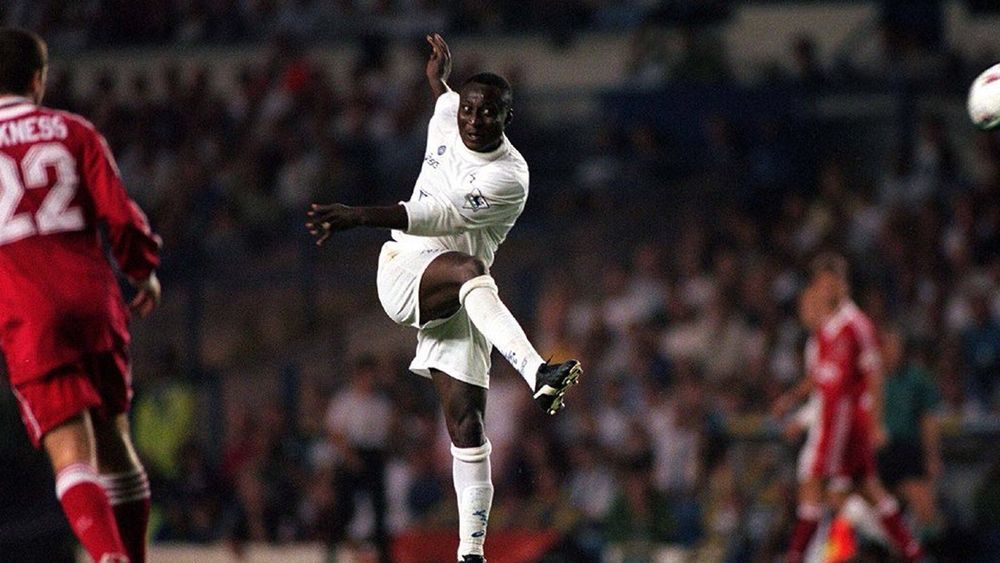
In January 1995, Tony Yeboah arrived from Eintracht Frankfurt for a club-record £3.4 million after a long search for a high-profile goalscorer.
It was almost a belated admission that the problem Dean had identified had never really gone away.
Yeboah scored 12 league goals in 21 appearances as Leeds finished fifth in 1994-95, immediately helping transform the side.
"Yeboah was the shot in the arm they needed," Dean said. "He gave them something completely different. Suddenly you've got this guy who can score from anywhere, and the team gets a lift from it."
That is what makes the transfer story of the Wilkinson era so frustrating.
Leeds eventually found the answer, but only after the collapse of the champions had already happened, after a season in which they failed to win a single away league game and finished 17th.
Dean believes Yeboah's later impact showed what might have been possible if Wilkinson had found his striker earlier.
"They could have got Yeboah earlier," he said. "I think if they'd got somebody like that in the summer of 1992, it could have been a completely different story."
Yeboah did not merely rescue Wilkinson's team. He extended its life.
Leeds finished fifth in both 1993-94 and 1994-95, and the manager who had looked close to the end after the disastrous title defence suddenly had another competitive side.
The painful part, Dean argues, is that the warning signs were there from the beginning.
Leeds had won the championship. They had an exceptional midfield. They had Chapman, Wallace and a defence that had just proved itself the best in England.
What they did not have was the next striker.
And by the time they found him, they had spent two years finding out exactly how much they had needed him.
Rocco Dean's book "Sgt Wilko's defending champions" is from Pitch Publishing - which is available here.