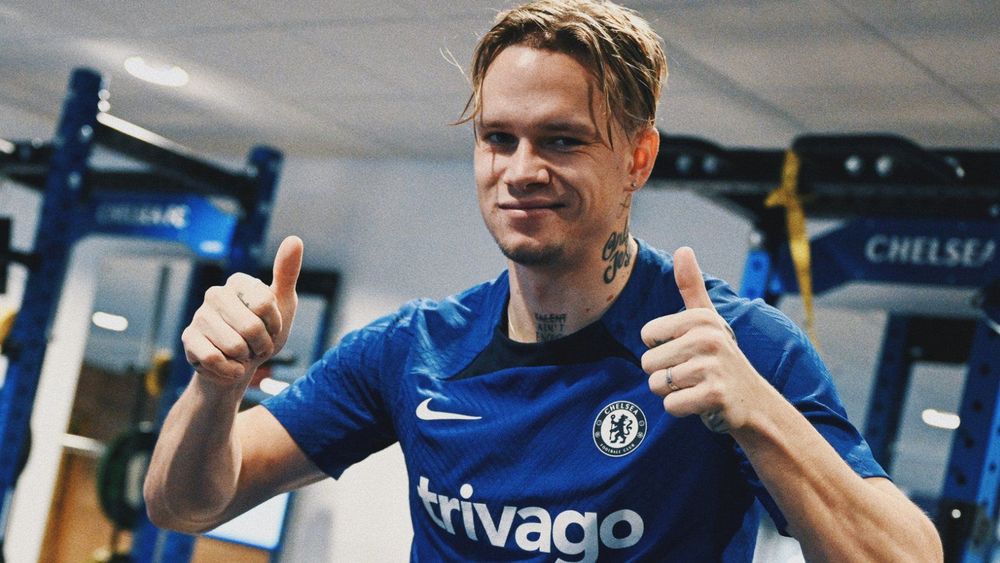
Shevchenko has launched a strong response to Mudryk's accusations over his doping suspension, claiming the winger's representatives repeatedly asked Ukraine's football association to find an employee willing to take false responsibility for the presence of meldonium in his sample.
The Ukrainian Association of Football (UAF) president rejected Mudryk's suggestion that the national organisation was responsible for the substance entering his system, describing his allegations as baseless and demanding a public apology.
Mudryk, who is currently on loan at Tottenham from Chelsea, was suspended from November 2024 until July 2026 after testing positive for meldonium.
In an interview published on Wednesday, the 25-year-old blamed the UAF for his lengthy absence from football, suggesting the substance could have entered his system while he was on international duty.
He also criticised the support he received during the case, claimed information had been leaked and questioned the association's handling of the investigation.
Shevchenko has now responded directly, rejecting the accusations and making a serious allegation about the conduct of Mudryk's representatives.
“His representatives repeatedly approached the UAF with a proposal to find an employee who would falsely take responsibility for the meldonium found in his doping sample,” he said in a statement.
“The UAF refused, as such a proposal contradicts the principles of our work.”
The former Chelsea and AC Milan striker described Mudryk's comments as “baseless slander against our people, who do their work honestly and professionally”.
He also said that investigations and audits carried out during the case had failed to establish when or where the substance entered the player's system.
Shevchenko disputed the suggestion that the national team had failed to support Mudryk. He said the UAF had complied with a request from Chelsea not to administer medication to the winger during international camps.
He also revealed that Ukraine head coach Serhiy Rebrov had allowed two of Mudryk's personal specialists to work with him while he was with the national team.
“Head coach Serhiy Rebrov also approved for Mykhailo to have two of his personal specialists work with him at the training camps,” Shevchenko said.
“These were the exact people who monitored his regimen and recovery, and helped him with his daily routine.”
The UAF president insisted the association had completed the necessary checks, provided information requested by Mudryk's representatives and remained in contact with those handling the case.
He also challenged the player to substantiate his claims rather than make accusations against individuals who, according to Shevchenko, had acted professionally throughout the process.
“If Mykhailo has evidence to back up his words, let him provide it,” he said.
“If no such evidence exists, I expect him to publicly retract his accusations and apologise to the people whose honesty and professionalism he has called into question.”
The dispute leaves Mudryk facing a public confrontation with the organisation responsible for his international career, with the two sides presenting sharply different accounts of the events surrounding his suspension.
Mudryk's representatives have been approached for comment in reporting on Shevchenko's response. The UAF's allegations remain claims made by its president, rather than independently established findings about the player's camp.