
He saw successive groups of young players emerge, watched the academy win the FA Youth Cup seven times in nine years and experienced the frustration of seeing talented graduates struggle to reach the first team.
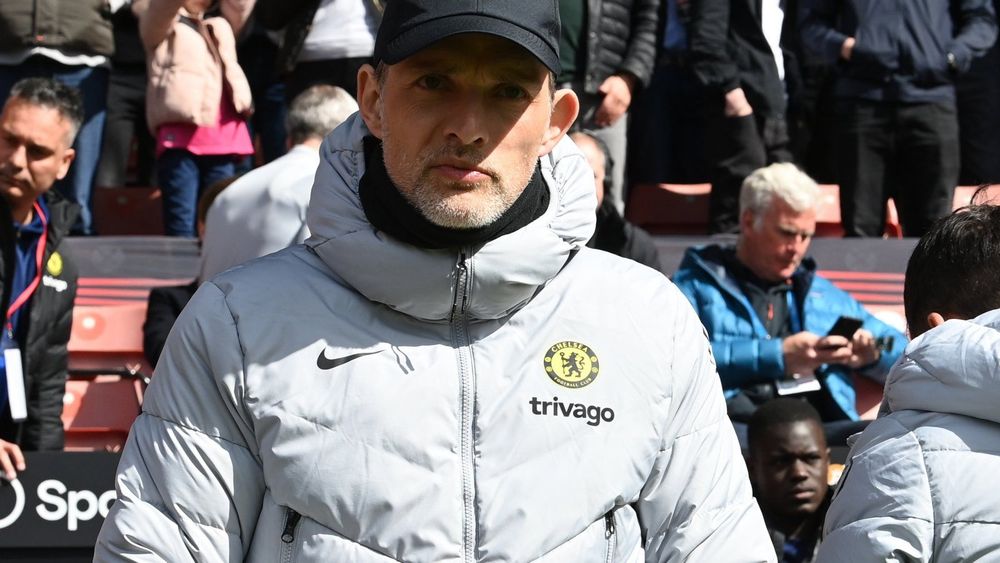
During that time, Chelsea appointed a succession of high-profile managers, many of whom had little incentive to look towards the academy. But Robinson remembers Thomas Tuchel differently.
The former Chelsea academy scout, who joined the club's recruitment team in 2012 and later held senior positions before leaving in November 2023, was told by academy director Neil Bath that Tuchel had made a point of meeting him on his very first day.
It was an introduction that immediately impressed Robinson.
Why Chelsea's academy graduates struggled to get opportunities
Chelsea's academy was producing exceptional numbers of professional players, but winning youth trophies did not automatically translate into first-team opportunities.
"All through the time when we were winning the FA Youth Cups, we couldn't get a player in the first team," Robinson tells Football Presse. "Because you have managers like Jose Mourinho, who's never played young players, you know, really whatever club he's been at.
"And the managers who were being appointed knew they were only going to be there for 18 months, two years. So they had no, you know, they were under such pressure for the results. It was difficult for them to play young players.
"It was a very frustrating time. We had really good, talented players coming through. Ruben Loftus-Cheek was a good example. He just couldn't break in. And when he did get opportunities in the first team, he didn't really take them that well. So that's the other side of it. The players have got to be ready."
Robinson believes that short managerial tenures and the demands of immediate results often worked against academy graduates. A manager arriving with a limited period to prove himself was naturally more likely to rely on established players than take risks with young footballers.
The problem was not necessarily a lack of talent coming through the academy. Chelsea had an extraordinary production line, but the pathway into the senior side remained difficult.
The photograph that made the academy's work worthwhile
The breakthrough finally came under Frank Lampard, whose familiarity with the academy and close relationship with its staff helped create the conditions for young players to establish themselves.
"And so the big change came when we had the transfer sanctions. Frank Lampard was in as manager. All of his staff were academy people. So he was in our academy with Neil Bath, the head of youth development, daily.
"And it was a very close-knit team then. And he was ready to give the young players like Mason, Rees and what have you, the opportunity. And they took the opportunity."
The significance of Chelsea's 2021 Champions League triumph was particularly powerful for the people who had spent years developing the club's young players. The photograph of Mason Mount, Trevoh Chalobah, Reece James and Tammy Abraham with their winners' medals represented something that had often seemed out of reach for the academy staff. "That was the thing. But they had been prepared for that point with all of their development over years and then their loans and everything. And it was just the right time, right place."
It was a striking illustration of how far the club's young players had come, after years in which the academy's success on the pitch had not translated into opportunities at senior level.
The Champions League victory also provided a reminder of the importance of having a first-team manager prepared to trust the players coming through the academy. For Robinson, that relationship was central to the work being done at Chelsea.
The message Tuchel delivered on his first day
When Thomas Tuchel arrived at Chelsea, Robinson heard something that immediately suggested the German understood the importance of that connection.
"When we got to Frank Lampard and the sanctions, the young players really got a break and then Thomas Tuchel, you know, I spoke to Neil Bath and he said that Thomas Tuchel had come to see him on his first day and said, look, I come from an academy background, I want to work with the academy, you know, and that's fantastic, that's what you want to hear as an academy team, that's the approach and that someone's approachable.
"And they weren't all, he certainly was and Chelsea should never have got rid of him, without any doubt, in my mind."
For Robinson, that approach was significant because it represented a willingness to understand the work being done below the first team, rather than treating the academy as a separate operation.
He had spent years working alongside Bath, who had built and led Chelsea's academy over more than two decades. The relationship between the academy and the first-team manager could make an enormous difference to whether young players received opportunities.
Tuchel's reported decision to seek out Bath on his first day, explain his own academy background and make clear that he wanted to work with the youth department was precisely the kind of message Robinson wanted to hear.
Why Robinson rated Tuchel so highly
Robinson's admiration for Tuchel extended well beyond his attitude towards the academy. He considers the German one of the best managers in the world, placing him immediately behind Pep Guardiola.
"After Pep Guardiola, I think he's the best manager in the world."
Asked why, Robinson pointed to Tuchel's ability to reproduce success at different clubs and his tactical work during his time at Chelsea.
"Because of the way he's been able to translate his success from one club to another and I think his tactical ability when he was at Chelsea was outstanding, I thought.
"If you got into a big game, I would pick him to be the one who would set the team up right, rather than anybody else if everything was running on the gate and I think he'll do very well with England."
Robinson was also surprised that Tuchel accepted the England job, recognising the difference between managing a club side and working in international football. But his respect for the manager remained clear.
"I'm surprised he took the job because obviously it's very different from working with a club, but I've got a lot of respect for him."
Tuchel's reputation and the pressures of management
The conversation also turned to Tuchel's reputation for falling out with people and his man-management.
Robinson did not dismiss the criticism, but he felt the circumstances surrounding Tuchel's departure from Chelsea deserved consideration. He suggested that the ownership had made the manager's position difficult and that there were aspects of the club's direction with which Tuchel would not have been happy.
"I think he was given a very difficult task at Chelsea and from what I hear, the ownership didn't make it easy for him, I don't think. There were some things that were just, he was not going to be happy with."
He also offered a broader perspective on the pressures faced by managers, drawing on his own experience in the dugout.
"But then as a manager, you have to believe in yourself because you're going to be standing up there on that touchline alone and even when I was managing him just in front of a few thousand people, you have to get used to the fact you're standing up there, half of the crowd would not only think they could do your job better than you, they'll be telling you, very loudly."
For Robinson, the relationship between a manager and an academy is not a secondary consideration. The academy can produce outstanding players, but its work needs to be understood and trusted by the person responsible for the first team.
Tuchel's approach to Neil Bath, his appreciation of the academy and his tactical ability made him, in Robinson's view, exactly the kind of manager Chelsea should have wanted to keep.
His verdict on the club's decision to part company with the German was unequivocal.
"Chelsea should never have got rid of him, without any doubt, in my mind."