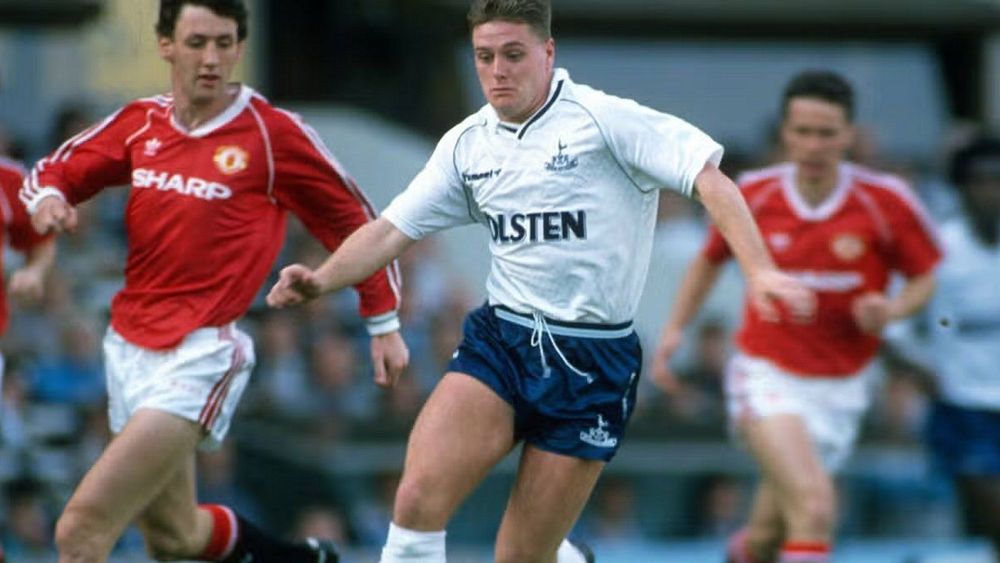
The two men came through the England set-up together, sharing dressing rooms, hotel corridors and the strange intensity of international football. Parker, already an established defender with Manchester United and England, quickly discovered that Gascoigne was unlike anyone else he had encountered.
There was the talent, of course. Gascoigne could change a game with a pass, a run or a piece of instinctive improvisation. But Parker remembers something else: the sheer force of personality, the mischievousness and the emotional intensity that made Gazza both irresistible and, at times, impossible to contain.
“He was just different," Parker began, speaking to Football Presse. There was nobody else like him. You couldn't coach Gazza because so much of what he did came naturally to him. You could try and explain something to him, but then he'd go and do something completely different and you'd think, ‘Well, actually, that's probably better than what I was trying to tell him.’
“He was a fantastic footballer, but he was also a character. He wanted to enjoy himself. He wanted everybody else to enjoy themselves. Sometimes that got him into trouble, but that was who he was. He wasn't trying to be anybody else.
“I think that's what people connected with. He was a footballer, but he was also just Gazza. He could make you laugh one minute and then produce something on the pitch that nobody else could do.”
Parker first encountered Gascoigne around the England set-up at a time when the Newcastle United midfielder was still establishing himself internationally. The England manager, Bobby Robson, had recognised his extraordinary ability, but also understood that Gascoigne needed to be managed carefully.
Robson, the former Ipswich Town manager and England coach who had guided his country to the 1990 World Cup semi-finals, became an important figure in Gascoigne’s development. He gave him freedom to play, while surrounding him with senior players who could absorb some of his energy.
“Bobby was brilliant with him. He knew exactly what Gazza was like. He knew you couldn't just say, ‘You're going to do this and you're going to do that,’ because Gazza wasn't going to listen in the same way as everybody else.
“But Bobby also knew how good he was. He wasn't going to take that away from him. He wanted him to express himself. He wanted him to play football.
“I remember how much attention there was around Gazza, even before the World Cup. Everybody was talking about him, everybody wanted to know what he was doing, and Bobby was always having to keep an eye on him. But that was part of it. He was a young lad who suddenly found himself in the England team with all these experienced players, and he was just enjoying every minute of it.”
The relationship between Gascoigne and his teammates was not always straightforward. He could be disruptive, restless and capable of turning the most ordinary moment into an adventure. Yet Parker insists that the behaviour was inseparable from the footballer.
“He was always doing something. You'd be in a hotel and you'd wonder where he was, and then you'd hear something happening somewhere else. He'd be winding somebody up or making everybody laugh.
“But you couldn't really be angry with him for long because he wasn't doing it maliciously. He was just a young lad who had so much energy. He wanted to have fun.
“That was Gazza. He could be completely daft, but then he'd walk out onto a football pitch and suddenly everything changed. You'd see him get the ball and you knew something was going to happen.”
That contrast became particularly evident during Italia 90. England arrived in Italy with doubts surrounding the team and manager. The memory of a disappointing European Championship two years earlier still lingered, and the early matches in Italy did little to suggest that England would become one of the tournament's great stories.
Gascoigne changed that perception.
Parker remembers the midfielder as someone who refused to be intimidated by the occasion or the opposition. He was not simply there to participate in a World Cup. He wanted to impose himself on it.
“Gazza wasn't bothered who he was playing against. He didn't care if it was somebody he'd never seen before or somebody everybody said was the best player in the world. He believed he could beat them.
“That was the thing about him. He had no fear. If he lost the ball, he'd want it back. If somebody tackled him, he'd get up and go again. If somebody tried to intimidate him, it probably made him want to play even better.
“He wanted to win everything. He wanted to win a tackle, he wanted to beat somebody one-on-one, he wanted to make the pass that nobody else had seen. He was emotional about football. When things went well, he was absolutely buzzing. When things didn't go his way, you could see the frustration.”
Parker was part of the England side that eventually reached the semi-final against West Germany. It was one of the defining matches of Gascoigne's career, but Parker believes the midfielder's importance to the team went beyond individual moments of brilliance.
He brought belief to a side that had initially struggled to find its identity.
“Gazza gave us something different. You had players like Bryan Robson, Gary Lineker, Peter Shilton and Terry Butcher, all of whom had been around for years and knew what international football was about. But Gazza brought this freshness.
“He didn't look at the game in the same way. He wasn't thinking about what people expected England to do. He was thinking about what he could do with the ball.
“That helped everybody. You'd see him trying something and suddenly the whole team would have more confidence. He could lift the mood. He could change the atmosphere in a dressing room just by being himself.”
The semi-final against West Germany ended in heartbreak. Gascoigne received a yellow card that meant he would miss the final if England progressed, and his tears became one of the defining images of the tournament.
For Parker, the reaction was entirely consistent with the player he had known.
“People talk about the tears, but that's what Gazza was like. He cared. He cared so much about football and about playing for England.
“He wasn't crying because somebody had criticised him or because he was worried about what people were going to say. He was crying because he thought he'd lost something. He thought he wasn't going to be able to play in the biggest game of his life.
“I think that was why people responded to him. Footballers weren't supposed to show that sort of emotion back then. You were supposed to get on with it and pretend everything was fine. Gazza didn't do that. If he was upset, you knew about it.”
Parker also saw the way Gascoigne’s fame changed after Italia 90. The midfielder returned to England as a national hero, but the attention was unlike anything he had experienced before.
“He went from being a young footballer to being Gazza, and there was a difference. Everybody wanted a piece of him. Everybody wanted to talk about him.
“But I don't think he ever really changed. That was the strange thing. He was still the same lad who wanted to have a laugh and play football. The world around him changed much quicker than he did.
“That was probably difficult for him because suddenly everything he did was news. You couldn't just be Paul Gascoigne anymore. You were Gazza, and people had expectations of what Gazza was supposed to be.”
For Parker, the lasting memory is not simply of a player who entertained England or a personality who became larger than football. It is of a teammate whose natural ability was matched by an extraordinary emotional connection to the game.
“He was one of those players you were lucky to play with. You knew you were watching something special.
“Sometimes he'd frustrate you, sometimes he'd make you laugh, and sometimes you'd just stand there and wonder how he'd done something. But that's what made him Gazza.
“There will be other great English players, of course. There will be players with more medals and players who have had longer careers. But I don't know if we'll ever have another one quite like him.
“He was a one-off. And when you played alongside him, you knew it.”
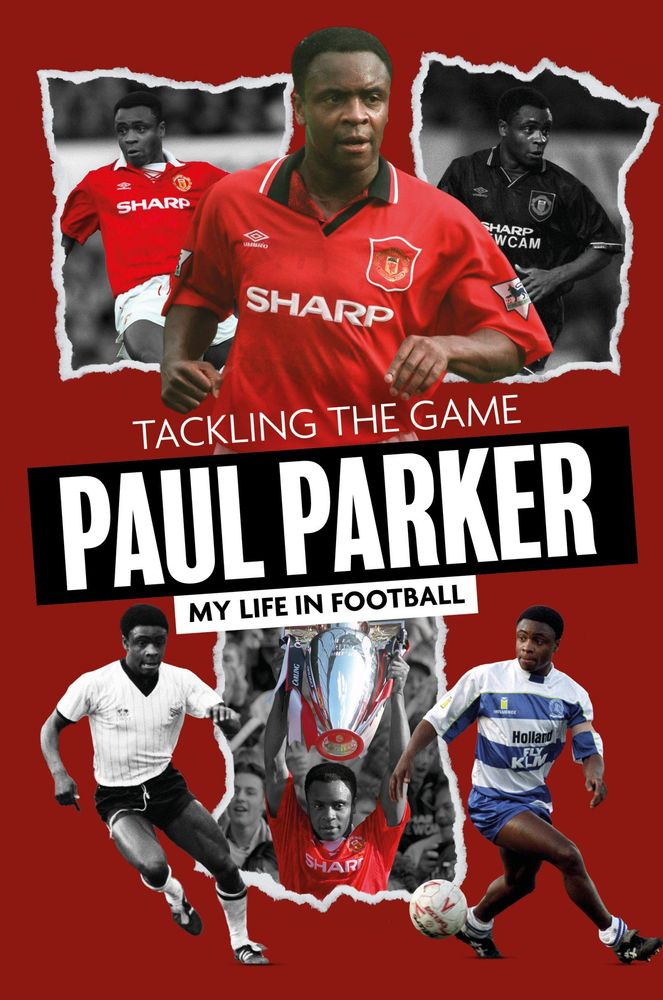
Paul Parker's book "Tackling the Game: My Life in Football" is from Pitch Publishing - which is available here.