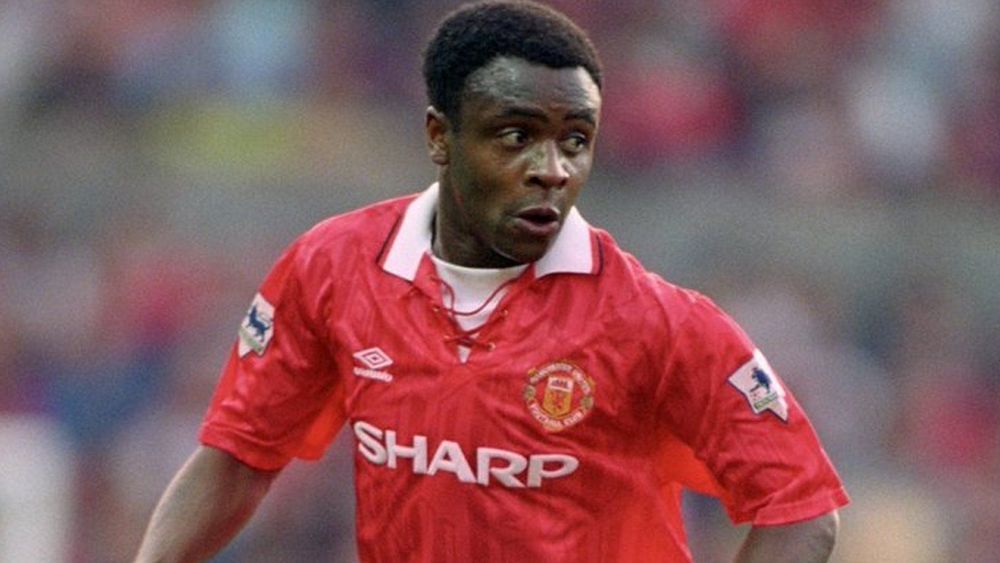
He won two Premier League titles, an FA Cup and a League Cup during his time at Old Trafford, while his 1992-93 title-winning campaign saw him make 31 league appearances. The following season, he played 40 times as United won the Premier League and FA Cup double. He had already established himself as an England international at Queens Park Rangers and played six matches during England’s run to the 1990 World Cup semi-finals, eventually collecting 19 caps.
Yet when Parker looks back at his career, the medals do not entirely silence the feeling that something was left behind.
The regret is not about what he failed to achieve. It is about what he believes he could have achieved if he had found his motivation again after an ankle injury began to derail his Manchester United career.
“Yes, on my part. It's my biggest regret at this moment in time, I would say, the way I allowed it to happen," Parker admits to Football Presse.
“But I was a little bit out of control with it because at that given time, my head wasn't in a good place. And being how everything was, who was I going to go to when I didn't really feel I had anyone to talk to about it or say something, or someone who I wanted to admit that I f***ed up in that sense?
“I'd lost my drive. I'd lost that to keep going. From the moment I got my ankle injury and that moment of my final season with United, I would say from there really I wasn't right.
“I didn't do enough to force myself to get back into the team. I didn't do enough. I thought I had, I was telling myself I had, but I know myself. When you're out the other side now, you know, if you're not honest now, you're never going to be. I've never done enough.”
It is a striking admission from a player whose career had already overcome obstacles that could easily have stopped him much earlier.
Parker had been developed as a centre-back at QPR despite his size, became an England international and was one of Bobby Robson’s key defensive players at Italia 90. Manchester United paid around £2 million to bring him to Old Trafford in 1991, where he became part of the side that would begin one of the most successful periods in the club’s history.
But Parker does not use those achievements to soften his judgement on himself.
“People say to me, ‘Oh, you won this, you won that.’ I say, ‘Never won enough.’
“Does it hurt? Yeah, a little bit. No, a lot. A lot hurts. A lot.
“Because I know myself. I know what I could have done. That's the difficult bit. It's not somebody else telling you that you could have done more. It's you knowing that you could have done more.
“And that's something that stays with you.”
That makes the memory of United’s first Premier League title particularly complicated.
Parker arrived at Manchester United because the club represented an opportunity to reach the highest level. He had initially considered staying in London, with Tottenham Hotspur his dream club, but Terry Venables told him he had to take the chance when United came calling.
He did, and within two years he was part of the team that ended United’s 26-year wait for the league championship. Manchester United won the inaugural Premier League title by 10 points, finishing ahead of Aston Villa after beginning the season as runners-up to Leeds United in the old First Division.
Parker remembers the disappointment of losing that first title race as something that drove the squad into the following season.
“Disappointment, frustration, and as a group, I think everyone was panicking really because the boss was on a warpath.
“Anything that just moved the wrong side of the needle, you knew you were in trouble because it had to be done the following year. There was no — otherwise maybe it could have been his job, but you thought about yourself then. You wondered if you were going to be there. What was he going to do? What were going to be his next changes if we didn't succeed?
“Luckily enough, we succeeded, and all we'd done was get Roy Keane. That's all it was. We just added Roy Keane.
“So that was the feeling really: this is more or less now or never, at least for us as a group.”
The previous season had taught United something else. Parker believes the team had become too predictable and, when opponents worked out how to stop them, lacked another way of playing.
That was why Eric Cantona’s arrival from Leeds United in November 1992 mattered so much. Parker had already described the Frenchman as giving United “another dimension”, but the change was not simply tactical.
It altered the mentality of the group.
“We hit a bad spot, but we had a better way of playing out of it. We knew we could get ourselves out of it. So we improved as a team.
“Everything changed and the dressing room changed a bit as well. It just relaxed everything. The boss was more relaxed as well, in certain ways, as relaxed as he could be.
“But there was just that belief after failing. And it was a failure. You can't argue the fact that whoever wins a league deserves to win a league. Simple as that. There's no, ‘But if this and if that.’ No. Shut up. It's a marathon. They sat in there longer, but they'd done their work maybe at a different time to allow them this opportunity.
“So we were just in better shape mentally to go into the following season.”
The title itself was secured at Old Trafford against Blackburn Rovers. By then, however, Parker says the achievement was about more than finally ending the wait.
It was about what the victory meant for the people who had built the team and for the manager who had spent years trying to turn Manchester United into champions again.
“No, it was all pure. It was just mad. It was enjoyable.
“None of us had been there before. Those players before had won FA Cups and a Cup Winners' Cup, but the fact of being at Manchester United and winning that first league title in 26 years was much bigger. It was the one that was going to live with them and live with everyone around them, which everyone would talk about.
“It's that bit you live off. You know, I'm not really talking to you if I don't win titles at Manchester United, that kind of thing. That's how things were then.
“And it was that relief, but then it was again knowing that whatever you've done — and there was that speech that the boss made before the game. The whole thing was about, you've done great, you've done fantastic. Shouldn't have maybe drunk too much the night before.
“But it was just about your next problem. Your next problem is the fact you've got to do it again.”
That was Ferguson’s Manchester United. The title was an achievement, but it was never allowed to become an excuse to relax.
Parker remembers the manager’s obsession with performance and the standards that came with playing for United. Even a 5-0 victory could prompt a dressing-room dressing-down if Ferguson believed the players had become complacent.
“He doesn't want anyone who looks too long at that medal. The moment you get that, you have a look and bang, it's gone.
“He's a breeder of serial winners. Anybody who doesn't show the DNA of a serial winner doesn't play in any of his teams.”
Parker’s own record illustrates how central he was to that first title-winning side. He played 31 Premier League matches in 1992-93, then 40 the following season as United retained the championship and added the FA Cup. Across his Manchester United league career he made 105 appearances, according to club records.
But his memory of the first title is also tied to the players around him.
Steve Bruce, Gary Pallister, Peter Schmeichel, Bryan Robson, Paul Ince, Mark Hughes, Ryan Giggs and the emerging Cantona all formed part of a dressing room Parker remembers as unusually strong in personality. And when he talks about leadership, he repeatedly returns to Robson and Bruce.
“When you talk about captains, Robbo's a captain. And there's only a few who were like that, who did it that way.
“I was lucky that when I was at United, I played for two of them like that, him and Steve Bruce.
“And that was the thing about that team. We had people who would tell you exactly how it was. We had people with fire in their belly. Everyone tried to antagonise them.
“The boss always said whenever we went away from home, the first objective was not to do anything to arouse the crowd. Don't do anything. Try and keep them quiet.
“Get the first corner, get the first one around the box, try to get control of the game early. In other words, win the battle to win the war.
“It sounds a bit cheap and nasty, but that's how it was. And it was quite simple. That's really what football's about.”
For all the success that followed, Parker believes the 1992-93 title was the moment that established something different at Manchester United.
He did not fully appreciate it at the time. He was too young, too immersed in his own career and too focused on what came next to understand how quickly the club was becoming something much larger.
“Not really. I think at the time you're still quite young in a way. You're looking at life at 28 or something like that, and all you're bothered about is what's going on with yourself.
“You knew United were big anyway, but to win those — I mean, the thing that really should have capped it was when we won that game against Blackburn Rovers.
“All of a sudden there was Danny McGregor, the commercial manager at the time, and he had us T-shirts to put on with ‘Champions’ on them. No one else had ever done that before.
“First Premier League, first season of the Premier League, and he just came bang. And that was what United were about. They were so quick with everything and they were the first to do everything on that sort of thing.
“Everyone just followed on from them.”
That first title was the beginning of something enormous for Manchester United. For Parker, it was also the high point of a career that had taken him from Fulham and QPR to England, the World Cup and Old Trafford.
And perhaps that is why the regret remains.
He knows what it felt like to reach the summit. He knows what it took to get there. And he knows that, after his ankle injury, he did not give himself everything required to remain there.
“People can say, ‘But look at what you've won.’ And I appreciate that. I really do.
“But I know there was more there.
“I'd lost my drive. I didn't do enough to force myself back into the team. That's the truth of it.
“I look back now and I know I could have done more. And that's probably the biggest regret I've got.
“But then I think about that first title. I think about what we achieved, what that meant to Manchester United and what it meant to all of us.
“You can't take that away. Nobody can.
“I was part of that. And I was lucky enough to be there when Manchester United became champions again.”
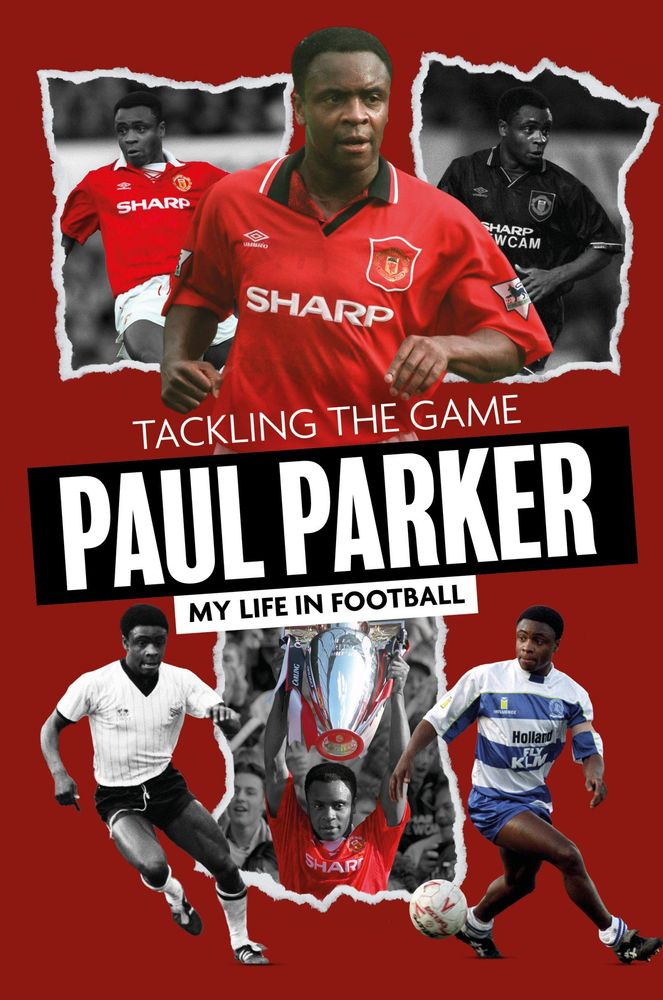
Paul Parker's book "Tackling the Game: My Life in Football" is from Pitch Publishing - which is available here.