
Looking back, Rafael believes the biggest difference between Dutch and German football was what the game demanded from a player.
“In Holland, it was more about details. Details on positioning yourself, details in the positioning game," Rafael tells Football Presse. “You knew that 80%, 90% of the game is ball possession, how to function with the ball and without the ball.
“I learned how to be significant in a team. That means that I needed to learn to adapt and to see every single player in my team, what are their qualities, the strongest point, the style of playing.
“I should know because I was also forced to play in different types of positions.
“So I can get the understanding of what the fullback does, what the attacking forward does, number 10, number 7, 8. Different types of positions, I should really know the function.
“So in details and the tactical discipline that I learned in Holland, and also the technique, how to handle the ball, because this is something we did every single day, passing drills.
“That’s what I learned in Holland.”
Germany offered a different education.
“And the difference in Germany, back in the day, was just about results. Why? Because you need results to maintain in the league, first of all, and you need results to qualify for something.
“And of course, in the end of all this, there is money attached to it.
“So if you win games, you get a bonus. If you perform well, there is a bigger opportunity to go to a better club.
“So that was the difference between these two countries.”
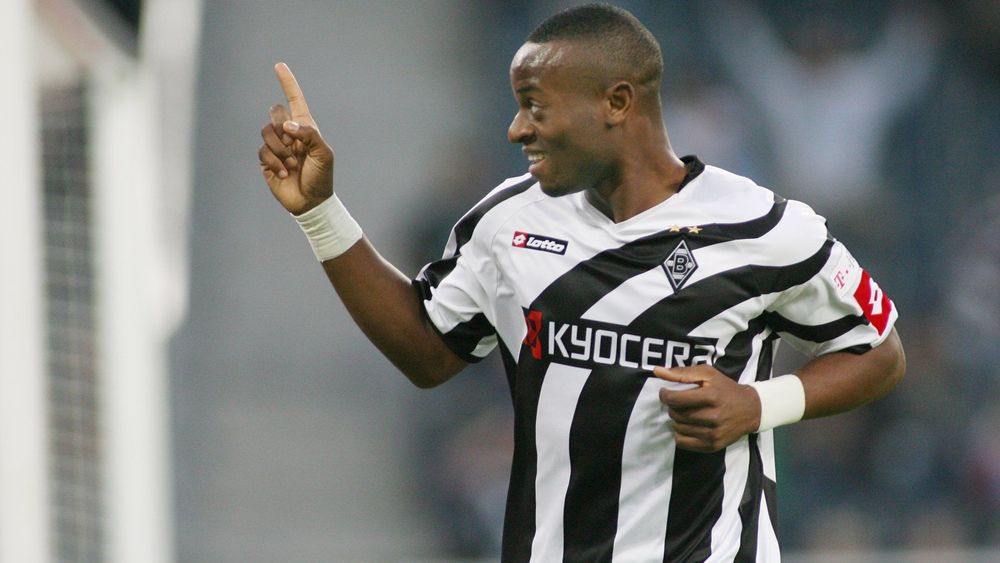
That lesson became particularly clear when Rafael moved to Borussia Mönchengladbach, his second club in Germany after Hertha.
“I came mid-season at Borussia Monchengladbach. We survived in the league, and then the second season we were relegated to the second league.
“So it was my first time really playing against relegation, learning to fight.
“Learning that sometimes it’s really only about the results.
“I was exposed to this type of football for the first time at Borussia Mönchengladbach. So I would say learning how to fight as a collective and also as an individual.”
Augsburg provided a very different experience and, in Rafael’s eyes, produced the best football of his career.
“At Augsburg was the best football because I had a really good chemistry with my partner who was playing with me as a striker, Michel Thurk.
“That was a chemistry that I felt, to know what he’s going to do with the ball, without the ball, so vice versa.
“And of course, as I came to Augsburg, as I mentioned before as well, I came as the missing piece that the club and the team needed.
“Because the year before they almost made it, and then the year after, when they signed me, we made it.
“So I came as a very important player who had to take the responsibility on the pitch. And off the pitch as well, also in the dressing room.”
By then, Rafael's Bundesliga experience also meant he had a different role within the group.
“In my character as a person, I always build a golden bridge between young players and an older player.
“Because back in the day I had already experienced playing Bundesliga, and we didn’t really have many players who played the Bundesliga.
“So I became one of the five, six, seven guys who had already Bundesliga experience.
“And with myself, to take this type of responsibility to be able to manage, to help the younger players also in the locker room, on the pitch.
“And also with my experience and performance.
“So I would say that was my duty to do at Augsburg.”
There was another German education waiting for Rafael when he came up against one of the country's most imposing defenders.
Asked to name the most difficult defender he faced during his career, his answer was immediate.
“The most difficult defender that I faced, I will say, was Lúcio.
“Lúcio, the time he was playing for Leverkusen and Bayern Munich. And of course he was a Brazilian national team player.
“That was the most difficult defender for me.”