
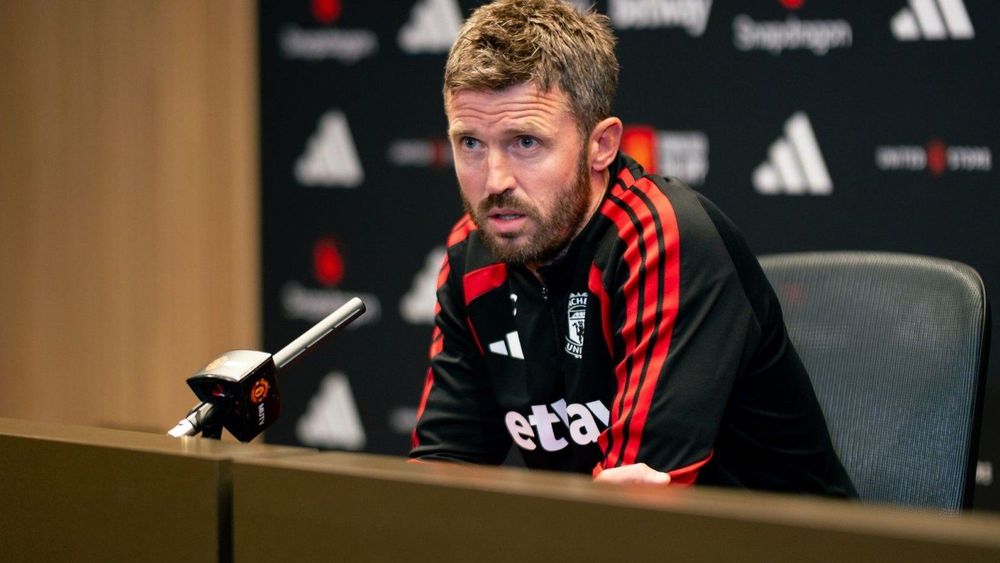
Despite a dramatic 4-4 draw at Old Trafford, the club decided that the former midfielder was no longer the right man to lead them forward.
The decision followed three matches that Manchester United's leadership had identified as a test of Carrick's position. They lost 2-0 at Chelsea, recovered to beat Roma 3-2 in the Champions League and then twice came from two goals behind to draw with Villa. The eight goals conceded across those fixtures did little to convince the hierarchy that the team's defensive structure was improving.
According to BBC Sport, chief executive Omar Berrada and director of football Jason Wilcox had made clear that performances and results needed to improve. A defeat, a victory and a draw were not enough to persuade them that Carrick could turn the season around.
The Villa match offered a reminder of why Carrick retained support among the players and supporters. When Patrick Dorgu scored the stoppage-time equaliser, the manager celebrated before making a point of placing himself among his players as they acknowledged the crowd. It was a gesture that reflected his instinct to protect the team rather than draw attention to himself.
That loyalty had been a feature of his time in charge. When Carrick initially took over in January, United valued his calm approach, positive communication and willingness to shield players from criticism. His team won 12 of their remaining 17 league matches, secured third place and qualified for the Champions League.
The club believed he had earned the permanent position, handing him a two-year contract in May. Yet the optimism of the summer disappeared quickly. United opened the new campaign poorly and were in the relegation zone by November, with just one league victory from their first ten matches.
The decision to dismiss him was not entirely unexpected. After the 3-0 defeat by Bournemouth, United took 44 hours to publicly confirm that Carrick would remain in charge, although he was reportedly informed earlier. His position remained under scrutiny during the subsequent run of fixtures.
The process became increasingly uncomfortable as discussions over his replacement developed. BBC Sport reports that Berrada contacted Carrick's agent on Monday to explain that he and Wilcox would meet co-owner Sir Jim Ratcliffe in Monaco, where the manager's future would be discussed. Wilcox subsequently spoke directly to Carrick, with both conversations understood to have included the possibility of a recommendation on his position.
By then, United were already examining the possibility of bringing in Mauricio Pochettino. The club knew of a release clause in the Argentine's United States contract and began discussions over activating it.
The Manchester Evening News, in reporting the reasoning behind the dismissal, said United's hierarchy believed the squad was considerably stronger than its league position suggested. The club felt a managerial change could produce a better response from a group expected to compete much higher up the table.
Carrick leaves after ten months in charge, having moved from a successful interim appointment to a permanent role and then an abrupt dismissal. His final weeks were difficult, but his standing among supporters appears to have survived the circumstances of his departure.