There was a time when a Celtic-Rangers match felt less like a football fixture and more like an eruption waiting to happen.
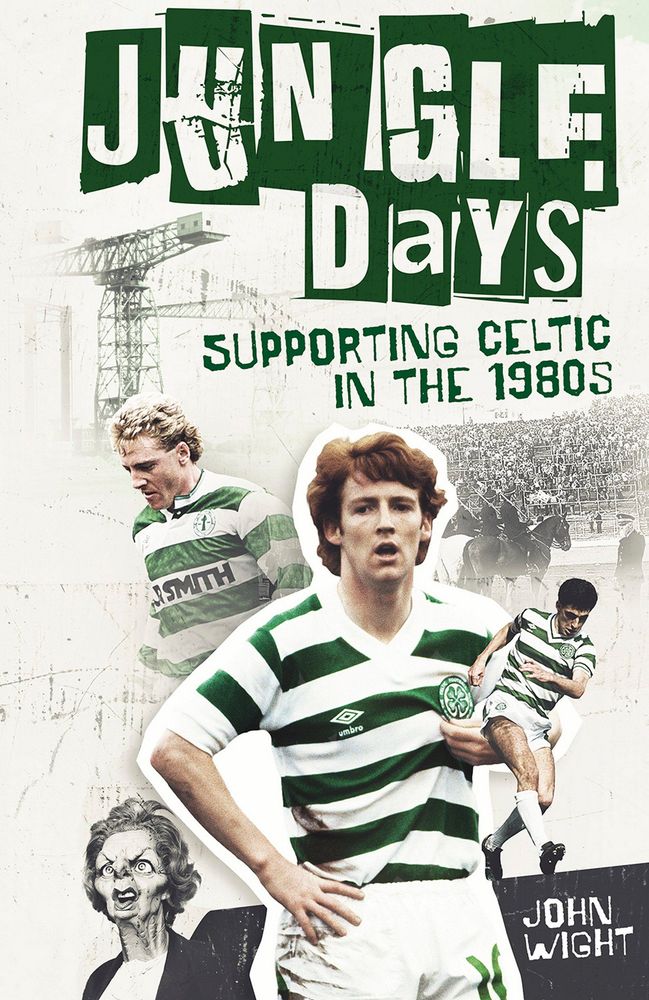
John Wight was a teenager watching Celtic from the Jungle during the 1980s, when the Old Firm rivalry was intertwined with the religious, cultural and political divisions running through Scottish society.
"It was working-class civil war," Wight told Football Presse.
"It was working-class civil war, both united, predominantly, not all, but predominantly working-class support. But there, as I say in the book, all congruence ended."
The rivalry had deep historical roots, with Celtic's Irish Catholic identity set against Rangers' association with Protestantism and loyalism. Wight believes those competing identities gave the fixture an intensity that is difficult to understand without appreciating the society surrounding it.
"They are loyal to the Crown, they are loyal to the status quo, they're loyal to the boss class. We're rebels, we're in rebellion, that's our history."
"And because of the contending history in Ireland with loyalism and with the occupation of Ireland by the British state and so on, it just feeds into the hatred that existed."
"In the '80s it was unbridled, unfettered, unabashed and unapologetic mutual hatred."
One match remains the defining example.
The 1980 Scottish Cup Final at Hampden ended with Celtic beating Rangers 1-0 after extra time, but the football was quickly overshadowed by a mass pitch invasion and fighting between rival supporters. More than 200 people were arrested and both clubs were fined £20,000; the disorder also contributed to the subsequent banning of alcohol at Scottish football grounds.
For Wight, the scenes demonstrated just how deeply the rivalry had penetrated the culture of the two clubs.
"The 1980 Scottish Cup Final, Celtic and Rangers, the infamous scenes on the pitch which eclipsed the game, where two sets of fans on the pitch were involved in this mass brawl, and it was broadcast to the world."
"I don't think you've seen scenes like that in many games around the world."
"It was proof positive that in Scotland, it wasn't just a minority aspect of supporting the club. It was the DNA of both teams. It was entrenched in the DNA of both teams."
Wight remembers the atmosphere as genuinely dangerous.
"Quite remarkable looking back when I think of those times and the Celtic-Rangers games that I attended. In many respects, you kind of took your life in your hands."
But there was another dimension to those fixtures. Wight believes the danger, intensity and tribalism were part of what made the games so compelling for supporters of his generation.
"I relish the memories of that powerful passion and hatred between two sets of fans."
The modern Old Firm remains one of football's great rivalries, but Wight believes the experience has changed considerably.
"Football is a different game now. It's money, it's comfort, it's a fan experience. It's becoming more sanitized than it was in the '80s for good and bad reasons."
One of the most visible changes concerns away supporters.
During Wight's time following Celtic, Rangers supporters could occupy an entire stand at Celtic Park, with Celtic fans receiving the same treatment at Ibrox. That practice was subsequently removed for security reasons.
"Back in the '80s, Rangers fans, when they played at Celtic Park or Parkhead, they would cover a whole stand to themselves, and vice versa when Celtic played Rangers at their ground at Ibrox."
"That's gone for various reasons. I think they're trying to bring it back."
Wight believes the atmosphere created by having opposing supporters physically facing each other was worth preserving.
"I think they should bring it back, because were it, the advantage of that in terms of policing and security and safety, I think pales into comparison with the atmosphere in the ground at these games, having a full stand of opposing fans."
That intensity also provides the backdrop to Wight's memories of the great players who played in the rivalry.
One of the most interesting comparisons in the interview concerns Celtic captain Paul McStay and Rangers star Paul Gascoigne.
McStay was Celtic's one-club midfielder, making 677 appearances between 1982 and 1997 and becoming one of the most decorated players in the club's history. Celtic themselves describe him as one of their finest-ever players.
Wight has enormous admiration for him.
"Fantastic. He came into the team in the late '80s, nicknamed the Maestro."
"Great passer of the ball, great leader. One club player."
But when asked to compare McStay with Gascoigne, Wight refuses to let his Celtic allegiance cloud his judgement.
"The Gascoigne?"
"Paul Gascoigne was world class."
"Paul McStay was fantastic, but Paul Gascoigne was a different order."
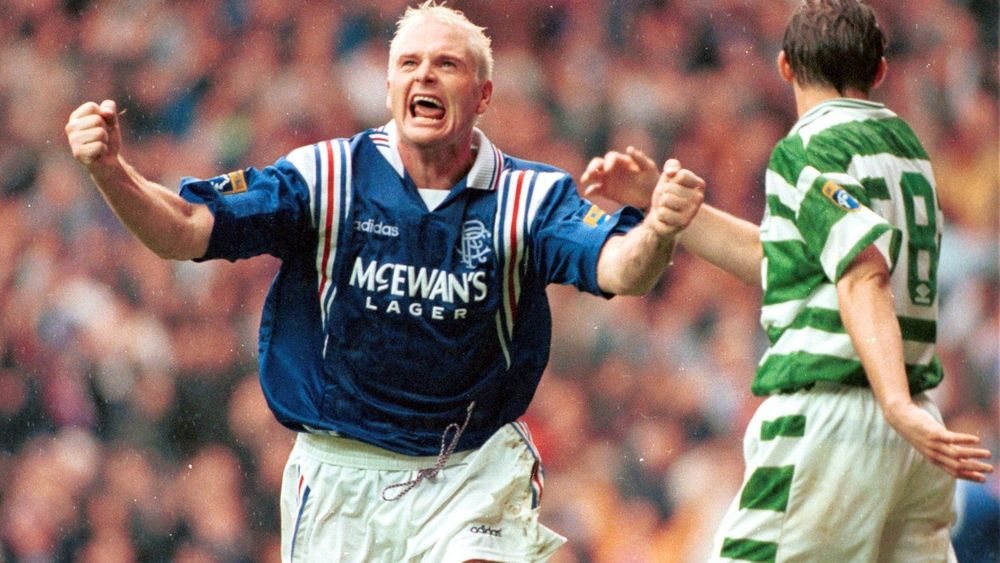
Gascoigne joined Rangers from Lazio in 1995 for a then-club-record fee of around £4.3 million and immediately became one of the biggest stars in Scottish football. In his first Old Firm league match at Celtic Park, he scored in a 2-0 Rangers victory — a game that proved decisive in the title race.
For Wight, it was Gascoigne's ability to decide matches that separated him.
"Paul Gascoigne's goals, his individual skill, the way he could change games, his presence on the pitch."
"I mean, even though I'm a Celtic man and I'm a great fan of Paul McStay, I have to be honest and say Paul Gascoigne was a player who, in his prime, could get into the first team in any team in Europe."
"I'm not sure that Paul McStay could because there were so many other great European players in his position at the time."
"But certainly Paul Gascoigne, he was that game changer. He was just such a unique talent."
That judgement is particularly striking because Gascoigne became one of the defining figures on the Rangers side of the rivalry during the mid-1990s.
His time at Ibrox was spectacular but turbulent. He helped Rangers win two league titles and a Scottish Cup, while his Old Firm appearances became some of the most emotionally charged games of his Scottish career.
The rivalry eventually became a stage on which individual personalities could become almost as important as the teams themselves.
Wight's memories of the 1980s belong to a different era, when McStay, Roy Aitken, Davie Cooper and others were identified so closely with their respective causes.
But Gascoigne's arrival demonstrated that the Old Firm could also attract players of genuine international stature and turn them into central figures in the rivalry.
For Wight, though, something fundamental has changed.
"The difference today... is that away fans, when Celtic and Rangers play, don't get a ticket allocation like they used to."
And that change is symbolic of his wider argument about modern football: safer and more comfortable, certainly, but less raw.
"It was a sense of me showing defiance of my own lived experience as a son of Irish migrants in Scotland."
The Old Firm has survived every change to Scottish football, but Wight's memories capture a period when the rivalry was not simply an important football match.
It was identity, culture and social history compressed into 90 minutes — sometimes with consequences that lasted far beyond the final whistle.
John Wight is the author of "Jungle Days: Supporting Celtic in the 1980s" from Pitch Publishing - which is available here.