
The former Arsenal and Bournemouth player had moved into coaching after working in academy football and the English lower leagues, but the opportunity to take charge of a national team represented a very different challenge.
Bangladesh needed rebuilding, and Day was attracted by the chance to create something rather than inherit a team already competing at the highest level.
“I had an Australian agent who had the rights to find a Bangladesh coach and they wanted an English coach and someone that was youngish and been involved in an academy background, which I had been at Arsenal and Charlton, developing as a coach,” Day told Football Presse.
“And then obviously I went into first team and he asked if I was interested.
“I met one of the presidents over in London. We had a good chat and I explained my ideas and how I see it and where I wanted to try and take Bangladesh football.
“He explained where the country was and where the players were at, and they was on a bit of a low.
“They'd been beaten in some games for qualifiers and football was on the way down. So he wanted someone to first of all stop that and then try and build a squad of younger players up to try and take football forward again.”
That challenge immediately appealed to Day.
“That’s what really caught my attention,” he said.
“That’s something that I wanted to do. I wanted to start somewhere that needed to be able to rebuild and you had a bit of time to create a good environment and try and take a team forward.
“And that interested me and decided that it was the right thing to do.
“And it was a chance at international football, which you don't get very often. So once I saw it all and spoke to one of the presidents, I knew straight away that it was for me and wanted to give it a good go.”
Day quickly discovered that Bangladesh possessed an enormous appetite for football, even if the infrastructure was not yet capable of matching it.
“There is so much potential in Bangladesh,” he said.
“I think there's 180 million people. Unfortunately the structure and foundations are not quite where they need it to be to start developing young players.
“I haven't been over there for a few years now, so I'm not sure if they started that process, but there's lots of Bangladeshis which I have seen playing abroad and got dual national now.”
Since Day's time in charge, that diaspora has continued to play an increasingly important role for Bangladesh.
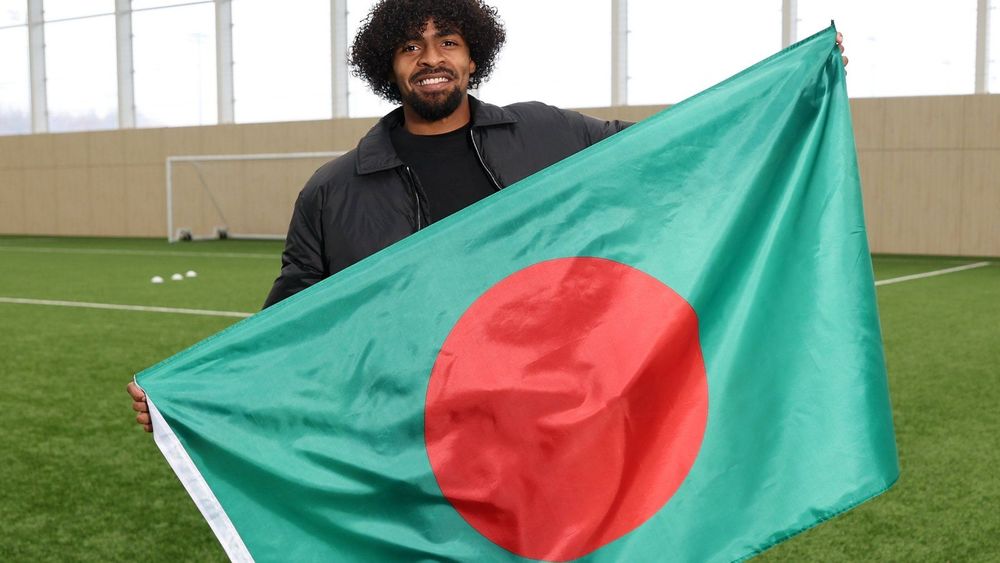
Hamza Choudhury, born in Loughborough and developed through Leicester City's academy, switched his international allegiance from England to Bangladesh in 2024. Canadian-born midfielder Shamit Shome has also represented Bangladesh after previously playing internationally for Canada at youth level.
Day believes players with links to Bangladesh who have developed in stronger footballing environments can make a significant difference.
“If you look at Choudhury and Shome from Canada, they've now playing for Bangladesh, which is going to help them massively going forward,” he said.
But Day believes the potential goes far beyond the players who can be recruited from abroad.
“The people of Bangladesh love football,” he said.
“They love it as much as cricket in my opinion.
“They just haven't had the success that cricket's had over there, and maybe there's not the sponsorship and money that cricket have to be able to develop it quicker.
“But the Bangladesh people, fantastic people.
“They love their football. They want to win games. They want to be successful. They support their teams, and they have done, win, lose or draw, they're still there supporting.
“So you know that they're fully behind you.
“And they, like any country, they have their moments where you get beat and they're disappointed. But whenever I've watched games and been involved in games, there's always been a high level of support and wanting the team to do well.”
Day also learned that coaching internationally required more than simply taking his existing methods and imposing them on a new country.
His experience in Asia changed his approach to coaching.
“I think what I learned from Asia is you have to adapt straight away to the culture of the country that you're in,” he said.
“You have to make sure you involve the local coaches. You have to make sure you're polite. You have to learn how they live, how they train, first of all.
“And then you have to bring your ideas to it and find the balance of making sure that you're getting the correct work and detail into what you're doing, but also not overstepping the mark on how things are done before.
“I think if you go in with that mindset, then the local coaches and players are open to listening because they want to improve.
“But I think you have to respect everyone that's around that environment, and you have to spend time speaking to people in the country that you're working in.
“You have to make sure that you're open to ideas from what they've had previously.
“And I think that then is a good ingredient for you to be able to work in that country and get respect from the local coaches and the local players.”
For Day, earning that respect was fundamental to improving the team.
“And I think if you do that, players respond, and then they will react and do how you want things being done to try and make the team better,” he said.
The results gave Day plenty to be proud of.
Bangladesh qualified for the Asian Games group stage for the first time, defeated Qatar in the group stage and also qualified for the World Cup group stage.
“We qualified through the first round, which had never ever been done before from Bangladesh,” Day said.
“Again, fantastic achievement.
“We beat Qatar in the group stage, which would be unheard of.”
Day also looks back fondly on the tournaments in which Bangladesh began to rediscover its enthusiasm for the national team.
“I think actually working with Bangladesh, having really good memories of some really good tournaments and building a squad of players up from being really low down and at breaking point to bringing football back and enthusiasm back to Bangladesh,” he said.
“We won some really good games, played in some really good tournaments, qualified for the World Cup group stage, won some minor three-nation tournaments and got the buzz back in Bangladesh football.
“That will always play a part of me and how welcoming the people was.”
Yet one achievement still bothers Day.
The 2018 SAFF Championship represented an opportunity to take the rebuilding process even further, only for Bangladesh to fall short in the group stage.
“Looking back, one of my biggest disappointments with the national team,” Day said.
“We won the first two games comfortably, and I think we thought we was in the semi-finals and we just needed to draw the last game.
“And unfortunately, we didn't do that.
“But the squad we had, looking back, it still disappoints me now because I think we were good enough to win that tournament.”
Day believes the circumstances made the disappointment even harder to accept.
“We'd done the Olympics, Asian Olympics, and we qualified for the group stage, which is the first time ever,” he said.
“We had a good group of players, was really fit, was organised, was playing good football, and we just fell short in the last game.
“And that's a disappointment for me because I really felt that we could have won that championship.
“To finish getting knocked out on goal difference was really a bit of a pill to swallow.
“But we played some really good stuff in that tournament. It was just a little bit unlucky on how it all worked out.
“That was one of the tournaments that if I could go back and play again, hoping that we could just get through that last game, I genuinely believe we would have got through to the final.”
For all the frustration, Day believes his time in Bangladesh demonstrated exactly why coaches should be prepared to step outside their comfort zones.
“I would always recommend coaches going to work in different countries,” he said.
“I think it gives you a fantastic experience. I think you learn so much, not just about coaching but about life.
“You meet new people, you see different cultures. It does take you out your comfort zone.
“And it can be difficult when you've got a family, because sometimes your family won't travel, they'll stay at home, so there's long periods away.
“And it does test you as a person and your character.
“But I had a fantastic time, had some fantastic memories, and would do it again in the future.
“It is a big jump and you have to go fully committed into it, but I think there's lots of benefits from working abroad.
“So yeah, I would highly recommend doing it for any young coach that has an opportunity to go down that path.”