
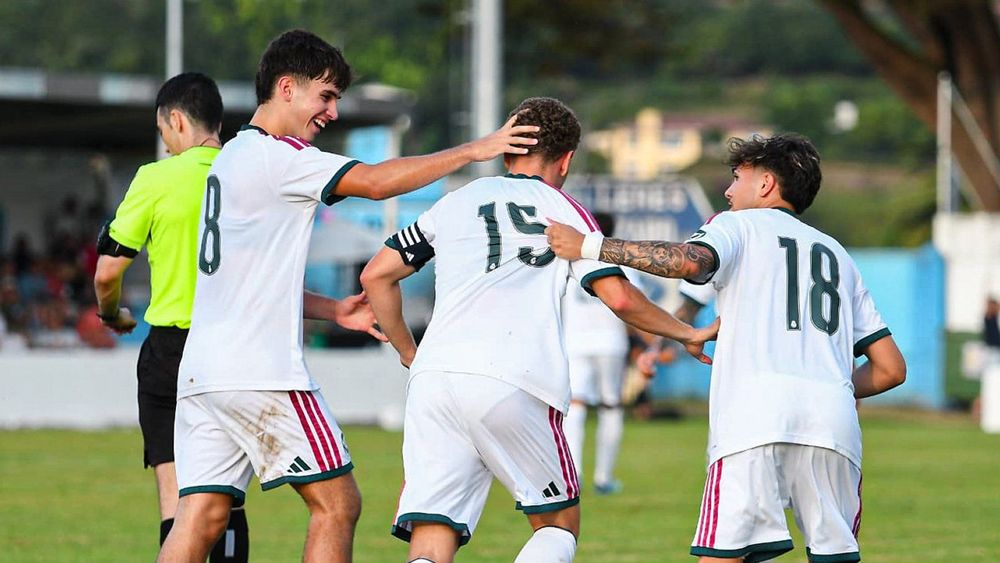
The €210 million Real Madrid generated from academy players this summer was the headline figure, but the success of Valdebebas goes far beyond transfer income.
The club’s academy has produced sporting and financial returns at the same time, with success in La Liga, the Copa de Campeones, the UEFA Youth League and the Under-20 Intercontinental Cup complementing a transfer model that increasingly goes beyond traditional loans.
Real Madrid’s academy players have also been prominent across Spain’s national teams. Thirty-four footballers developed at Valdebebas represented the country’s men’s sides during the recent international period, from the senior team managed by Luis de la Fuente to Hernán Pérez’s Under-16 side.
The strategy is built around identifying players with the potential to reach the highest level. Winning matters, but it is viewed primarily as a consequence of developing talent capable of eventually helping Real Madrid’s first team.
That pathway can take several forms. Players such as Raúl Asencio and Thiago Pitarch have moved closer to first-team involvement, while others become attractive to major European clubs without ever establishing themselves in the senior Madrid squad.
This summer provided a clear example. Nico Paz moved to Como for €60 million, while Fulham paid €40 million for Gonzalo García. Víctor Muñoz, Mario Gila, Álvaro Rodríguez, Álex Jiménez, Palacios and Jacobo also generated fees above €10 million, while the wider total included players such as Valde, Mario Martín, Fran García and Fran González.
Florentino Pérez and José Ángel Sánchez have placed Manuel Fernández at the centre of the academy structure. As director of the youth system, Fernández oversees a network involving around 300 players, 50 coaches, analysts and physical trainers, supported by 40 scouts, including 12 based in Madrid.
The recruitment operation is headed by José Oriol Gil-Delgado, while Wladimir de Dobrynine coordinates the development structure and Joaquín González oversees methodology and coordination between coaches. Alberto Mori also occupies a key role across the academy, linking players, coaches and medical staff.
The famous trials that once formed part of the Valdebebas mythology have disappeared since the pandemic. The club has instead built a more structured recruitment and development system, while also adapting its approach to the restrictions surrounding the recruitment of young players.
The model is not limited to producing players internally. With 13 Castilla players leaving after last season, Real Madrid also invested in prospects capable of contributing immediately while retaining first-team potential.
Sergio Martínez and Óscar Naasei were among those arrivals, with the club spending more than €2 million on the pair.
That combination of recruitment, development, competitive success and intelligent exits explains why Valdebebas has become one of football’s most productive academies. The €210 million figure is impressive, but it is the system behind it that has made the academy so valuable.