
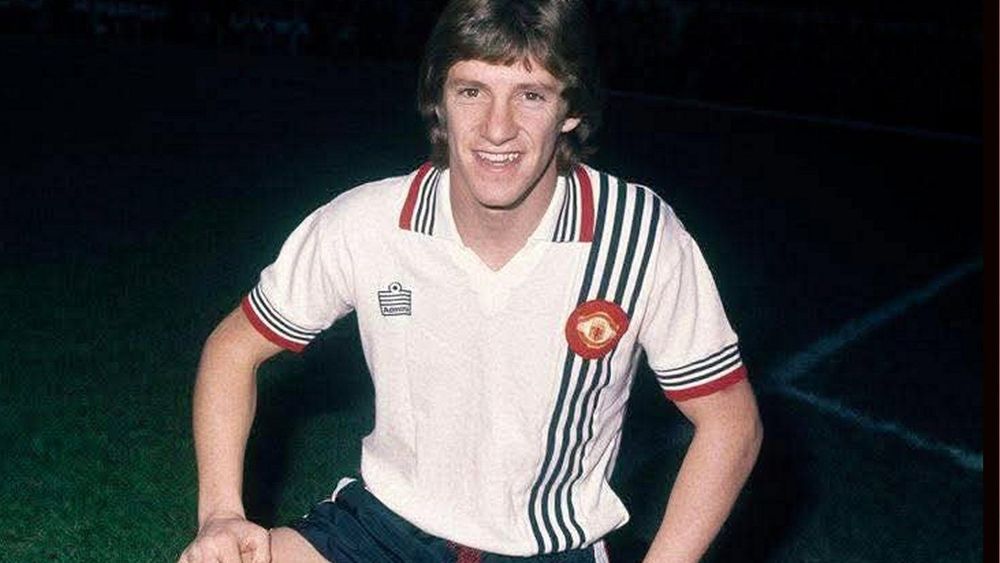
Hill was only 21 when he joined Chicago Sting on loan in 1975, but his performances in the North American Soccer League were impossible to ignore.
He scored 16 goals in 21 appearances, added seven assists and finished third in the NASL's points standings.
Then came the ultimate recognition: Hill was selected in the league's First Team All-Star side alongside names such as Pelé, Peter Bonetti, Mike England, Werner Roth, Arfon Griffiths and António Simões.
It was an extraordinary collection of talent. Pelé had only just arrived in America with the New York Cosmos, while Bonetti, England and Simões were established internationals.
Hill was the young English winger who had arrived from Millwall.
“I was only a kid and they wanted me to get some experience and to use it as a pre-season,” he recalled to Football Presse.
What followed was far more significant than anyone could have expected.
“I scored a lot of goals and was named in the All-Star team alongside Pele.”
The performances also caught the attention of Manchester United.
Tommy Docherty signed Hill from Millwall for £70,000 in November 1975, shortly after his return from Chicago. Docherty was rebuilding United with youth and attacking football, and Hill was exactly the sort of player the manager wanted.
But there was a direct link between Chicago and Old Trafford.
Bill Foulkes, the legendary Manchester United defender who had spent almost two decades at the club, was Hill's coach at Chicago Sting.
Hill believes that relationship mattered.
“Bill Foulkes was my manager in Chicago and he obviously still had strong contacts back in Manchester.”
And Hill is in no doubt that his form in America accelerated the move.
“I think Manchester United had already pinpointed me as a talent before I went to America. However, I'm certain that my performances out there sealed the deal.”
That makes Hill's experience particularly relevant to the debate about American football development today.
He was not simply a famous player visiting the United States at the end of his career. He was a young player using the American game as a springboard.
Within months he had gone from Millwall to Manchester United.
Within a year of arriving at Old Trafford, he was an England international.
“So I moved to United and within a year I was in the England team.”
Nearly half a century later, Hill sees an American football culture that is vastly different from the one he encountered.
But he does not believe growth alone guarantees better players.
“It’s improving, but so is the rest of the world.”
That is the problem facing the United States.
The country now has enormous participation numbers, professional infrastructure and a generation of young players growing up with football as a much more visible part of sporting life.
Yet Hill remains unconvinced by the pathway available to all of them.
“The system isn’t ideal. Pay-to-play doesn’t work.”
For Hill, the issue is not whether America has enough talented youngsters.
It is whether the system is good enough at finding them, coaching them and giving them a chance to progress.
“Relying on homegrown players is good, but they need better coaching systems.”
There is an obvious irony in Hill making that argument.
His own development did not follow the neat academy pathway that dominates modern elite football. He moved through a succession of clubs before getting his professional opportunity at Millwall, then took an unexpected trip across the Atlantic.
America gave him another stage on which to prove himself.
And he did so spectacularly.
The 1975 NASL season was packed with players who had already achieved far more than Hill. Pelé was the global superstar, Bonetti had been England's goalkeeper, Mike England was a Wales international and Simões had been one of Portugal's great attacking players.
Yet Hill finished the season among them.
That was not simply a curiosity in an emerging league. It was evidence that a young English winger could perform at a level that demanded attention from one of England's biggest clubs.
Hill's story therefore offers an unusual perspective on America's development problem.
The United States once provided the stage that helped a young player break through.
Now Hill wants the country to build a system capable of producing more players who can take that next step.
“It’s still not their number one sport, probably fourth behind basketball, NFL, and baseball.”
That may explain why the American game still has work to do.
But Hill's own story demonstrates what can happen when opportunity, coaching and exposure come together.
A 21-year-old Millwall winger went to Chicago expecting a short experience.
He returned as an NASL All-Star, having shared the league's best XI with Pelé.
Tommy Docherty then paid £70,000 for him.
The rest became Manchester United history.