
Fontana had come through the Italian divisions with Catanzaro, Padova, Alessandria, Juve Stabia and Ascoli before moving to Fiorentina, where he helped the club return to Serie A. He later played for Napoli before beginning his coaching career in 2008, working his way through the lower divisions and into Serie C.
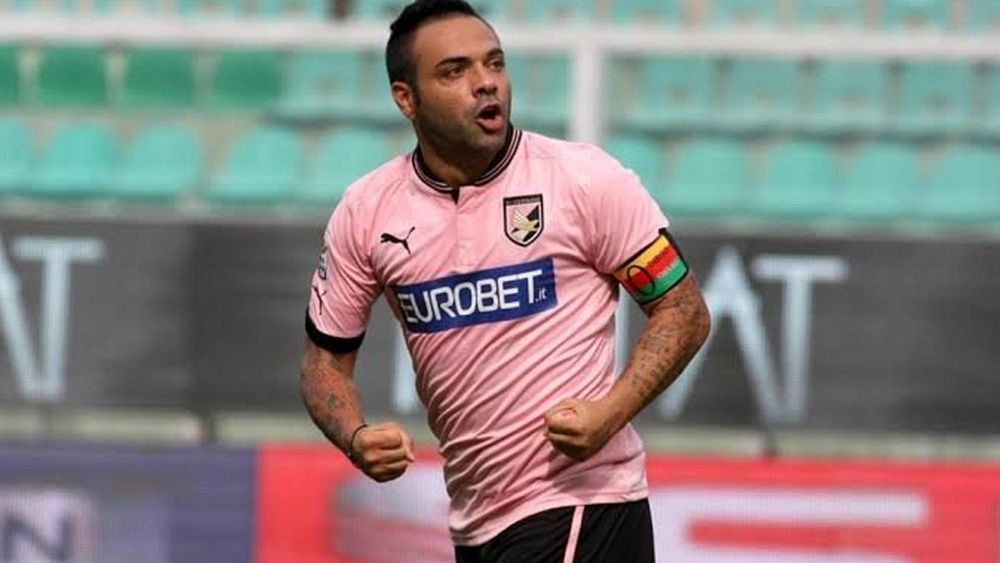
Among the players he encountered in Florence was Fabrizio Miccoli, a diminutive forward whose career would take him from Perugia and Juventus to Fiorentina, Benfica, Palermo and Lecce.
For Fontana, Miccoli's ability was immediately apparent.
“I remember the year of Serie A especially, when these players arrived and raised the quality of the team considerably,” Fontana told Football Presse.
The difference was not simply that his teammates were technically better. Fontana found that the entire rhythm of football changed.
“I, who passed for a player who was, let's say, quite good technically, found myself having difficulties because what struck me so much was the speed of the ball and the speed of thought,” he said.
“It was completely different from what I had known in the lower divisions.”
That environment allowed Fontana to see Miccoli's talent at close quarters. And the impression left on him was extraordinary.
“When I saw Miccoli play and touch the ball, I thought about how lucky all those people had been who had known Maradona and had lived close to Maradona,” Fontana said.
The comparison was not about achievements or reputation. Fontana was describing the feeling of watching a player capable of producing something with the ball that others simply could not.
“Miccoli, in his own way, did extraordinary things,” he said.
“He filled my eyes because he had an innate quality, an extraordinary talent that Mother Nature manages to give you.”
Miccoli's 2004-05 season in Florence would produce 12 Serie A goals, while Fontana was part of a squad that also included Giorgio Chiellini, Dario Dainelli, Enzo Maresca, Marco Donadel, Valeri Bojinov and, later in the season, a young Giampaolo Pazzini.
For Fontana, being surrounded by that level of ability also changed the way he viewed his own game.
Miccoli stood out even among those talented players because of the things he could do instinctively.
Fontana did not need to explain the finer details of Miccoli's technique. His reaction to watching him was enough: the forward's touches made him think of one of football's greatest-ever players.
Miccoli had already demonstrated his qualities before arriving in Florence. He had broken through at Ternana before establishing himself in Serie A with Perugia and earning a move to Juventus. After his Fiorentina season, he went to Benfica and eventually returned to Italy with Palermo, where he became one of the defining players in the club's modern history.
But statistics do not fully explain the impression he made on Fontana.
What the midfielder remembered was the sensation of watching Miccoli manipulate the ball at a level that seemed instinctive.
It was also an important period in Fontana's own development. Having climbed through the divisions and reached Serie A later than many of the players around him, he was experiencing first-hand the difference between being a good professional and competing alongside genuinely elite talent.
That lesson stayed with him as he eventually moved into coaching.
Fontana has since managed a succession of clubs in Italy, including Nocerina, Juve Stabia, Cosenza, Casertana, Fano, Imolese and Gubbio. His coaching career has been shaped by the same progression through the divisions that characterised his playing career.
But when he looks back at Fiorentina, one memory remains particularly vivid: watching Miccoli receive the ball and do something that seemed almost impossible to teach.
For Fontana, that was the essence of genuine talent.
And it was good enough to make a teammate who had already spent years in professional football think of Maradona.