
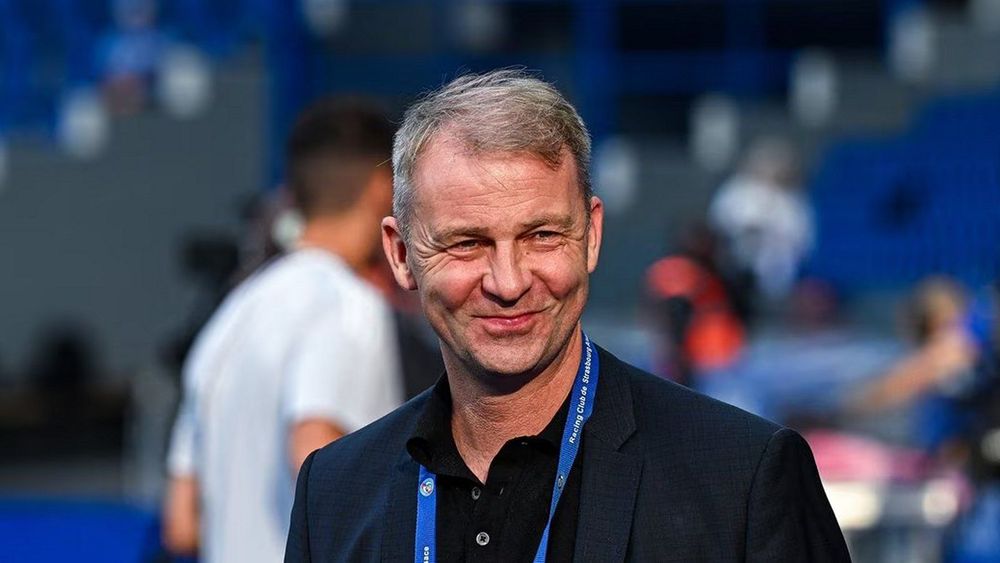
The Belgian joined the Gunners in the summer after leaving Strasbourg, where he had worked as technical director since 2024. He succeeded Per Mertesacker, who departed at the end of last season after eight years overseeing the club’s academy.
Speaking to Sporza, De Maesschalck said he had not expected to land a position at a club of Arsenal’s stature. Instead, he approached the recruitment process as an opportunity to learn.
“I actually still have no idea how they ended up with me,” he said.
“I have always learned to do your job as well as possible, and then opportunities arise. Don’t think in advance, ‘I want to do that’.”
He explained that the chance to work at Arsenal represented a significant step from his previous roles, but that he left the interview feeling positive regardless of the outcome.
“In my case, a club of Arsenal’s calibre came along, which is a completely different dimension than where I was able to work before. I walked out with a good feeling.
“I said, ‘even if I don’t get the job, I still learned a lot in the past two hours’. Our ideas aligned well.”
De Maesschalck now has responsibility for an academy that has supplied several players to Mikel Arteta’s first team. Bukayo Saka and Myles Lewis-Skelly are among the graduates to establish themselves at senior level, while Max Dowman and Marli Salmon are also pushing towards greater involvement.
He said Arteta had made clear his desire to work closely with the academy and give young players opportunities.
“Arteta wants to collaborate, he also wants to give the youngsters a chance,” De Maesschalck said. “He has expressed his support for that very clearly. Our ambition is to write the development story of England.”
The academy director is also placing emphasis on personal relationships, explaining that his work extends beyond watching matches and assessing players.
“I watch a lot of matches. I also build relationships with the players and their parents, because I think it is important to know the players personally. It remains a people’s business.”
Recruitment, however, remains central to his plans. De Maesschalck believes the quality of the players brought into the system ultimately determines whether the academy can succeed.
“And recruitment, of course. That is the most important thing. You can have the best facilities or operations, but with the wrong players, it won’t work.”