Before becoming one of the most recognisable forwards of the 1980s, the Scotland international was working underground, playing local football in Doncaster and trying to make an impression at Barnsley.
His breakthrough owed something to three men who knew rather a lot about the game at the highest level. Allan Clarke and Norman Hunter, the Leeds United legends who had become influential figures at Barnsley, recognised the determination of a young player who was prepared to give everything. Then, at Darlington, Billy Elliott saw something in Speedie's aerial ability that would change the direction of his career.
Looking back, Speedie remembers those early years with considerable affection, particularly the people who gave him an opportunity when professional football was still a distant ambition.
From the coal mines to Barnsley
Speedie was never particularly enamoured with his alternative career.
"It was the most horrendous thing you could ever imagine doing as a job," he recalled to Football Presse.
The teenager had been spotted by Barnsley's chief scout Martin Wilkinson, who identified him playing for a local team in Doncaster. Although Speedie initially missed out on an apprenticeship, he continued turning out for Barnsley's youth and reserve sides while still working in the mines.
"I was taken on before they came," he explained, making an important distinction when asked about the roles of Clarke and Hunter in his arrival.
Wilkinson had identified the talent first. Clarke and Hunter, however, would become significant figures in his development.
Speedie was already making an impression through his attitude. He was a midfielder at the time, but his enthusiasm and willingness to compete stood out among players who were considerably more experienced.
Clarke even used him as an example when trying to get more out of the senior players.
The former Leeds United striker took the Barnsley squad down the mines to show them where their young team-mate was working. Speedie, meanwhile, was given the day off.
"He took them down the pits to show them what it was like because I was fighting for everything, every tackle, every everything to do with football.
"I was giving my all in training and in games."
Clarke wanted his players to understand what the youngster was doing away from football and why he was so determined to make the most of his opportunity.
"So he said, look at this young guy, this little fella here, he's running around like a blue-ass fly, and you guys are not putting it all in.
"So he says, I'll show you what it's like down the pit. It might give you a reason to try a bit harder."
It was an extraordinary way of motivating a dressing room, but Speedie remembers being held up as an example rather than being treated as somebody who needed rescuing.
He had already been taken on before Clarke and Hunter arrived, and the experience underground had only strengthened his determination to make football his profession.
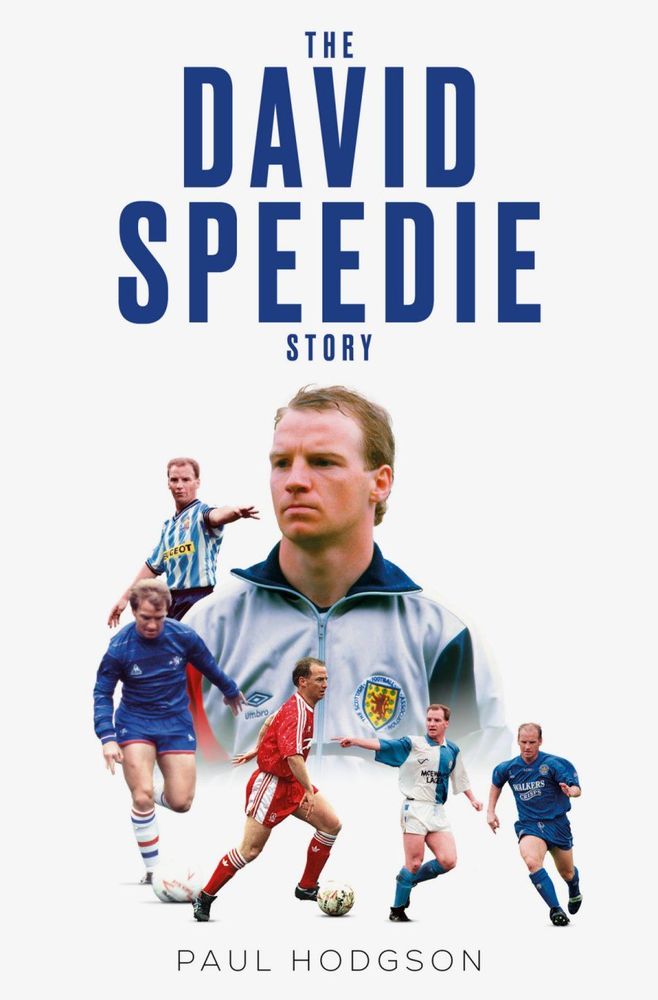
In his autobiography, "The David Speedie Story", he recalled the fear of working underground and the determination it gave him to escape that life.
The Leeds legends who became his heroes
For Speedie, there was another reason why the presence of Clarke and Hunter meant so much.
He had grown up watching Leeds United and admired the players who had helped make Don Revie's side one of the most formidable teams in the country.
"It was great because I used to go to the Leeds United game, so they were, they were my heroes."
Clarke and Hunter were therefore more than just experienced football figures. They were people he had previously watched from the terraces, now involved in his own development.
Asked whether he had appreciated the significance of having three such influential figures around him during those early years, Speedie was emphatic.
"It was an honour to play for them people. They knew what it was like at the top.
"And that's what I aspired to."
There was still work to do, however, and one of the most important changes to his footballing education would come after leaving Barnsley.
Billy Elliott's decision that changed everything
Speedie joined Darlington in 1980, initially still regarded as a midfield player. It was Billy Elliott, the former Sunderland favourite who was managing the Quakers, who recognised that another position could bring out the best in him.
Asked whether it was Elliott who turned him into a striker, Speedie explained that his manager had identified a particular quality.
"He spotted my ability in the air."
Elliott's instruction was straightforward.
"And he said, get up front and do some damage. And I did."
It was a simple positional change, but one that would have a lasting impact on Speedie's career.
The ability to attack crosses and compete in the air, despite standing only five feet six and a half inches tall, would become one of his most distinctive qualities.
He had already been working on that part of his game at Barnsley, staying behind after training with several team-mates to practise his heading.
"When I started at Barnsley, we used to stay behind – myself, Nick McCarthy, Ian Banks, Graham Reid, and one of the goalkeepers.
"We used to make the youth team goalkeeper stay behind. 'You're not going home, we're going back out there.'"
The work was paying off. At Darlington, Elliott recognised that Speedie's aerial ability could be used much more effectively further forward.
The midfielder was becoming a centre-forward, and the goals would follow.
From Darlington to the bright lights of Chelsea
Speedie's two years at Darlington provided the platform for the next move. Chelsea came calling in 1982, taking him from the Fourth Division into a completely different footballing environment.
He admits there were other opportunities, but his mind was made up when Chelsea entered the picture.
"I had the opportunities to go elsewhere, but I chose Chelsea because they played in blue and my dad was a Rangers supporter and they play in blue."
The decision was also shaped by his upbringing and a childhood affection for the club. His father supported Rangers, and the colour of Chelsea's shirt had always appealed to him.
There was, however, a practical consideration behind the transfer.
"I didn't have a choice. Darlington needed the money."
So Speedie headed south, leaving behind the more familiar surroundings of Yorkshire and the north-east for London and the challenge of establishing himself at a much bigger club.
It was a considerable adjustment.
"It was a massive transformation. Living in London is not the easiest thing to do. It takes you an hour longer to get to places than it would normally."
He also recognised that the pace of life was entirely different.
"Everything's full speed ahead."
By then, the young miner who had been spotted playing local football in Doncaster had made it into the professional game, changed position and earned a move to Chelsea.
Speedie has never forgotten the people who helped him along the way. Martin Wilkinson spotted him, Clarke and Hunter gave him a glimpse of the standards required at the top, and Elliott recognised the striker waiting to emerge from the midfielder.
Three different interventions, each important in its own way.
The journey from the coal face to Stamford Bridge had begun with a young footballer who simply refused to give anything less than everything he had.
The David Speedie Story by David Speedie and Paul Hodgson is available now.