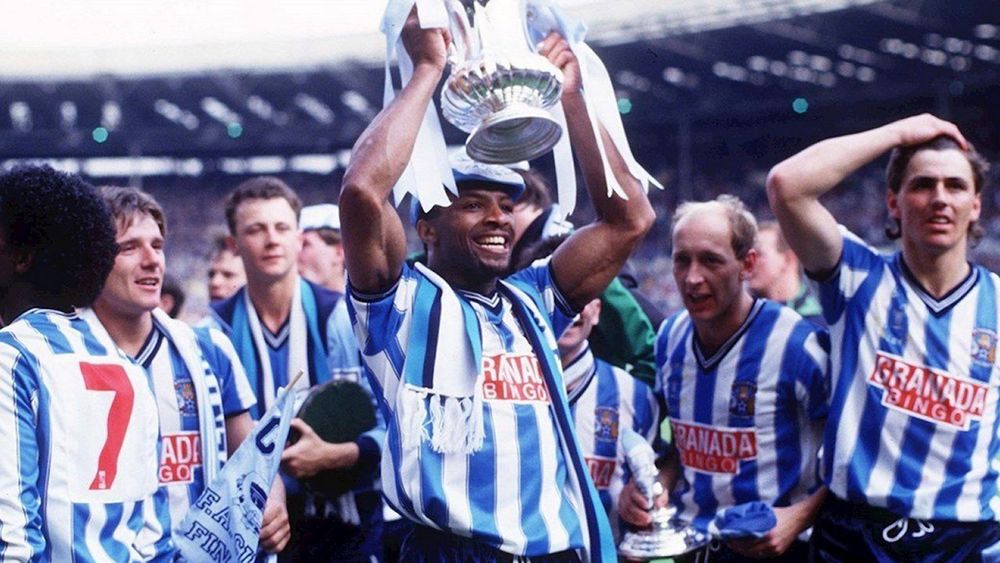
A meeting with John Sillett and George Curtis convinced him that his next chapter should be at Highfield Road, beginning a spell that he still regards as the most enjoyable of his football career.
“I had a meeting with him in a place called the Hopcroft Halt between London and the Midlands,” Speedie recalled to Football Presse.
“And I was only in that meeting for an hour and I couldn't wait to get to the club and start training and playing for them.”
That enthusiasm was rewarded. Coventry gave Speedie an environment in which his competitive instincts, intelligence in the penalty area and distinctive finishing could flourish.
“I loved it at Coventry. I loved it everywhere. I just love playing football, except Southend.”
For Speedie, football was a wonderful way to earn a living. His description of the routine was characteristically straightforward: “You get out of bed in the morning, what you got to do? You got to go training for two hours. Great, a great way of life.”
John Sillett and George Curtis understood their players
Speedie's recollections make clear that his relationship with Coventry's management was central to his enjoyment of the club. He had left Chelsea because he wanted to move away from its management team, but what he found at Coventry was a very different experience.
Asked about Sillett, his verdict was emphatic.
“Different class. Made me welcome. He allowed me to do my own thing.”
Speedie remembers being given the freedom to play to his strengths rather than being constrained by unnecessary instructions.
“Just go and destroy the opposition.”
He also identifies something more important than any individual tactical instruction: the relationship between the managers and their players.
“Having a great relationship with everybody individually, that is a strength. Man management is everything.”
He credits both Sillett and Curtis with excelling in that respect. Their approach gave players confidence, while the coaching staff also prepared carefully for opponents.
“We worked on set pieces and things defensive-wise every week against other teams that they'd been watching prior to us playing against them.”
It was a combination Speedie clearly appreciated: personal trust alongside detailed preparation. His memories are not simply of a team that played enjoyable football, but of a club where the people in charge understood how to get the best out of individuals.
Cyril Regis: the teammate who looked after him
Speedie's partnership with Cyril Regis remains an important part of his Coventry story, although he is quick to distinguish between the striker who was his best partner and the teammate who meant so much to him personally.
“My best strike partner was Kerry Dixon,” he says, before explaining his affection for Regis.
“But Cyril was my minder. He looked after me, he looked after me. He was amazing guy.”
That description offers a glimpse into the relationships that helped make a dressing room special. Regis was not necessarily Speedie's greatest strike partner in purely footballing terms, but his influence extended beyond the goals they scored together.
Speedie's tribute is enduring rather than merely nostalgic. He carries a badge bearing Regis's name and picture on his lapel.
“I wear it every time I go to a game. Yeah, he's on my lapel.”
It is a small gesture with considerable emotional weight. Regis remains part of Speedie's football life, long after their playing days together ended.
The training-ground work behind those chipped goals
Speedie's reputation as a finisher was built on more than instinct. His ability to lift the ball over advancing goalkeepers became a recognisable feature of his game, and he explains that the technique was something he deliberately practised.
“Nearly all my career I was chipping and lobbing goalkeepers.”
He still enjoys reminding one former opponent of the problem he caused.
“I still tell Bryan Gunn today, every time I see him, I say, stay on your line.”
Speedie laughs at the memory of the Norwich City goalkeeper's reaction.
“He's sick of seeing me saying that.”
The habit was developed on the training ground, where he and his teammates stayed behind to work on their finishing.
“When I started at Barnsley, we used to stay behind — myself, Nick McCarthy, Ian Banks, Graham Reid, and one of the goalkeepers.”
The players would make the youth-team goalkeeper stay behind as well, working on their technique after the main session had finished.
“'You're not going home, we're going back out there.' But it stands you in good stead.”
Speedie's shorter stature also encouraged him to develop other qualities. At five feet six and a half inches, he knew that competing with bigger defenders required excellent timing and an ability to get above the ball.
“When you're only five foot six and a half, you need to learn how to head the ball and jump. It's just practice.”
His mischievous side surfaced in a story about some training ground mickey taking at Coventry.
“I chipped Steven Ogrisovic from the penalty spot once.”
The goalkeeper was a substantial figure, but Speedie saw an opportunity when he came off his line.
“He came out a bit too quick and I just clipped it over him.”
The finish was not the end of the story.
“He used to chase me around, used to chase me around the training ground. He wasn't happy me taking the mickey out of him.”
Why Speedie would relish today's Premier League
Modern football offers a tantalising prospect for a striker with Speedie's eye for an advancing goalkeeper. With goalkeepers sometimes operating well outside their penalty areas, the opportunity to exploit the space behind them is obvious.
Asked whether he would thrive in today's game, Speedie's answer is immediate.
“Yeah, I'd have a field day.”
He immediately recalls a goal that delighted him for precisely that reason.
“Like, for instance, Kenny McLean scoring that goal against Denmark.”
It is a typically confident response, but one supported by the work he describes doing throughout his career. Recognising a goalkeeper's position, judging the distance and executing a delicate finish are skills that require repetition, not simply flair.
For Speedie, Coventry remains the place where his footballing life brought together the things he valued most: excellent management, a strong dressing room and supporters who made the experience memorable.
“They've great squad of players, great management, the supporters were amazing and still are.
“They bought the ground, so it now belongs to Coventry City. That's the best thing that's happened in a long time.”
He had been back to watch Coventry shortly before the interview, seeing a team whose supporters continued to matter to him.
His affection for the club has survived the years, just as his admiration for Regis remains visible on his lapel. And when Speedie considers the Premier League of today, he sees a game in which the finishing skills he honed through hours of extra practice could still make the difference.
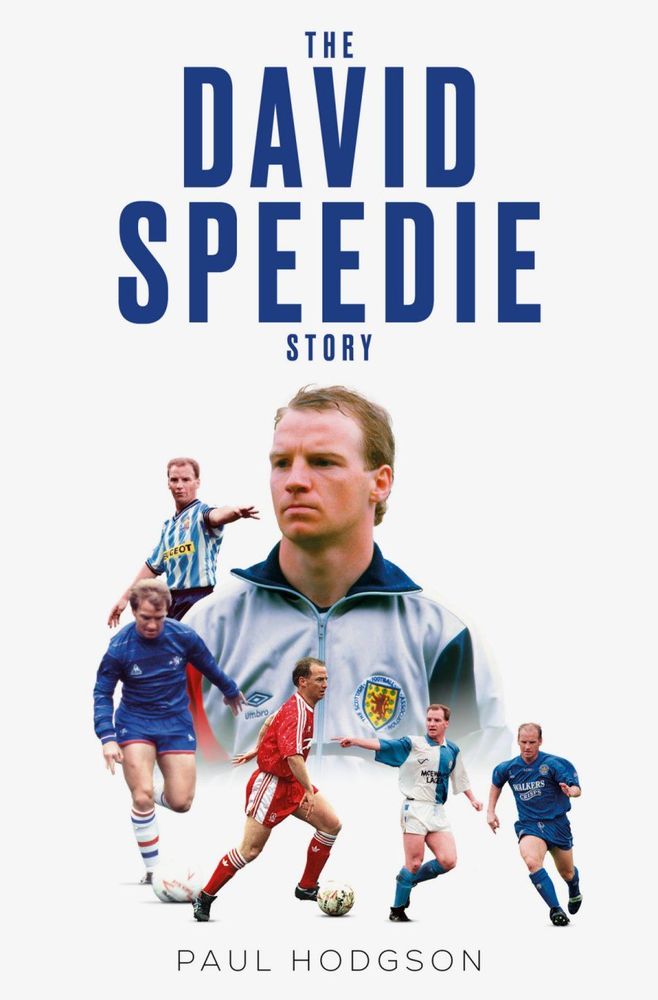
The David Speedie Story by David Speedie and Paul Hodgson is available now.