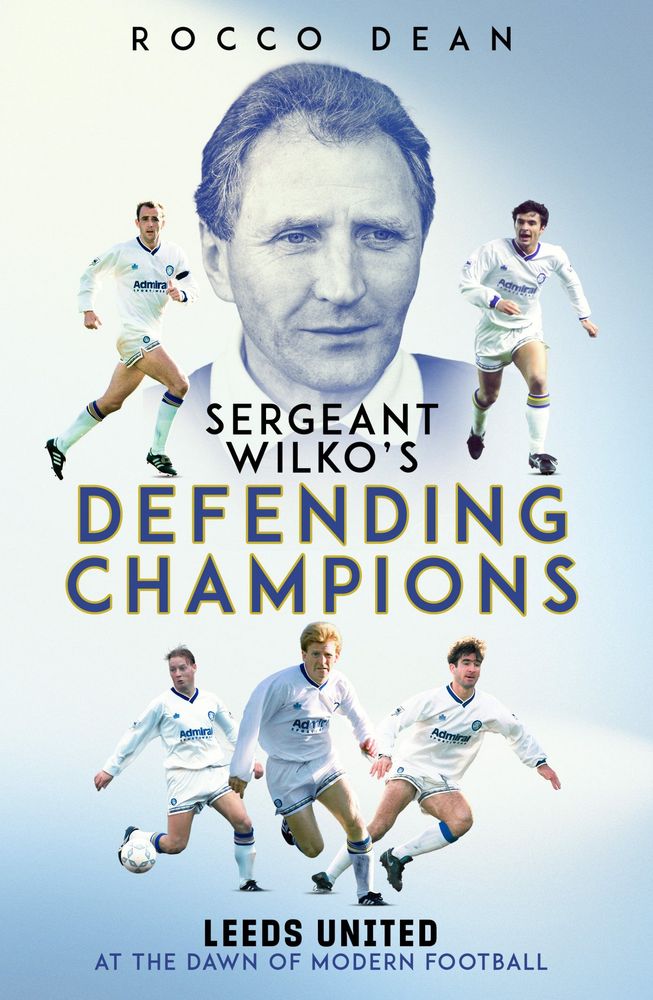
Rocco Dean, author of a new book examining Leeds United's disastrous 1992-93 title defence, believes the problem was not simply Rocastle's form — it was that nobody ever quite worked out how to use him.
Rocastle arrived at Elland Road from Arsenal on 23 July 1992 for a club-record £2 million fee, having already won two league titles and the League Cup at Highbury and earned 14 England caps. He was 25, in the prime of his career, and Leeds had just been crowned champions of England.
Yet within 18 months he was gone.
For Dean, the story becomes even stranger when the thinking behind the transfer is examined.
He recalled to Football Presse, "Wilkinson was very clear in that he bought Rocastle to replace Gordon Strachan if Strachan was unable to regain full fitness and form from his back operation."
There was an immediate problem.
"Rocastle was adamant in saying that his best position was central midfield. Strachan's a right winger. So there's a disconnect there."
It is one of the most revealing details in the story of Rocastle's unhappy time in Yorkshire. Strachan recovered from his back operation and went on to produce what Howard Wilkinson regarded as some of the best football of his career.
Rocastle, meanwhile, found himself trying to fit into a team that had very little room for him.
A signing without a position
Rocastle's reputation was enormous when he arrived.
He had come through Arsenal's youth system, made his first-team debut aged 18 and played a leading role in the famous 1988-89 title triumph at Anfield. He was also part of George Graham's 1990-91 championship side and had been named Arsenal's Player of the Year as a youngster.
But Leeds already had Gordon Strachan, Gary Speed, Gary McAllister and David Batty.
Dean remembers being a young supporter and immediately wondering where Rocastle could possibly play.
"I was a bit bewildered because Leeds had this famous midfield quartet that was the best in the country. And you're wondering how he's going to play, where's he going to play him?"
The answer, ultimately, was almost everywhere except where Rocastle wanted to play.
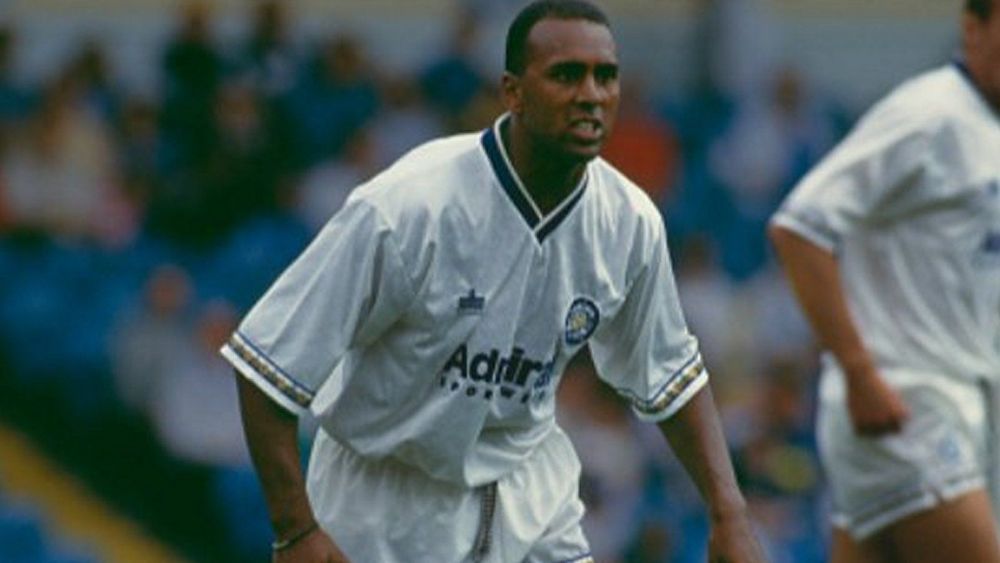
He appeared on the right wing, in central midfield and even at right-back when Mel Sterland was unavailable.
"He just didn't play," Dean says.
Even when Batty was injured for around three months and Rocastle finally received an extended run, the role did not suit him.
"Rocastle came in, had five or six games, but he's not a David Batty type player."
The contradiction was obvious. Leeds had spent £2 million on a player with proven international and championship pedigree, but the structure of the existing team meant there was no obvious place for him.
When Rocastle showed what Leeds were missing
There were flashes of what might have been.
Rocastle's first Premier League start for Leeds came against his former club Arsenal on 21 November 1992, in a 3-0 victory at Elland Road. He also scored in a 1-0 win over Manchester City in March 1993.
Dean remembers that he produced his best performances against Arsenal.
"His only real chance in the Leeds team was either on the right wing or in place of Batty."
"But against Arsenal, he was superb."
That makes the transfer even more frustrating in hindsight.
Rocastle was not an ordinary squad player struggling to make the step up. He was an established England international who had played 260 competitive matches for Arsenal, scored 34 goals and helped define one of the most successful periods in the club's modern history.
At Leeds, however, he never came close to establishing the same authority.
Dean believes the tactical mismatch was central to the problem.
"He's a bit of a flair player himself, albeit a hard worker. Maybe he also didn't suit Leeds' direct style of football, very much, you know, either get it up to Chapman or get it out wide and not so much going through the middle of the park."
It was a remarkable waste of talent.
A man caught between two ideas
There was another problem: Rocastle had apparently been signed with one role in mind, but the player and manager did not appear to share the same understanding of that role.
"There's a disconnect there, which is, yeah, it's really strange, isn't it, to think, you know, they must have had conversations when he was signed."
That becomes particularly significant because Rocastle had left Arsenal reluctantly.
He had spent almost a decade at Highbury and was deeply attached to the club. Arsenal colleague Paul Davis later recalled that Rocastle cried when he was told he was leaving.
Dean's research left him questioning whether the move had ever been entirely straightforward.
"Rocastle had to be convinced to leave his boyhood club that he absolutely loved. He played for all his life, over 200 appearances, two title wins."
"So he came to Elland Road. I don't know, was it under false pretences? Who knows what the truth of that matter is."
That uncertainty hangs over the entire Leeds episode.
The tragedy behind the transfer story
Rocastle eventually left Leeds for Manchester City in December 1993, having made only a limited impact at Elland Road. His subsequent career took him to Chelsea, Norwich City, Hull City and, finally, Malaysia.
But his career was never allowed to reach the heights that once appeared possible.
And then came the tragedy that changed the way his football life is remembered.
Rocastle was diagnosed with non-Hodgkin lymphoma in early 2001 and died on 31 March that year, aged just 33.
His death produced an extraordinary outpouring of affection across English football. Arsenal and Tottenham supporters stood together in silence before their North London derby that day, a remarkable tribute given the rivalry between the clubs.
For Leeds supporters, there is an additional layer of frustration.
They never really got to see what Rocastle could have become at Elland Road.
Dean describes him as "an absolute diamond of a guy" and remembers that he "always put in 100% effort".
"Yeah, the signing, you know, it didn't work out at all."
But that is almost too simple a conclusion.
Rocastle did not arrive at Leeds as a finished player in decline. He arrived as a 25-year-old England international, twice a league champion, with a reputation for technical ability, energy and creativity.
The problem was that Leeds had bought him without ever finding the position in which he could reproduce those qualities.
"Maybe his best position would have been replacing McAllister, with Batty behind him," Dean says.
Instead, Leeds spent £2 million on a player who was repeatedly asked to solve problems that were not really his own.
"An absolute diamond of a guy."
That may ultimately be the most fitting description of Rocastle's Leeds career: a brilliant footballer caught in the wrong place at the wrong time, whose talent was never given the opportunity to shine.
And 25 years after his death, the affection for "Rocky" has only grown. His Arsenal achievements have secured his place in English football history, but his Leeds story remains one of the game's great what-ifs.
Rocco Dean's book "Sgt Wilko's defending champions" is from Pitch Publishing - which is available here.