The Manchester City chairman was sitting inside Wembley Stadium on 30 May 1999, watching his club's season, and potentially its future, disappear in front of him.
City had spent the campaign fighting their way back from the third tier of English football after relegation the previous season. They had finished third in Division Two, beaten Wigan Athletic over two legs in the play-off semi-final and reached Wembley knowing that victory over Gillingham would restore them to the First Division.
But as the clock moved towards 90 minutes, City were losing.
And Bernstein was already thinking about the consequences of defeat.
“For me, it was the ultimate match,” Bernstein told Football Presse. “And I've never quite recovered from it. Nothing has lived up to that in my sporting life.”
That was not simply because of the drama. Bernstein believed the match could determine whether the club escaped the downward spiral that had engulfed it.
“I think it's the most important match in City's history,” he said. “I think Paul Dickov's goal and Kevin Horlock's goal, the two of them were the two most important goals because without that, I think the position City would be in now could be extremely very different from where we are.”
The stakes were enormous.
City had endured two relegations in three seasons and were playing their only season in the third tier. Promotion was not merely about getting back up a division. It was about restoring credibility to a club that had been declining for years.
Bernstein had become chairman in 1998 after already spending four years on the board. By the time of the Wembley final, he had seen first-hand how badly the club needed to change.
“We had to make a lot of changes, some of them real, some of them cosmetic, to really show we meant business and we were going to change the club from back to front,” he recalled.
“There were no sacred cows.”
The football had begun to improve under Joe Royle, but City had been too far behind to win automatic promotion.
“At Christmas, we beat Stoke City. That started regeneration,” Bernstein said. “We were too far behind to go up automatically, but we got into the play-offs.”
After the semi-final victory over Wigan, Gillingham stood between City and promotion. The final initially became a stalemate. Then, with ten minutes remaining, everything changed.
Carl Asaba put Gillingham ahead in the 81st minute and Robert Taylor doubled the lead five minutes later. Suddenly, City were staring at another season in the third tier. Bernstein looked up at the giant Wembley scoreboard.
“I’m looking at a giant Wembley scoreboard, Gillingham 2, City nil,” he said. “The Gillingham fans are singing away. Our fans are leaving the ground.”
That image remains one of the most haunting parts of Bernstein's recollection.
“I’m really thinking, what the hell?”
Then his thoughts turned immediately to the following season.
“I’m like, next year, what do I do next year? Next year is going to be really, really tough because that initial impetus will have gone.
“There’ll be different sorts of problems and so on.”
City were not simply about to lose a football match. Bernstein feared they were about to lose momentum.
“There was so much hanging on this game,” he said. “One of the main things was the potential new stadium.”
At the time, Manchester City were in discussions with Manchester City Council and Sport England about moving from Maine Road into the stadium being prepared for the 2002 Commonwealth Games — the venue that would eventually become the City of Manchester Stadium and, later, the Etihad Stadium.
Bernstein says promotion was central to those discussions.
“We were in deep discussions with Manchester City Council and Sport England about the future of it but it needed the credibility of our getting a promotion out of the third tier of English football.
“Had we lost that match against Gillingham there was quite a good chance that the new stadium deal would never have gone through.
“And if that had happened, our club’s history would be a lot different.”
That is why Bernstein's description of what happened next is so revealing. City were not just trying to rescue a football match. They were trying to rescue the club's future.
And then, with 90 minutes approaching, came Horlock. The City midfielder pulled one back in the 90th minute. Bernstein had barely allowed himself to believe again.
“Even then, I thought, too little, too late,” he said. “You know, there’s only a few minutes left.”
Then came another piece of fortune.
Bernstein remembers a cross-field ball touching a Gillingham player when, in his view, it did not need to.
“One of the chapters of the book is entitled 89-25,” he said. “That is the second when a cross-field ball by one of our players touches a Gillingham player's foot, who didn't need to even go near the ball.”
Instead of a Gillingham throw-in, City were awarded possession.
“And instead of it being their throw-on, it was ours — it went for our throw-on, from which Kevin Horlock scored.”
City were alive. Then came the five minutes of added time.
“We were delighted to see five minutes extra time.”
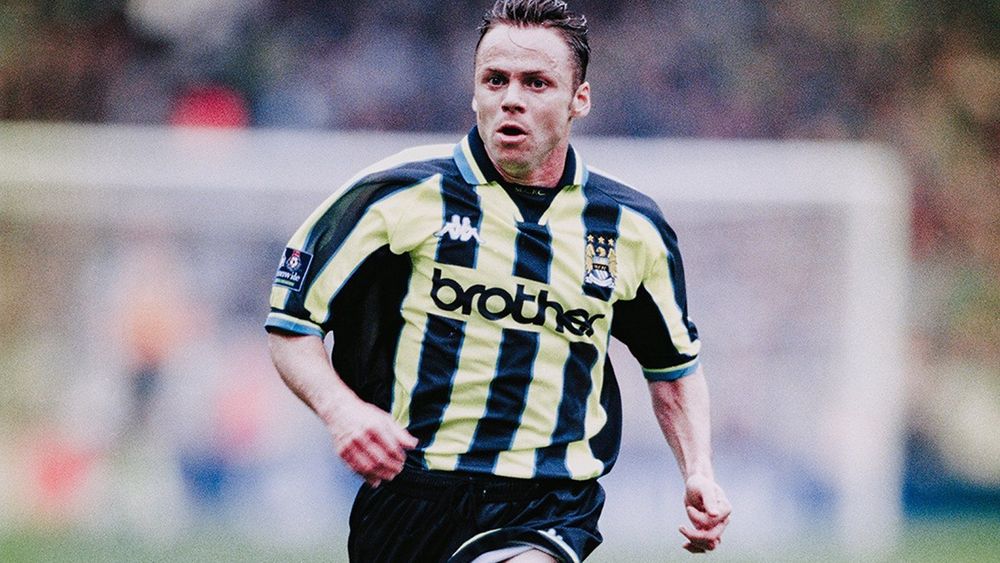
And with the game apparently slipping away, Paul Dickov produced the moment that became immortal.
“Then lo and behold, we have this great goal by Paul Dickov,” Bernstein said. “When he... it's a tribute to actually the coaching he had because he actually passed this ball into the net and it was just unbelievable.”
The goal sent the City end into delirium.
“The fans ran back into the ground,” Bernstein recalled. “These are legendary moments.”
Dickov's 95th-minute equaliser forced extra time. Neither side could find a winner during the additional 30 minutes, so the destination of promotion would be decided by penalties.
And Bernstein still had another ordeal to endure.
City eventually won the shootout 3-1, with Nicky Weaver making two saves and Kevin Horlock, Terry Cooke and Richard Edghill converting for City. The chairman had survived the most extraordinary match of his football life. But there was no huge celebration waiting for him.
“I lived in London,” Bernstein said. “The team had to go back to Manchester. We hadn't planned anything.
“So I was left very much on my — well, not on my own, but with my family and one or two of the City people.”
The night ended in a Chinese restaurant in Hendon.
“We ended up in a Chinese restaurant in Hendon, which was a bit of an anticlimax.”
The following year was very different. City secured promotion to the Premier League after finishing runners-up in the First Division, and the club finally had the stability Bernstein had been trying to establish.
“We did have a big, big party in Manchester,” he said. “But that was a different sort of dynamic.”
The significance of Wembley 1999 only became clearer as the years passed.
City moved into the new stadium for the 2003/04 season. Five years later, Sheikh Mansour's takeover transformed the club's financial power and ultimately helped create the modern Manchester City.
Bernstein does not claim that the Gillingham victory alone caused everything that followed. But he believes losing it could have changed the chain of events fundamentally.
“If that hadn't happened, the rest of City's history would be very different.”
That is why he ranks it above the trophies that followed.
“I think it's the most important match in City's history.”
Even compared with the Champions League triumph, the game retains a unique place in his mind. It was not the biggest match City ever played in terms of status. It was not the greatest team they ever produced.
It was not even a final for a major trophy. It was something more basic. It was the moment when the club could have gone one way or the other.
Bernstein remembers sitting at Wembley, seeing supporters leave while Gillingham celebrated a 2-0 lead, and already imagining the consequences.
“I’m really thinking, what the hell?”
Then Horlock scored.
Then Dickov.
Then penalties.
Then promotion.
And then, eventually, the future changed.
For Bernstein, that is what makes the afternoon impossible to forget.
“For me, it was the ultimate match,” he said.“And I've never quite recovered from it.”
More than a quarter of a century later, the scoreboard that once read "Gillingham 2, Manchester City 0" is no longer a symbol of what might have been.
It is the starting point of what eventually became.
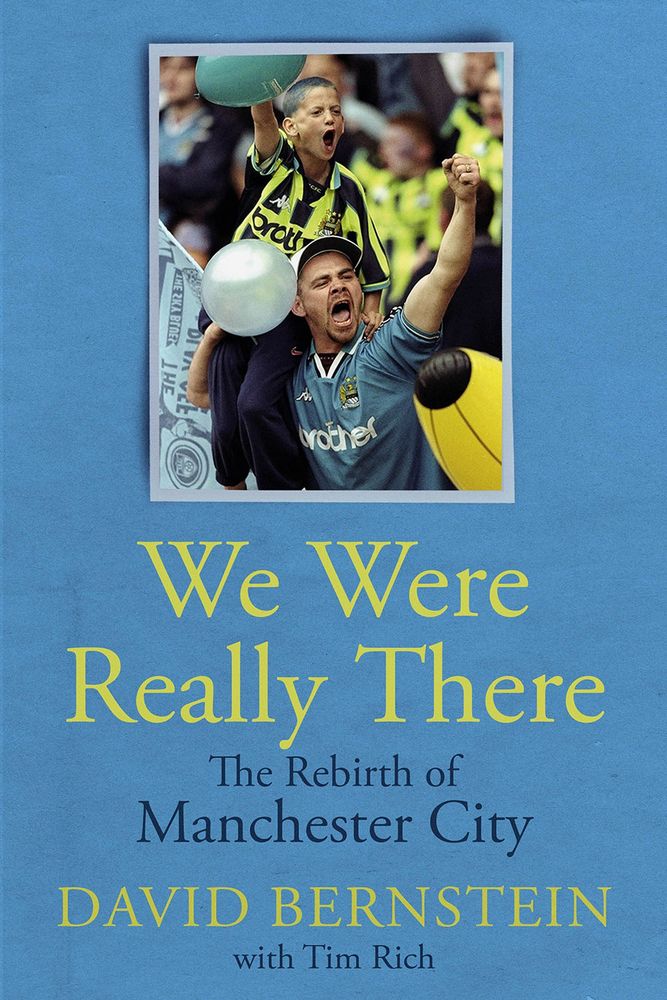
David Bernstein's book "We were really there: The Rebirth of Manchester City" is from Pitch Publishing - which is available here.