He is the first to make that clear.
But when Bernstein took over as chairman in the late 1990s, with City struggling in the third tier of English football, he recognised that the club's youth system could become one of its greatest assets.
The decision was significant.
City were cutting costs across the club, yet Bernstein says the academy was one area where investment was actually increased.
“When we had gone down to the third level of English football and we had to be extremely tight on finance and cut virtually everywhere, the only thing we didn’t cut, in fact, we increased the investment in, was the academy,” Bernstein told Football Presse.
“It was pretty obvious to me that if City was going to really start to strengthen the squads and so on, yes, we would buy players to some extent.
“But we needed to develop an academy where we could develop our own.”
That thinking was not born in isolation.
Bernstein had already seen what Manchester City’s youth system could produce.
The club’s 1986 FA Youth Cup-winning side had included Paul Lake, David White, Ian Brightwell, Steve Redmond, Andy Hinchcliffe, Paul Moulden and Ian Scott. Seven members of that team would eventually make 1,397 first-team appearances for City.
For City supporters, those names still carry enormous weight.
Lake was regarded as perhaps the outstanding talent of the group before injury cruelly curtailed his career. White made 342 appearances and scored 96 goals for City, while Brightwell remains the record appearance-maker from that youth side with 380 games.
Bernstein remembers that generation as an important reference point.
“Yes, well, they did. Yes, of course they did,” he said when asked whether Lake, Brightwell, White and the others influenced his thinking.
“And we had quite a few other players that you have mentioned who came through the academy.
“Yes, it was — I mean, we were very successful at doing that.”
The task Bernstein and academy director Jim Cassell faced, however, was not to invent City's youth system from scratch.
“To be fair, we didn’t start that, it was established,” Bernstein said.
“We did have a youth set-up and so forth. But I think we professionalised it and we brought it on a level, and Jim was instrumental in doing that.”
Bernstein has particularly warm memories of Cassell.
“Jim did that extremely successfully. He was a great asset to the club,” he said.
“I’m very fond of Jim and a very decent guy as well.”
Cassell's work became particularly important because City could not simply solve every problem by buying established players.
The academy offered a different route to building a competitive team.
But Bernstein understood that producing good professional footballers and producing players capable of representing an elite Manchester City were two very different challenges.
“To bring on players who, you know, are going to really give you great service in the Championship or even the lower reaches of the Premier League is one thing,” he said.
“To bring on players who can service, you know, give you service at the very top end, the elite end of the game, is another.”
It was a question Bernstein was already asking when City were nowhere near the elite.
“I’m not sure now whether any academies are at the top end of English football,” he admitted.
“This is something I’m not sure about, but whether they’re able to service the needs of the top half a dozen, six or eight clubs I doubt, to be very honest.”
The modern Manchester City academy has provided a rather compelling answer.
Phil Foden has become one of the club's defining players of the modern era. Rico Lewis has established himself as a senior England international, while Nico O’Reilly has now taken the pathway to another level.
O’Reilly joined City’s academy at Under-9 level. In 2025/26, the boyhood Blue made 53 appearances, scored six goals and provided eight assists, while becoming a trusted member of the first team. He was named both Manchester City’s Etihad Player of the Season and the Premier League Young Player of the Year.
Then came England.
O’Reilly made his senior international debut in November and went on to be selected for Thomas Tuchel’s 2026 World Cup squad. He started England’s opening World Cup game against Croatia and subsequently featured during their run in North America.
For a player who began at City as an Under-9, it is a remarkable journey.
And it is precisely the sort of journey Bernstein hoped the academy could make possible.
The numbers underline the change, too.
City's academy recorded more first-team minutes than any other Premier League academy in 2025/26, with graduates including Foden, James Trafford, O’Reilly, Lewis, Divine Mukasa and others contributing to the total. Eight academy players made their senior debuts during the campaign.
Bernstein, though, is careful about drawing a straight line from his time at the club to today's operation.
“I’d like to say yes, but I don’t know,” he said when asked whether he could see the connection between the work he and Cassell did and the modern academy.
“It’s a long, long thread. You need a long piece of thread now between then and now.”
What Bernstein does believe is that his administration helped reinforce the idea that the academy was worth protecting even when the senior team was struggling.
“The very fact that we took the academy so seriously, we invested in it at the time, at a very difficult time,” he said.
“We gave Jim Cassell serious backing and support.”
He also remembers the contribution of people inside the club who helped establish that mentality.
“People in the club at the time like Dennis Stewart were very supportive of the academy,” Bernstein said.
“I hope contributed, if you like, towards a culture where the academy was really valued.”
That may be the most important distinction between City's academy then and now.
The 1986 generation proved that Manchester City could produce a remarkable group of footballers from its own system.
Lake, White, Brightwell, Hinchcliffe, Redmond and Moulden went on to make their mark in the professional game, with White and Hinchcliffe also representing England.
Cassell's generation subsequently produced another wave, including players such as Micah Richards, Daniel Sturridge, Kieran Trippier and Ben Mee.
Then came Foden.
Now there is O’Reilly, who went from joining City at Under-9 level to becoming a Premier League award winner, a senior England international and a World Cup player.
Bernstein still refuses to claim that the modern academy is simply his legacy.
He is also realistic about the difference between the City of his era and the club that now competes at the very top of world football.
Asked whether the players from his own period could have fitted into today's City side, he was blunt.
“They were good,” he said.
“But, you know, everything’s relative.
“As First Division, Championship players, players in the lower reaches of the Premier League, they were good. There’s some very good talents there.
“But they’re not players who I believe would fit into the present City side.”
That is not an insult to the Lake generation. It is Bernstein recognising how dramatically the club has changed.
And perhaps that is why his recollection of those difficult years matters.
City's academy was not being developed because the club expected to become one of the richest and most successful sides in world football.
It was being developed because the club needed another way forward.
Bernstein's great achievement, as he sees it, was not predicting that the academy would eventually produce players capable of walking into an elite City side.
It was ensuring that, when the money was tight and the club was down in the third tier, the young players were still worth investing in.
“We gave Jim Cassell serious backing and support,” Bernstein said.
And four decades after Lake, White and Brightwell emerged from City's youth system, a player who joined the academy as a nine-year-old has now stood on the biggest stage in international football.
That thread may be long.
But it is difficult to argue that it has disappeared.
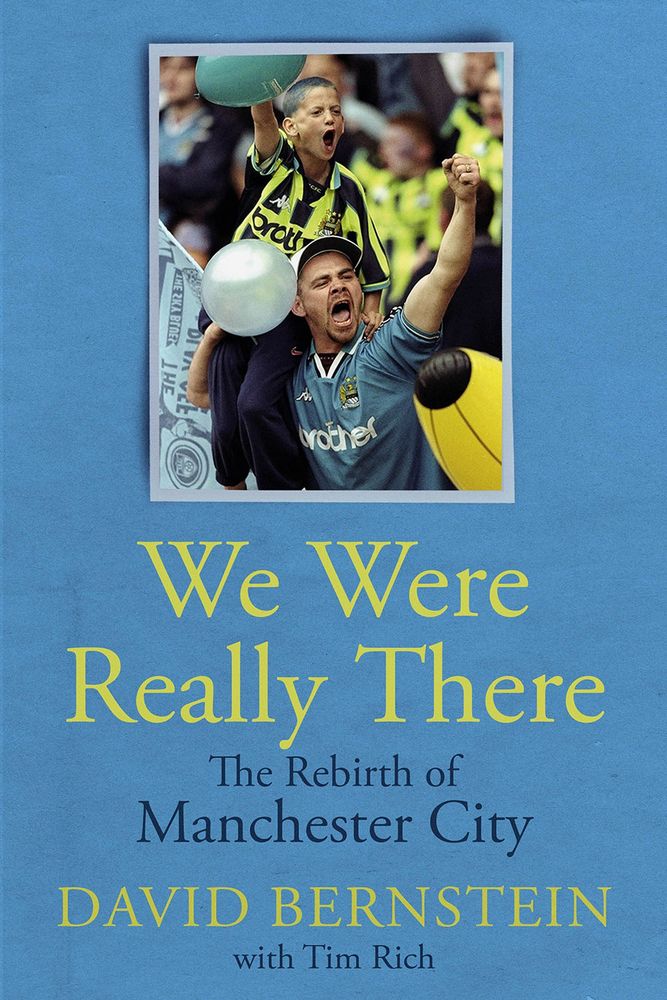
David Bernstein's book "We were really there: The Rebirth of Manchester City" is from Pitch Publishing - which is available here.