“Well, I think it's about — it depends who you believe, whether it's Ridsdale or O'Leary or the combination of the two," Tomlinson tells Football Presse. "I think they believe their own publicity. They both blame the other.
“I think, as I understand it, O'Leary didn't see the writing on the wall. So there was this meeting where he was still talking about doing the stuff before, and they said to Ridsdale, ‘Is he not aware of what's going on?’ I've told him. Well, you might have told him. He's not registered. Have you?
“So I think it was about — one, became a bit too big for his boots. Two, I think he went with the naive young manager stance for too long. Three, he did lose the dressing room. I don't think people would argue about it. He says he did. He said he got a lot of things going through and Woodgate and Bowyer were handled badly.
“Combination of all those things. And then the plummet at the end of the season just did for him.”
Tomlinson does not, however, believe O'Leary's departure suddenly made everything better. If anything, the club's subsequent decline demonstrated just how difficult it was to replace what Leeds United had built.
“But we didn't really benefit by him going, did we? I mean, we should have done.
“So you got Terry Venables, who I thought was a great appointment. I thought '96 was wonderful, but he was probably three or four years too late.
“Off the cliff, all collapse from there. So you've got to be careful what you wish for. Grass is always greener. Not always.”
For all the problems that eventually emerged, Tomlinson is adamant that O'Leary's side delivered some extraordinary football and some unforgettable nights.
“He again gave some wonderful nights. Champions League, wonderful nights. Absolutely classic Leeds.
“Classic season, what they did in Europe, completely blitzed the continent, shocked them. Absolutely fantastic.
“Alan Smith, perfect example. Lee Bowyer, perfect example. All the way through. Wonderful team. Wonderful team. And you do have to give the manager credit for that.”
Tomlinson's assessment of O'Leary's fall is therefore more complicated than simply blaming the manager. He believes the environment around a successful football team can be just as important as the man in charge.
“What managerial career? Do you mean Villa? Goodbye.
“But you do get this, it's never just about the manager. It's about the manager, the players, the club, the atmosphere, the time you're in. It's the combination of all of it.
“You've got to be careful you don't believe your own publicity. He believed it was all about him, same as in Don Revie's time.
“The board believed it was all about them rather than Don. It was the circumstances, the entire set of things around it that make the difference.”
And among the players who made that Leeds team so special was Harry Kewell, a footballer Tomlinson regards as an exceptional talent despite his complicated relationship with the supporters by the end of his Leeds career.
“Let's not talk about Harry Kewell.
“He came from Australia, you know, he didn't come through the ranks. And you see in retrospect, he was a really good player and he did some wonderful things, but you always felt it was about him rather than the team.
“He contributed, made a massive impact.”
“He was a real star. You like that quality coming through.”
Tomlinson still has enormous admiration for what Kewell could do on a football pitch.
“The time he was there, fantastic player. I do remember a wonderful, wonderful talent. Some of the goals he scored, some of the things he did, a rare talent.”
But the way the relationship between Kewell and Leeds eventually deteriorated remains part of Tomlinson's assessment of that era.
“Look what the crowd changed around that. Certainly, you know, what he did at the end, you know, they all did, didn't they? But what he did at the end when he left to go to Liverpool, we got pittance out of that.
“That's money. That's money. And it's like, you know, when you know they're playing for themselves and the money, Leeds don't like that, do they?”
Viduka is viewed differently. When Tomlinson is asked which players from that great Leeds side he would put into today's team, the Australian striker is one of the first names he reaches for.
“Viduka. Viduka.”
Then he immediately refuses to reduce his choice to a single player.
“Viduka, and Smith. I can't differentiate different players. Fantastic players. Absolutely fantastic. They make, they make all the difference.
“I do love David Batty though.
“But I would go for Viduka and Smith personally.”
That quality is what Tomlinson believes made the O'Leary team capable of competing on the biggest stage.
The problem was that the club could not preserve the combination of players, personalities and circumstances that had created it.
Tomlinson repeatedly returns to that idea when explaining why the era ultimately collapsed.
“It’s never just about the manager. It's about the manager, the players, the club, the atmosphere, the time you're in. It's the combination of all of it.”
He sees the same principle in other great Leeds teams, including the Revie and Bielsa sides.
“Go back to Bielsa, it wouldn't have been the same if you hadn't got Angus Kinnear, if you hadn't got Andrea Radrizani, they wanted to come in, if they hadn't got the players that made the difference, if you hadn't got the club behind it, it wouldn't have been what it could have been.
“You've got to be careful you don't believe your own publicity.”
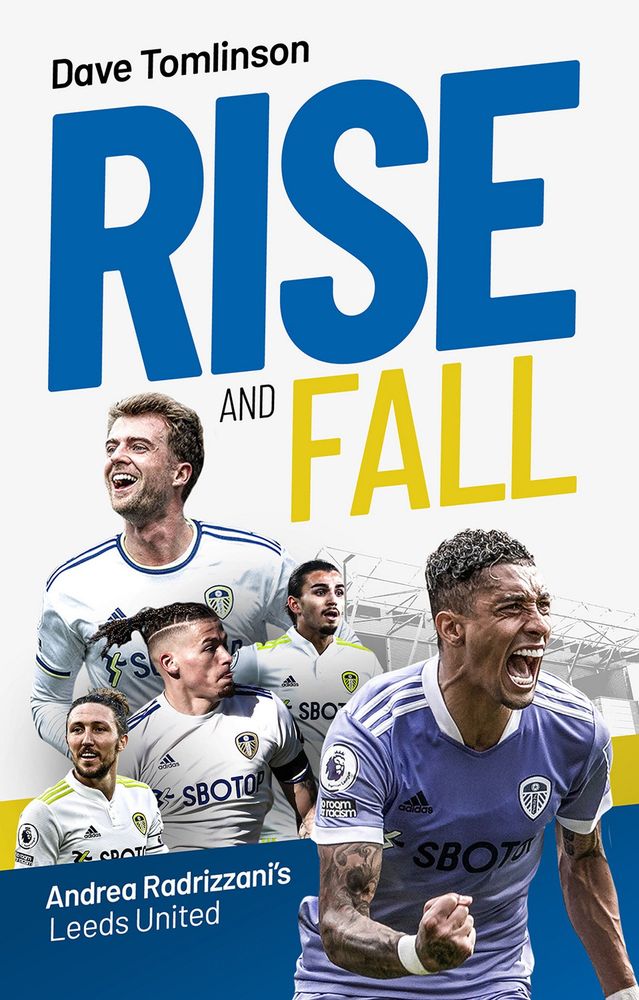
Dave Tomlinson's book "Rise and Fall: Andrea Radrizzani's Leeds United" is from Pitch Publishing - which is available here.