It is something deeper: the spirit that connects the team to the supporters and makes the club feel like one entity.
And as Leeds continue to establish themselves in the Premier League, the author of "Rise and Fall" believes there are unmistakable signs of that old identity returning.
Tomlinson sees echoes of the great Leeds sides of the past in a team that may not yet possess the individual stars of the Don Revie era, but has something he considers just as important.
“Spirit, connection with the fans, never give up, never give up,” he tells Football Presse.
“Leeds have always got a chance till the end of the game. They've also got a chance to ship six goals in 10 minutes, haven't they? But, you know, I think it's about the real spirit, the way that the fans identify that, and it's just that they've got a great squad in terms of togetherness that works together well.”
That togetherness is what Tomlinson believes separates the current Leeds side from simply being another newly established Premier League team.
“Maybe they haven't got the wonderful, absolutely mega stars, but they've got a great squad, great team spirit, and I think it's just the togetherness, the fight, the never say die, that we will compete,” he says.
“I think it's just that classic Leeds, or it will be. I think this has got the makings of the next great Leeds side.”
For Tomlinson, the connection with the supporters is fundamental. It is also the thread that runs through the club's greatest periods, from Revie's teams through Howard Wilkinson, David O'Leary and Marcelo Bielsa.
He does not believe those eras can simply be ranked against each other.
“I wouldn't differentiate. It's going through it and that experience because if you go, that's the best or that's the best, well, it's an anticlimax after,” he says.
“These are all great times, these are great times.”
That sense of collective identity is particularly important when considering Revie's legacy. Tomlinson believes the former Leeds manager would recognise something familiar in the current side, even though the football and the circumstances are radically different.
“I think he would say and be proud of the continuity, what he created from nothing, from a slag heap, from a nothing club, from a mediocre club, a yo-yo club,” Tomlinson says.
“What he created — this all stems back to Don Revie. Before him, there was nothing. It was wasteland. We wouldn't be here today if not for Don Revie.”
For Tomlinson, Revie's greatest achievement was not simply the trophies or the famous players. It was the identity he created, and the fact that it has continued to survive across generations.
“He'd be proud that there is a We Are Leeds,” he says. “He'd be proud of that identity. I think he would have identified as absolutely — would have been proud that what he did and what he started has lived through and still carries on.”
That identity is visible, Tomlinson believes, in the players who embody it.
Some modern Leeds players remind him of the personalities who became synonymous with the club, not necessarily because they possess identical abilities, but because of their character and the way they carry themselves.
“You only get players like Billy Bremner, Johnny Giles, etc., once in a lifetime,” he says. “The fact that we had so many at the same time and they stayed so long was incredible.”
But Tomlinson does see modern examples.
“Ampadu's one. Rodon's another. You do pick through. Alan Smith was another. David Batty was another.”
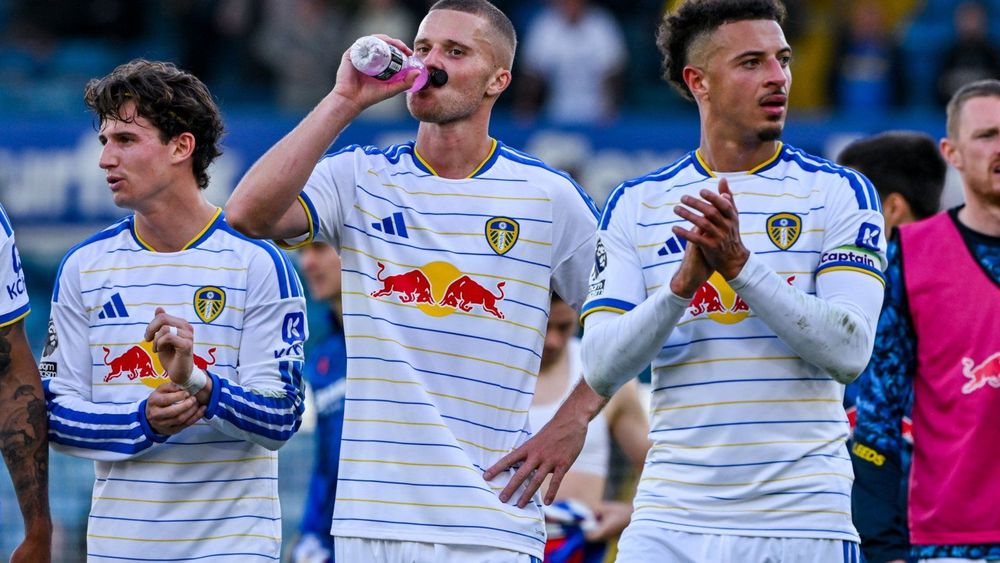
It is Ethan Ampadu in particular who Tomlinson regards as a modern embodiment of the kind of character Leeds supporters have traditionally embraced.
“I think he's wonderful, absolutely impeccable,” he says.
And Ampadu's long-term commitment to the club has only strengthened that impression.
“Ampadu signing up for long term, massive statement,” Tomlinson says. “You can see when he's not there, you can see the leadership when he plays in there, you can see him taking people through the game. Wonderful player, absolutely fantastic signing.”
Joe Rodon also fits the profile.
“He gets Leeds,” Tomlinson says. “Some of these, you could take them back '60s, '70s, they wouldn't have been out of place in those teams. It's the spirit.”
That phrase — getting Leeds — is central to Tomlinson's understanding of what the club has always been about.
It is why certain players become so loved by supporters. They are not merely judged on technical ability. They become representatives of the supporters themselves.
“You get them, you get them, and they gravitate towards Leeds,” Tomlinson says. “That's why we love them. They are us on the pitch. They are absolutely exemplars of what we're about.”
That, he believes, is why players such as Pontus Jansson could establish such a powerful connection with supporters despite the complexities of his time at the club.
The current team has other players who Tomlinson believes embody that same character. He points to Rodon and Ampadu, but also to the standards set throughout the squad.
The spirit is not simply nostalgia for the past. It is visible in how Leeds play and how supporters respond.
“The classic Leeds is you don't give your opponent a chance,” Tomlinson says. “You push them, you're intense, you push.”
That intensity is part of what he believes supporters recognise instinctively.
“A massive tackle like Gudmundsson — I remember Sam Byram when he first came through, first game. Matt Jarvis, Wolves winger, played for England, took him out. This kid's 16, 17, bang, up in the air. That got the crowd going.”
“In your face, in your face. Reputations mean nothing to us. Us against the world.”
It is an attitude Tomlinson sees as quintessentially Leeds.
The club's identity, he argues, has survived changes in tactics, ownership, football economics and generations of players because the underlying relationship between team and supporters remains.
“It is this, it's togetherness,” he says. “It's at one with the city. And it is this one-club city.”
“They love the club. They really get the club. They don't want anything else. They are going to boo them, but no one else can boo them.”
“It is absolutely cast iron identity, cast iron cohesion, cast iron community. It's we together against the world.”
That is why Tomlinson believes Revie's legacy remains so powerful.
The football has changed. The players have changed. The managers have changed. But the idea of Leeds — a team that fights, connects with its supporters and refuses to surrender — remains.
“It is the seam that runs through us,” he says. “It's about — this is Leeds.”
And if Revie were able to look at the club today, Tomlinson believes he would recognise more than just the colours.
He would recognise the identity he helped create.
“He'd be proud that there is a We Are Leeds,” Tomlinson says. “He'd be proud of that identity.”
“He would have identified as absolutely — would have been proud that what he did and what he started has lived through and still carries on.”
For a club whose history is so often measured in its peaks and its collapses, Tomlinson believes the most important continuity is not found in league positions or transfer fees.
It is found in the people on the pitch who understand what wearing the shirt means.
“Ampadu's one. Rodon's another,” he says. “You get them, you get them, and they gravitate towards Leeds.”
“They are us on the pitch.”
And that, more than anything else, is why Tomlinson sees something familiar in the current Leeds United.
The next great Leeds side will need more than talented players. It will need the same intangible quality that has always made the club what it is.
“The spirit, the connection with the fans, never give up.”
For Tomlinson, that is the Leeds way — and it is the part of Don Revie's legacy that has never really disappeared.
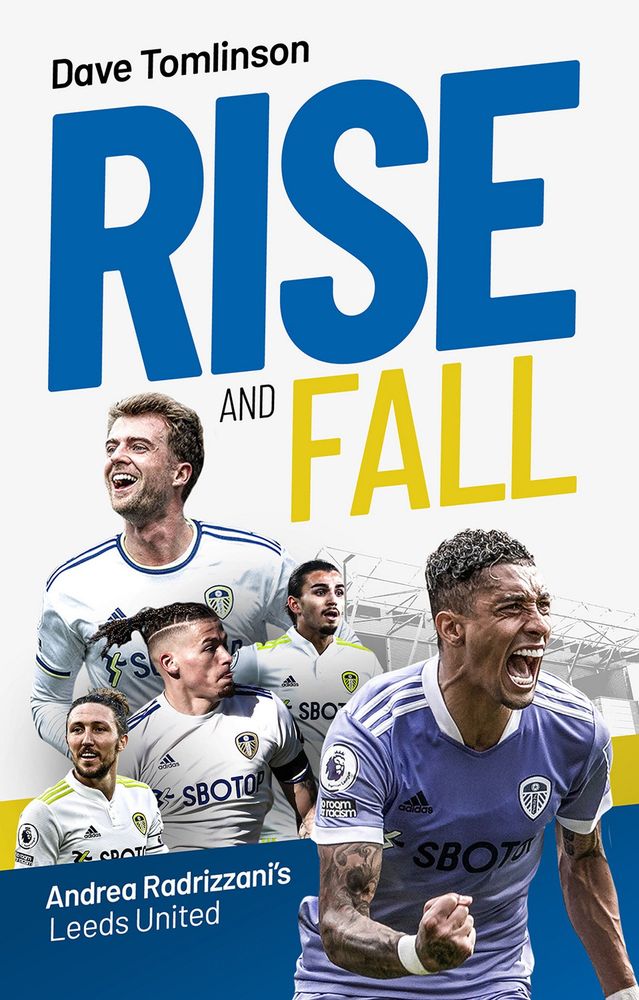
Dave Tomlinson's book "Rise and Fall: Andrea Radrizzani's Leeds United" is from Pitch Publishing - which is available here.