
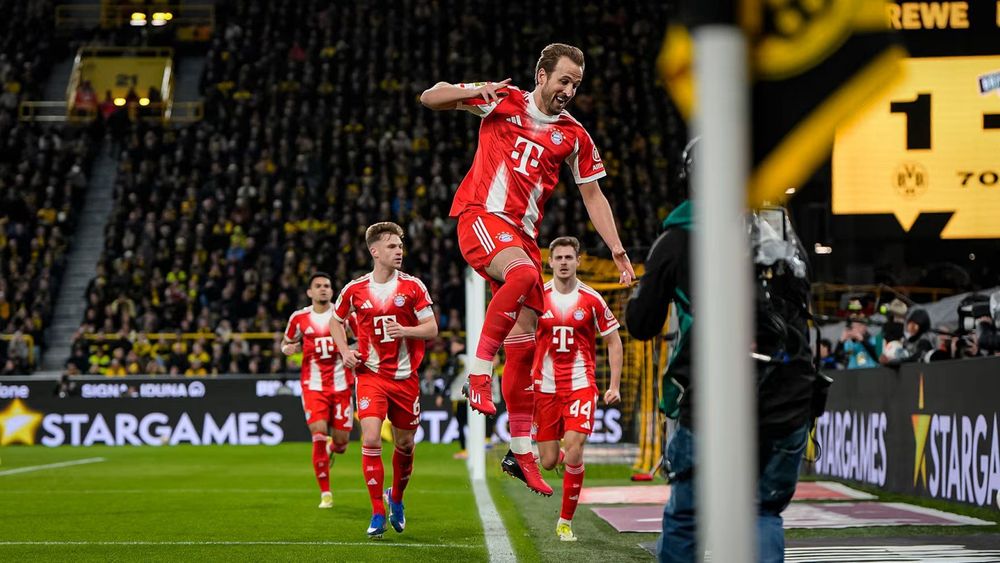
Kane, 32, has a contract until 2027 and chose not to activate his release clause this summer. Rummenigge told t-online that the decision was interpreted by the club as a clear signal of commitment.
"It is known that he had a release clause. He has not exercised it and has thus signalled that he will definitely stay in Munich. Now, after the season, the responsible executives will hold talks with him. With the clear objective of extending his contract."
Kane has scored 53 goals across all competitions this season — one of the most productive individual campaigns in Bayern's history — and Rummenigge expressed no uncertainty about the club's desire to keep him beyond 2027.
On Olise, Rummenigge drew on the precedent of Franck Ribéry, whom the club chose not to sell despite a record Chelsea offer in 2009, to explain the club's position.
"At that point we made a fundamental decision: that in the future we would no longer sell a player who we would miss on sporting grounds. That unwritten law applies to this day. For a player like Olise, there is no price tag that would make us flinch."
Rummenigge also addressed the club's broader transfer philosophy for next summer, acknowledging that without major sales, large-scale investment will be limited — while leaving room for a headline signing if the right player is available.
"An expensive transfer must be a difference-maker. A Harry Kane is such a player, an Arjen Robben, a Franck Ribéry were. When you spend money, these players must also make the difference on the pitch. There have also been players in between who did not fit so well — but we will of course always attract superstars to Bayern Munich again."