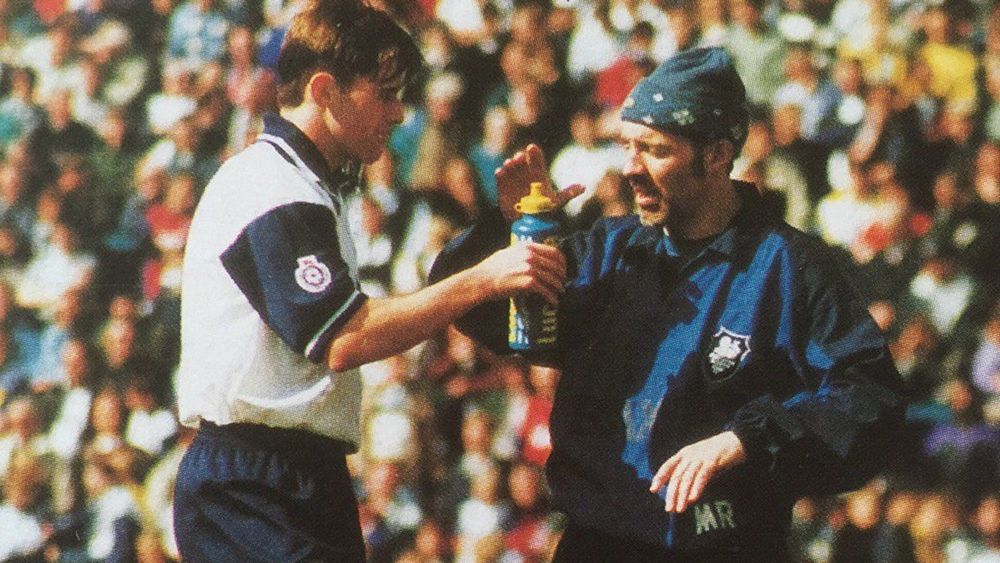
It is what happens to that player during the difficult days in between.
Rathbone’s approach has always involved more than treating an injury. His own athletic ability helped him connect with players, while his experience taught him that humour, enthusiasm and empathy could be just as important to the rehabilitation process.
Rathbone told Football Presse, “I was a fantastic runner. I'd won Birmingham Schools 800 meters, and I was really good at football and rugby. So I've always been naturally a really good runner.”
That ability remained a part of his work throughout his career. When he was at Harrogate, he would run with injured players rather than simply supervise them from the side.
“I did all the running with the two injured lads, every single run, every step of the way.”
At Everton, he was still putting himself to the test well into his forties. Rathbone recalled an occasion when the players completed a beep test and he asked the fitness coach if he could have a go afterwards.
“When I was at Everton, I won the beep test by a whole level. So I was about 45 then, and the lads did the beep test in the morning, and I said to the fitness coach, when they've all gone, let me do the beep test. I want to have a go.
“Anyway, I won by a whole level, and I said to the fitness coach, don't tell Moisey.”
The secret did not last. David Moyes found out, and Rathbone remembers the manager’s mock outrage at his physio outperforming the players.
“He said, ‘I'm furious, my fitness— my physio's won the beep test, he's 45. I'm not happy with you.’”
It was a joke, but it illustrated something important about Rathbone’s approach. He wanted to be alongside the players, sharing the work rather than asking them to do something he would not do himself.
Experience that no laptop can replace
Football medicine has changed enormously during Rathbone’s career. New technology, data and scientific methods have transformed the way clubs assess injuries and plan rehabilitation. He recognises the developments, but believes experience and the ability to work directly with players remain essential.
“With the new guys coming in with all the new stuff—iPads, theories, all that kind of stuff that I don't understand, I don't want to understand really—if I can still be at the front and I can still run with all the injured players and pass the ball and that, it doesn't matter that I could hardly switch a laptop on. It doesn't matter. No. The day I could no longer do that, then you may find you, you haven't got as much to offer.”
A moment of reflection while he was in the Caribbean helped him reconsider how he viewed his own experience.
“I realised I'm not old, I'm hugely experienced.”
For Rathbone, years spent working in football had given him something that could not be acquired simply by studying the latest technology. He had worked with players across different clubs, personalities and levels of the game, and understood what it meant to spend time alongside someone who was injured and frustrated.
“They'll never be me. They need to play 450 games and need to put 30 years in as a physio.”
He also believes that the ability to demonstrate football skills and share the work on the pitch helps build a relationship with an injured player. But the greatest value of that relationship often emerges when the player is struggling emotionally.
“Anybody can sort a hamstring out. Very few people can make people laugh. Very few people go into a medical room and lift them and raise the spirits and just get everybody laughing and optimistic and positive.
“And on them rainy days with the player who's very down and that, to put your anorak on and go out running and passing and sharing the running and that, that's a very, very powerful thing. And to always be upbeat and optimistic at that.”
More than treating a hamstring
Rathbone’s emphasis on the human side of rehabilitation comes from understanding how difficult it can be for a footballer to spend time away from the training pitch.
He recalled former Everton defender Joseph Yobo commenting on his cheerful nature.
“Baz, you're always happy, you always smile.”
Rathbone’s response captured the connection he wanted to establish with the players.
“Yeah, because I'm with you every day, Josie.”
He believes the physio has a responsibility to help players through the worst days of an injury, when frustration and disappointment can become part of the daily routine. Modern diagnostic methods mean the job is not simply about identifying what is wrong; it is also about helping the player through the process of getting better.
“With scans and consultants now, we're not missing anything, right? Them days are gone where you might miss a diagnosis. So our role increasingly is to be optimistic, show the players you care about their injuries and work with them and get them right and that. Yeah. Show enthusiasm. That's the job.
“Players aren't interested if I can, or if I can describe the 8 carpal bones or draw the brachial plexus. They don't care about that, but they want to come in and they want, when they're down, it's raining outside, they want to see Baz with his coffee laughing, joking, telling his jokes.”
He wants players to arrive at the medical room feeling that there is still something to look forward to, even when they cannot train with the rest of the squad.
“We've got some great stuff today. Me and you out on the pitch, we're gonna do some finishing, then some shuttles, then we do some press-ups, then we're gonna do some boxing.”
That mixture of hard work and humour is central to his approach. Rathbone wants injured players to feel involved, to keep working and to know that somebody is invested in their recovery.
Every player deserves the same treatment
Rathbone’s approach is not reserved for established stars. Whether he is working with a Premier League international or a young player hoping to make his way in professional football, he believes the standard of care should remain the same.
“You don't treat Wayne Rooney's tight calf different than one of the Huddersfield Town players. The tight calf's the tight calf. You don't play favourites.
“We've got a young lad at Huddersfield now who's having a few problems. I'm doing everything I possibly can, and he's my Wayne Rooney. He may or may not ever play professional football. He's a pro. He may never play in Huddersfield's first team. I think he will. I hope he will.
“But the point I'm making is he's the main point of my focus now. And if I was back at Everton and it was Wayne's problem, I wouldn't be putting any less time into this kid than I would into Wayne. And I've always been like that. I've always treated everybody the same.”
The principle is rooted partly in his own experience as a young player at Birmingham City. Rathbone remembers how badly he was treated at times and believes those experiences helped shape the physio he became.
“Somebody asked me the other day, ‘What did you deduce from all that? What did it— any regrets? Do you regret any of what happened to you?’ And I said no, because it made me super empathetic.
“And how badly I was treated as a young player at Birmingham, it made me ensure that I would not treat people like that. And I ensured that I would treat everybody I ever met in football as I would want to be treated. I hope everybody's like that. Sadly, many people aren't, you know.
“So all those bad times made me a much, much better person. And as I say, I would treat the most humble first-year pro like the most expensive signing. And that's the way I've always been.”
Keeping responsibility until the player is ready
That sense of responsibility also informs how Rathbone manages the final stages of rehabilitation. He does not believe that responsibility for an injured player should automatically pass from the medical team to the fitness staff as soon as the player reaches a particular percentage of fitness.
“The way I work, the way we work at this football club, is I keep the injured player with me until we're happy the injury's over and he's up to 100% speed.
“He's worked in environments where when the player's 70% fit, the fitness coach will take the rest of the stuff. I don't believe in that. Others do. I don't. I think the medical guy, because it's my responsibility, stays with the injured player till he's no longer injured. There's no risk of reinjury.”
He acknowledges that this approach has led to disagreements with colleagues, including a fitness coach at Everton who would challenge him when he disagreed with his methods. But the underlying principle remains straightforward: Rathbone wants to see the player through the entire process.
His philosophy returns to the same themes that run through his recollections of Everton and Preston: medical knowledge matters, but so do trust, commitment and the willingness to put the individual first.
For Rathbone, the work is about more than getting a player fit. It is about making the difficult days manageable, keeping a player motivated and treating every person with the same respect.
“Show enthusiasm. That's the job.”
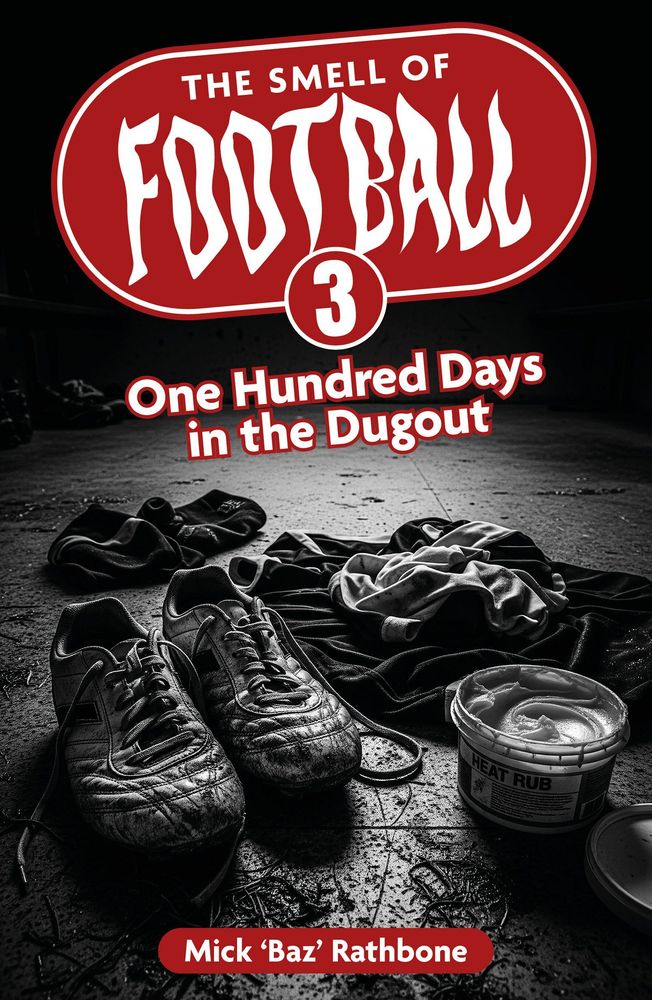
Mick Rathbone is author of "The Smell of Football III: One Hundred Days in the Dug Out" from Pitch Publishing - which is available here.