
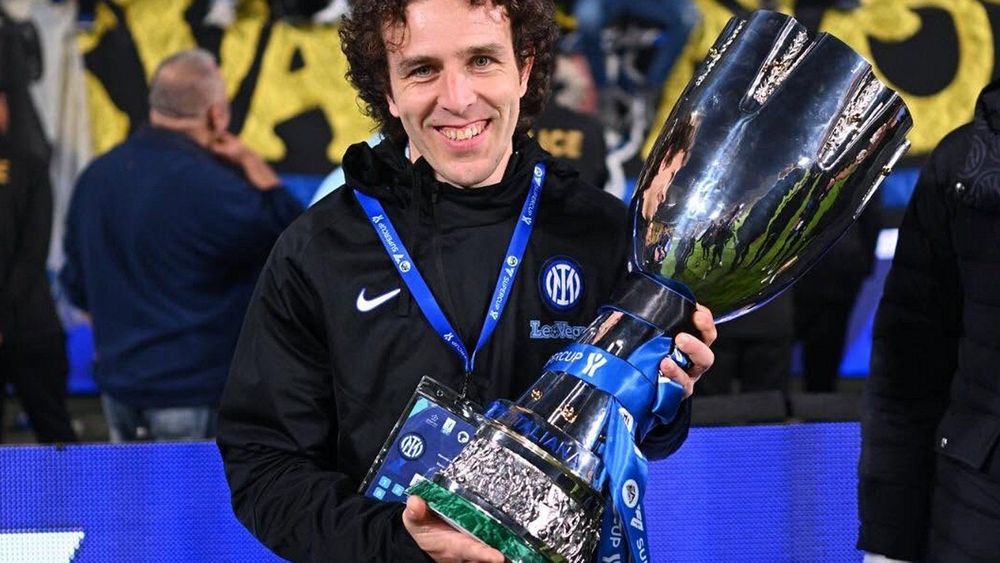
Among them is Marcello Muratore, a fitness coach whose journey through the ranks of Inter Milan offers a fascinating insight into modern football's hidden world.
Muratore's career has taken him from working with children and youth players to helping elite professionals perform at the highest level of the game. Along the way he has developed a philosophy centred on understanding athletes as individuals rather than simply chasing physical numbers.
Reflecting on the differences between coaching youngsters and first-team professionals, Muratore explained that the priorities change completely.
"When you work with children, you are not working towards winning or losing," he told Football Presse. "You are working on the formation of the player."
For younger age groups, the emphasis is on developing coordination, movement patterns and athletic foundations. Only later does the focus shift towards endurance, strength and performance.
"When you arrive in the world of adults, it's different," he said. "The players are already physically formed. What matters is getting the three points on Sunday, avoiding injuries and performing in the best possible way every time there is a match."
That progression mirrors Muratore's own path through football.
Unlike many coaches who come from professional playing backgrounds, Muratore was exposed to a variety of sports during his youth. He believes that experience gave him a broader understanding of athletic development and training methods.
"I was fortunate enough to practise many different sports," he explained. "This allowed me to learn different training methods and teaching methods from many coaches."
His passion eventually led him to study sports science before specialising in physical preparation. Among his influences were legendary coach Zdeněk Zeman and fitness expert Professor Rapetti, who later worked alongside him during his final spell at Inter.
Muratore's rise at Inter represents one of the achievements of which he is most proud.
"It was a beautiful experience," he said. "I started in the youth sector and arrived in the first team. I climbed through all the categories until I reached the top of the pyramid."
The journey was far from easy.
"Those were years of hard work, sacrifice and commitment," he said. "But there was great satisfaction because, beyond what was won or lost, going from the Under-15s to the first team over several years was extremely rewarding."
That climb eventually brought him into contact with some of the biggest names in world football, including Samir Handanović, Milan Škriniar, Alessandro Bastoni, Stefan de Vrij, Hakan Çalhanoğlu, Lautaro Martínez and Romelu Lukaku.
Rather than viewing them as untouchable stars, Muratore saw them as teachers.
"They are the essence of football," he said. "They almost tell you how you need to work."
According to Muratore, elite players possess such a deep understanding of their own bodies that fitness staff must learn from them as much as they teach.
"You observe them and understand, based on their movements and sensations, what you need to do to help them perform."
What struck him most, however, was their character away from the spotlight.
"You see these people filling stadiums and then you discover they are very humble and very human. That is what makes them truly special."
Muratore also worked under one of Europe's most respected coaches, Simone Inzaghi.
"Being part of his staff was a source of great pride," he said. "It was a very professional staff that taught me a great deal."
Describing Inzaghi himself, Muratore painted the picture of a coach completely immersed in his profession.
"He is a very balanced person, someone who thinks about football 24 hours a day. He is completely immersed in his work and extremely professional."
The physical demands of modern football have become one of the game's most debated issues, particularly with players facing increasingly crowded schedules.
Muratore believes the concerns are justified.
"The scientific studies tell us that a player needs at least three days of recovery before being ready for another match," he explained.
"When players are playing every two or three days, that physiological recovery time does not exist. This exposes them to a much higher injury risk."
As football continues to evolve, Muratore remains committed to evolving with it.
"My objective is continuous growth," he said. "To keep raising the bar higher and higher and achieve greater satisfaction both personally and professionally."
For a coach who worked his way from Inter's academy to the first team, that philosophy has already carried him a long way. Judging by his ambition and curiosity, it is unlikely to stop there.