
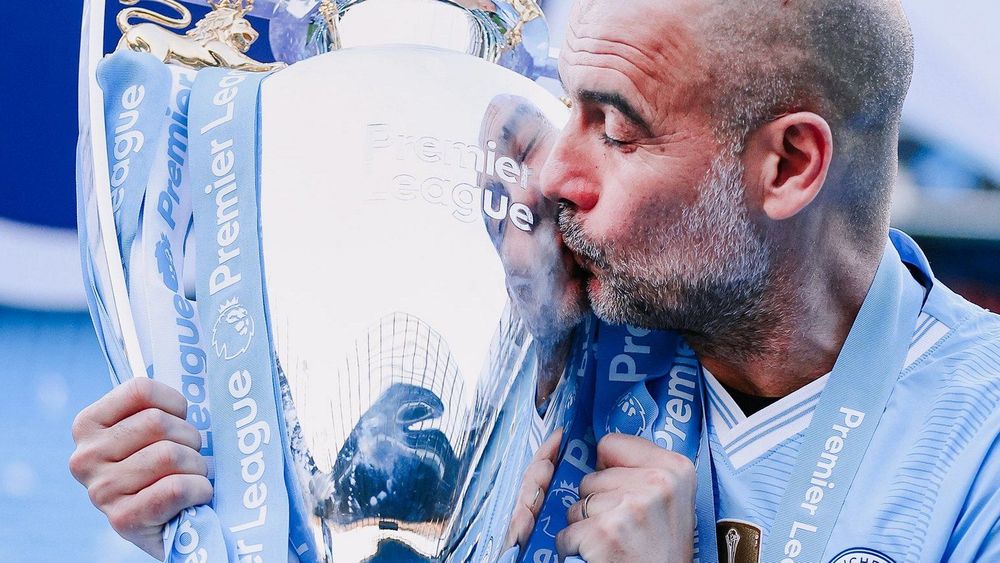
Following the publication of the 40-page findings, Bason spoke to Football Presse about the verdict, the financial implications and what could happen next.
“I think the numbers surprised me. I'm not sure the outcome on Friday was a massive surprise. There was always a chance it could go that way. But the numbers, yeah, very much surprised me when we saw those on Monday.”
Bason stressed that he was not a lawyer and had only seen the published findings, but said the language used by the panel was striking.
“The thing that strikes me about that document is the language that was used. It feels like the panel have absolutely no doubt as to their findings. They use very, very strict language. They say that things were untrue. They say that witnesses were dishonest.
"They use the word ‘sham’, which I believe is a legal term, but has connotations. So I think the language that the panel uses suggests that they're incredibly confident, and I have absolutely no reason to doubt them.”
The immediate financial consequences for City remain unclear because the sanctions have yet to be determined and the club has the right to appeal.
“At the moment, all we have is the findings of the panel. So what happens going forward will be very much dependent on the success or lack of success of the appeal. And then, if the appeal isn't successful, the sanctions that are laid down at Manchester City.”
One of the biggest questions is what relegation would mean for a club that has become accustomed to Champions League revenues and enormous commercial income.
“If they're relegated, that would be significant. There's a huge difference in finance between the broadcasting income in the Premier League and in the Championship. It's often said that the Championship play-off final is the most financially lucrative game in world football, and that's because the team that gets promoted automatically gets access to the Premier League's broadcasting deal, which guarantees every club £100 million or so.”
City would still possess enormous commercial strength, but Bason believes relegation would create a dramatic gap between their current income and their costs.
“Manchester City were to be relegated to the Championship, I'm absolutely sure that they'd be on TV every single week. And so the amount of money they get, they'd be getting more than some of the teams down at the bottom of the Championship. But the difference in revenue would be absolutely huge.”
There could also be consequences for commercial agreements, although Bason emphasised that this was speculative.
“I'm sure that perhaps sponsors, Nike for example, might have contract break clauses. This is just speculation. They might have clauses in their contracts that allowed them, if Manchester City were to be relegated, to break that. So yeah, I think financially it would be an absolute huge hit.”
Perhaps the most striking figure in the findings is the scale of the financial advantage identified by the panel.
“The report says that they recorded £950 million or so as sponsorship income over that time. Of that £950 million, about £120 million was actually paid by the sponsors, meaning that about £830 million was paid by the owner's company.”
When that figure is combined with the payments the panel found had not genuinely been made by the club itself in relation to managerial and player salaries, Bason said the overall advantage was enormous.
“When we add that to the money that apparently Manchester City didn't pay to their managers and the money that the club didn't pay but came from the owner in terms of salaries, that roughly is about £900 million of advantage between 2009 and 2018. It's a huge amount.”
Even if the club were relegated beyond the Championship, Bason believes City's underlying financial strength and support base would give them significant resources with which to rebuild.
“They have incredibly rich owners who are not just rich by football standards, but are rich by global wealth standards. So I have absolutely no doubt that they've put a huge amount of money into the club.”
There would nevertheless be major financial challenges, particularly because of City's enormous wage bill and the financial regulations that would apply outside the Premier League.
“Manchester City have huge costs, the amount that they pay their players. If they're relegated, they then potentially have issues with things like Championship or League One, League Two financial fair play regulations.”
But City's history would also matter.
“Manchester City's been relegated before. They were relegated in the '90s. They went down to the third tier in the late 1990s. They have a huge fan base. They have a big fan base who were fans before they became the Manchester City that we know now. They have an excellent stadium. I'm absolutely confident that if it was relegation and a big fine, they'd be absolutely fine. They'd be able to recover much in the same way that, for example, Rangers broadly recovered in Scotland.”
Bason also believes it is important to distinguish the current allegations from the Premier League's present financial regulations. The Profitability and Sustainability Rules cited in the case are no longer the league's current system.
“The Profit and Sustainability Rules that Manchester City have been found to have broken are no longer the rules that the league has. This season the league moved away from the profitability and sustainability regulations towards the squad cost ratio.”
He also explained why comparisons with the earlier Everton and Nottingham Forest cases can be misleading. Those cases involved comparatively straightforward breaches where the clubs accepted they had broken the rules and cooperated with the process.
“Manchester City, obviously, a lot of the charges that they're facing is that – or has been found guilty of – is that they've obstructed the investigation, both in the four years or so before the charges were brought and then in the three and a half years since.”
The scale of the City investigation was also fundamentally different.
“The hearing ran for around 42 days, I think they said. There's over a month of evidence being given during that. In disclosure, there were millions of documents. Just the index to the bundle, it said, ran to over 750 pages. You can't imagine what the actual documents were like. There were transcripts of over 7,000 pages. They had expert evidence in six different fields.”
For Bason, that helps explain why the case has taken years rather than months.
“This was an absolutely huge investigation. When looking back on it at the time, everyone was saying, ‘Why has it taken so long?’ I think looking back on it and looking back on what's come out of the report, it's understandable that something so complex needs to be done properly, and that takes time.”
The delay could, however, make the eventual punishment much harder to determine because the alleged conduct relates to a period that ended in 2018.
“Everton and Nottingham Forest were both deducted points for and fined for effectively single-year breaches. The fact that Manchester City breached the rules – well, presumably, they presented false information for nine years and breached the Premier League's Profit and Sustainability Regulations in the years in which it did stand.”
That creates an obvious problem when trying to apply sporting punishment years after the events.
“Do some people say they want us to be going back and changing league title wins and FA Cup results going back to 2009, 2010? I think that the fact that it's so long ago makes that very, very complicated.”
Bason also highlighted a fundamental difference between City's previous UEFA case and the current Premier League process. City successfully overturned UEFA's Champions League ban at the Court of Arbitration for Sport after CAS ruled that some allegations were time-barred and that others had not been proven.
“The Premier League's very much say that everything has to remain in-house. So I don't think Manchester City are going to be able to go down the same route as they did with UEFA. Any appeal will have to go through the Premier League process rather than going to something like CAS.”
Ultimately, Bason believes the greatest damage may not be measured in pounds or points.
“I think its reputation as a club has absolutely been hit. It's trying, almost trying to position itself as that challenger to the elite, and I think its reputation, both domestically and globally, has absolutely been hit.”
That could affect the club's relationship with commercial partners even if City eventually overturn the verdict.
“Sponsors tend to be very careful about who they associate with, who they want to use to legitimise their brands. And so, yeah, I think if not the current sponsors, then potentially future sponsors might be a lot more circumspect before agreeing deals with the club.”
And for City supporters, Bason believes the most difficult consequence may be trying to reconcile the club they love with the findings against people who represented it.
“Manchester City isn't those people. Those people are people who've worked for Manchester City for a relatively short period of Manchester City's existence, just as Liverpool, for example, aren't Hicks and Gillett in the late 2000s.”
“The Manchester City as a club is about the fans, it's about the community, it's about the history. And I very, very much hope that the people who want Manchester City not to exist anymore, that doesn't play out.”
For supporters who lived through the club's transformation from the third tier to the summit of European football, that leaves an uncomfortable question about how to view everything that came before the verdict.
“I think most Manchester City fans are going to be incredibly conflicted at the moment. I think they'll still look back on winning in Istanbul and the Aguero goal and Gundogan scoring at Aston Villa with huge amounts of happiness, but it may also be slightly tainted.”