Manchester United were already such a force in the global football market that Real Madrid were studying them.
Jimmy Burns discovered just how seriously the Spanish giants regarded United when he visited the Bernabéu while researching David Beckham’s move from Old Trafford to Madrid.
Burns, the author of "The Premier", was taken into the office of Real Madrid’s marketing chief and shown something that looked more like a military planning map than a football document.
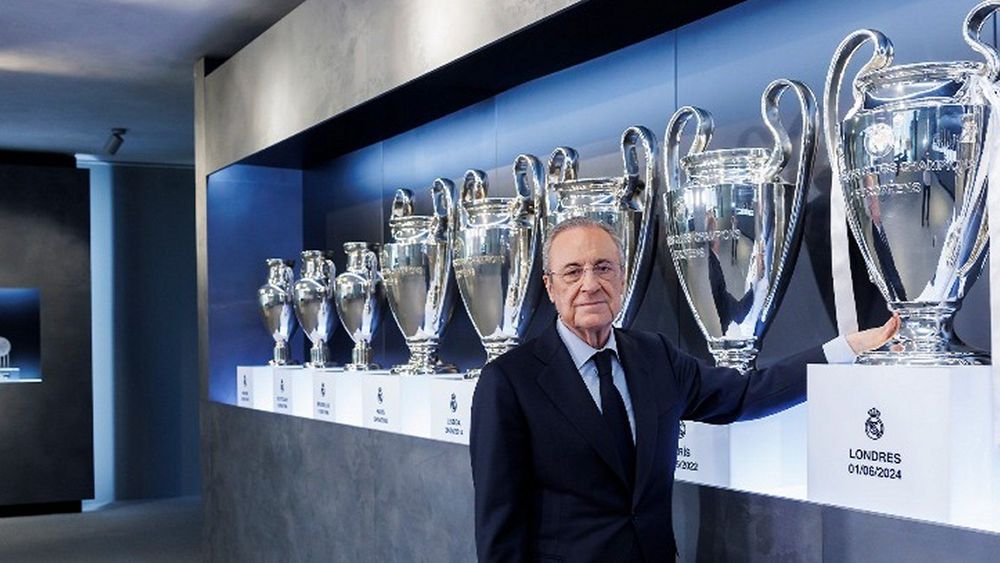
“I went into the office of the Real Madrid marketing manager who was the second biggest mover and shaker in the club after Florentino Perez, so that’s saying something,” Burns told Football Presse.
“And he showed me a huge map on the wall, which is rather like a kind of World War II strategic map, and it had little flags on it.
“And it had white flags and it had red, kind of reddish flags, particularly in places like Asia and United States.”
Burns soon discovered that the flags represented something far more important than a colourful piece of office decoration.
“The red flags represented Manchester United, and the white flags represented Real Madrid,” he said.
“And there was an accumulation of red flags in United States, quite a few in Asia, but white flags quite prominent in Asia, very few in the United States.”
The message from the Madrid marketing executive was blunt.
“He said, ‘Jimmy, do you see where the red flags are more numerous? That’s what we’re going for. You know, we’re really gonna go harder in the United States. We’re gonna go harder in Asia.’
“And they were actually following the strategy of Manchester United, you know, at that time.”
It was a remarkable admission from one of the biggest clubs in football: Real Madrid were looking at Manchester United not simply as a sporting rival, but as a global commercial competitor.
For Burns, the episode helps explain something fundamental about the rise of the Premier League.
Its global success was never simply about the quality of football.
“I think that probably there’s more than one factor,” Burns said.
“The first one, which is quite a cynical answer but a true one, is that the Premier, par excellence long, almost from its inception, is a huge commercial project.
“Very well thought out. Very strategic.”
The timing was just as important.
“When the Premier comes out, the whole question of satellite TV, streaming, all that sort of stuff was in a fairly early stage,” Burns said.
“And the Premier really expanded on the back of this kind of global TV audience that reached out to faraway places like Asia, and indeed the United States, which hadn’t taken football too seriously.
“And really aimed to cross borders.”
But Burns believes there was another ingredient that made the Premier League's commercial strategy work.
“At the same time, trying to retain what I would call the sort of historic sense of England being at the heart of the history of football,” he said.
“With a historic fan base, particularly in certain clubs going back to the mid-19th century, but which have stuck with their clubs through thick and thin.”
That was important because the Premier League was attempting something potentially difficult: turning a deeply traditional football culture into a worldwide commercial product without completely stripping away the emotion that made English football attractive in the first place.
“Those fans obviously gave that kind of passion to what otherwise would have been a fairly cold, clinical commercial bet,” Burns said.
There was another major change which helped English clubs attract a new generation of international stars.
“Then there’s another factor which obviously, you know, all these things you are more than familiar with, but as on the back of the commercial strategy was, and particularly post-Bosman, the Bosman ruling, freeing up transfers and things,” Burns said.
“The Premier was incredibly successful in terms of attracting real foreign talent, both at player level and at managerial level.”
And then came the money.
“Finally, by no means least, it attracted big money from foreign ownership,” Burns said.
“And obviously that big money sort of put the Premier in a competitive advantage in terms of buying players and building big stadiums and reaching out across the world.”
Manchester United, however, had already established themselves as a global football brand before the huge wave of foreign ownership that would transform English football.
Burns saw evidence of that when Real Madrid were attempting to expand their own reach — and were using United as the benchmark.
That was also the era of the Galácticos, with Madrid bringing the biggest names in football to the Bernabéu.
Burns sees Beckham as part of that wider battle for global attention.
“It was the era of the Galácticos and getting every year a Galáctico player,” he said.
“And of course, that paid dividends.”
Yet the map Burns saw in Madrid revealed something deeper.
Real Madrid had the history, the trophies and arguably the most famous club identity in world football. But when its executives looked at the global market, Manchester United had something they wanted.
They were already winning the battle for supporters thousands of miles from Manchester.
And Real Madrid knew exactly where they needed to fight back.
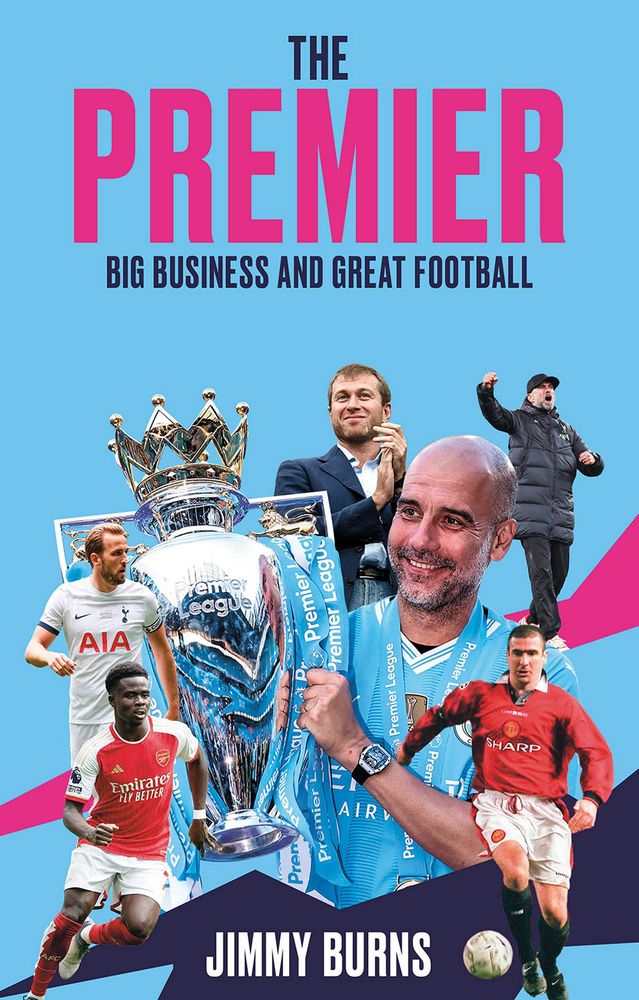
Jimmy Burns is the author of 'The Premier' from Pitch Publishing - which is available here.