
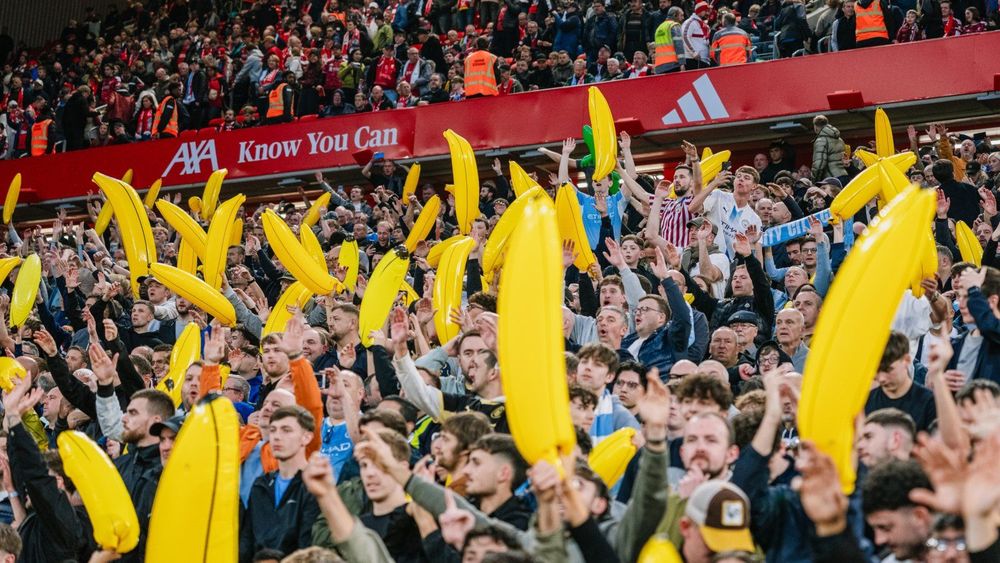
Varadi, who became known to City fans as “Imre Banana” during the 1980s, has started selling the inflatables for £10 each as the craze returns to prominence among supporters.
“I’m getting thousands of orders from all over the world — demand has absolutely gone through the roof,” Varadi told The Sun.
“The club want to see the entire Etihad holding bananas!”
City invited Varadi and his family to attend the club’s match against Ipswich Town, with the former striker expecting the occasion to provide another memorable display of the yellow inflatables.
“City invited me and my family to the game and are giving us the VIP treatment,” he said. “The craze has taken off again.”
The revival follows City supporters bringing inflatable bananas to Anfield for the team’s 3-0 victory over Liverpool. The display revived a tradition that became part of the club’s identity in the late 1980s.
The origins of the craze remain disputed, although one popular explanation links it to chants of “Imre Banana”, a playful variation on Varadi’s surname. Manchester City’s own historical account notes that the inflatable bananas became a national talking point during that period, while acknowledging that their precise origin is difficult to establish.
Varadi joined City in 1986 for a reported £50,000 fee and became a popular figure among supporters. He was the club’s leading scorer during a season that ended in relegation, and later played for a succession of English clubs during a career that spanned 15 teams over 18 years.
“It all began in 1987 and even made the BBC Six O’Clock News — now it’s back stronger than ever,” Varadi said.
“A lot of people ask, ‘Why do they call you call Imre Banana?’. Does Varadi even rhyme with banana? I don’t know!”
The tradition is remembered as a distinctive expression of City’s relationship with their supporters, rather than simply a novelty in the stands.
“Football was different when I played at City, with a lot of hooliganism in the game generally. But we were close to the fans and the banana craze just strengthened that bond,” Varadi said.
He believes the latest revival also reflects the mood among supporters following the club’s financial case. On 29 September, a Premier League independent commission found City guilty of serious financial-rule breaches, including breaches relating to commercial arrangements and financial reporting. The club has denied wrongdoing and the outcome remains subject to its response and any appeal process.
“It’s a reflection of the situation the club finds itself in. It’s not the fans’ or the players’ fault and it’s the supporters’ way of saying, ‘We’re still going to have fun and back our team’,” Varadi said.
“When rival fans are giving you stick, it can galvanise the team — and already has.”
Varadi said the reaction to the Anfield display had been especially encouraging, with messages arriving from supporters who remembered the original craze as well as those discovering it for the first time.
“To see so many bananas in the away end at Anfield was really special,” he said. “I’ve had so many messages about it since then and it’s just great to be part of City folklore.”
He has also been surprised by the scale of the business opportunity created by the revival.
“I launched my own company — as now the inflatable business is a billion-dollar industry,” Varadi said. “And I’m the actual ‘Imre Banana’ who played for City, wore the No 9 and scored goals for them!”
With another matchday display anticipated, Varadi expects the tradition to remain a source of amusement and solidarity for City supporters.
“And this weekend’s game against Ipswich is just going to be unbelievable.”