
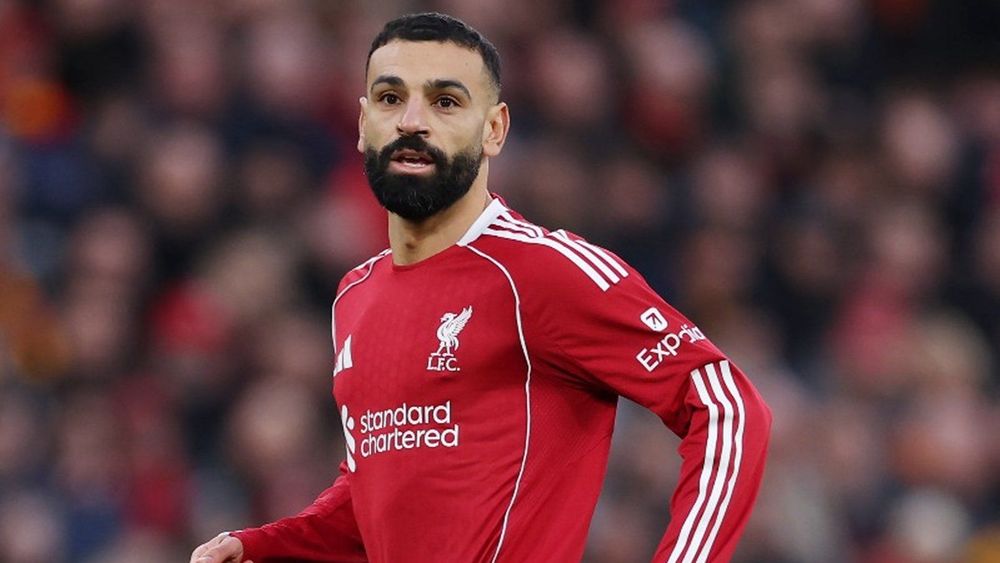
And now, the January warning signs look even more telling.
Back then, former Liverpool defender Glen Johnson spoke to Football Presse as Salah found himself surprisingly dropped ahead of Christmas, amid a dip in form and growing tension around new manager Arne Slot.
“If it’s purely down to football, then yes, absolutely,” Johnson said when asked if Salah should be playing. “But no one’s bigger than the club. If the manager feels like you’re not the right person to be in the dressing room, then regardless of what you’ve done in the past, that’s no longer relevant.”
That stance now feels significant, given Salah’s impending departure. At the time, the Egyptian had already turned down huge interest from Saudi Arabia to stay at Anfield — a decision Johnson admitted may look very different in hindsight.
“You can only make the decision you think is correct at that time,” he said. “If he knew Liverpool would be struggling and his form would dip, maybe he leaves last year. But hindsight’s a wonderful thing.”
What raised eyebrows most, however, was Salah’s rare public frustration — something Johnson insisted does not happen without deeper issues.
“For a player to speak out publicly, there’s usually a lot more that happens before that moment,” he explained. “That’s not the first point of call — that’s a last resort. So I can only presume there’s been things behind the scenes.”
Johnson was adamant that Salah’s personality made the situation even more unusual. “Everyone says how good a lad Mo is. You don’t get to his level without being the perfect professional. So for him to have an outburst, something must be wrong for sure.”
At the time, there was speculation that tactical changes under Slot — including attempts to integrate new attacking pieces — had impacted Salah’s role. Johnson, though, was unconvinced.
“I don’t think any manager should play for a player,” he said. “If it doesn’t suit Mo, then sorry, it doesn’t suit Mo — but it might suit nine others.”
Instead, he pointed to a wider issue affecting the entire squad. “There are so many players out of form, you can play any formation you want, it wouldn’t matter.”
Still, Johnson did question whether communication had broken down. “Seeing what’s been said publicly, then absolutely their communication isn’t where it should be,” he admitted. “If I was involved, it would make me boil — because other players are working their socks off and have to listen to all this.”
That frustration extended to the dressing room dynamic. “My sympathy is more with the other players,” Johnson added. “They don’t deserve to sit there and listen to it either.”
Despite his criticism, Johnson never believed the situation was beyond repair — a view that adds another layer to Salah’s decision to now walk away.
“He’s been a legend for the club,” he said. “But we can’t all live in the past. I think he owes Liverpool more than what’s happened recently — so I’m not happy with it.”
Crucially, Johnson also rejected the idea that Salah’s comments were a deliberate attempt to force an exit. “I don’t see him as that guy,” he said. “That’s why it would be so interesting to know the real reason behind it.”
Now, with Salah’s exit confirmed, that answer may never fully emerge — but as Johnson suggested months ago, the public fallout was likely only the surface of a deeper story unfolding behind closed doors at Anfield.