
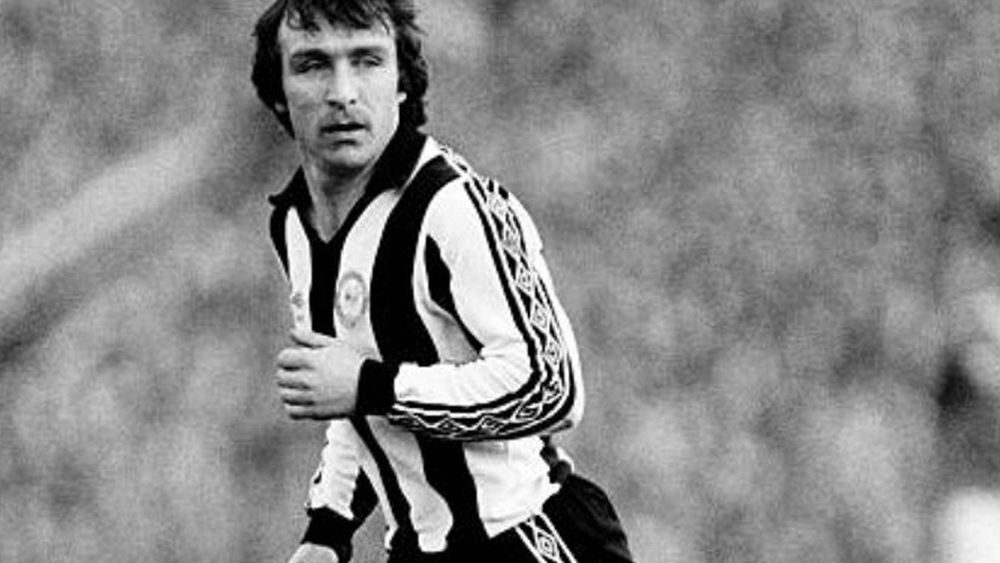
The pitches, the quality of opposition and the close-knit North East football community shaped his ambitions long before he established himself in the professional game.
One place remains particularly vivid in his memories: Bent’s Park, a stretch of ground between a park and the sea.
Bent’s Park and the test of character
“The pitches that we played on were Sunday League, no doubt about it," Brown told Football Presse. "But there was one area in South Shields, it has to be said, it was known as the Bent’s Park. And the Bent’s Park was a plot of land between the park itself and the sea. So you used to get the best of sort of all the weather, sometimes the worst of it as well.
“But when you found a sunny day, if you couldn't grow grass on them pitches, you were in trouble. You weren't a groundsman if you couldn't grow grass on them. So there were always a decent standard.
"But then you had certainly away venues that you went to and you were up against it, you know. You were on a school pitch probably that didn't have a caretaker that was looking after the ground, and all of them things come into play.”
Brown remembers the conditions with affection, but he does not pretend every pitch was perfect. The contrast between a well-kept local ground and an neglected away surface was part of the experience.
For him, those challenges helped distinguish players who could make the transition to the professional game.
“But I thought it was a test of mentality, it was a test of people's character. If you can get through that and become a professional footballer—I'm not saying you must have something, but you must—yeah, I am saying you must have something coming from Sunday League and going into professional ranks, which is, you know, surrounded by very good players.”
The standard could vary, but Brown's point is that the amateur game demanded resilience. Making the step up meant proving yourself against better players, not simply relying on the reputation built locally.
When two players made the leap
Brown played alongside Bobby Davison, and he still regards two players from the same Sunday League team progressing into professional football as an extraordinary outcome.
“It was a rarity that you used to get one player going into the professional ranks from Sunday League football. But to get two from the same team was, was unequaled. Nobody's heard of it before, you know.”
The local football network was close-knit. Players heard about the promising talents in neighbouring towns, and reputations travelled through conversations rather than today's extensive scouting systems.
“And everyone talked, you know, who were the up-and-coming players in the area. Of course you do, because they're the go-to players for a conversation.”
Chris Waddle was one of those players attracting attention. While Brown was playing in South Shields, Waddle was turning out for non-league Tow Law Town, and his name was known across the region.
“Tow Law was lower division again, you know, and non-league football. And everyone talked, you know, who were the up-and-coming players in the area. Of course you do, because they’re the go-to players for a conversation.
“There used to be places on the A19, the main road going back to South Shields from Hartlepool, passed through, almost through Sunderland. But you had Durham, and eventually on the other side of South Shields you had Newcastle. So it was just a close-knit community. The football community was very close-knit, so everybody knew of Chris.
“And I was just hoping that one day I would come up against him because, you know, he’s one of them wiry kind of wingers — left winger, right winger, whichever. He could go either way. And I was a right-back at the time, so I thought at some stage I’m going to come up against him.”
That sense of community meant footballers could admire those who had moved towards the professional game while still hoping to test themselves against them. For a player trying to make his own way, the achievements of someone from the same region made the ambition feel more tangible.
Alan Shoulder and the North East dream
Alan Shoulder embodied that possibility. After establishing himself at Bishop Auckland, the forward joined Blyth Spartans and helped the club make its mark during the 1977-78 FA Cup run. Newcastle United signed him in 1978, and he went on to make 117 appearances for the club, scoring 38 goals.
Asked whether Shoulder was a hero to Sunday League players when he earned his move to Newcastle United, Brown's answer was immediate.
“100%. Blyth Spartans, if I'm not mistaken. I think it was Blyth.”
Shoulder represented more than a successful move. He was another North East footballer who had climbed through the non-league ranks, offering local players an example of what might be possible.
“And you know of these players and you wonder, you know, what are they, you know? And you never understand that they're thinking exactly the same about you. You're always just thinking, what, I'd love to play up against the better non-league players.”
Brown's recollection captures the ambition running through that football culture: looking up to players who had progressed, while wanting the opportunity to measure yourself against the best in your own surroundings.
He also recognised the determination required to stay in the professional game.
“It was the mentality of the non-league players that kept him there. It wasn't the ability levels, it was just their mentality. They would run up against you and keep on coming.”
The attitude was one of persistence, even when a chance did not arrive immediately.
“As we used to always say, knock at the door. It's some, you know, sometimes it opens, sometimes it doesn't, but you keep on knocking. And that's what we, that's what we used to do.”
For Brown, the story of Sunday League football in South Shields is inseparable from the wider North East community: its pitches, its local rivalries, the names passed between players and the ambition to follow those who had made it.
Shoulder gave that ambition a particularly memorable example. Bent’s Park remains a reminder of where the journey could begin.