David Bernstein, who served on City’s board before becoming chairman, admired the Georgian’s extraordinary talent. But he also saw a player whose contribution did not always satisfy the demands of the collective.
“As a talent, he rates obviously very highly. As an entertainer, very highly. A great player to watch,” Bernstein told Football Presse.
Kinkladze arrived at Maine Road in 1995 and quickly became a source of inspiration for supporters enduring successive relegation battles. His ability to glide past opponents and produce spectacular goals made him a natural favourite, even as City slipped out of the Premier League and subsequently fell into the third tier.
Bernstein, however, believes the qualities that made Kinkladze so exciting to watch were not sufficient on their own.
“But he had his limitations as a team player,” he said. “He didn't work hard enough. He wasn't, you know, the merits of defending, of forwards defending and all those things that are part of the game.”
Kinkladze’s difficulties were not simply a question of ability. Under Joe Royle, who replaced Frank Clark in February 1998, the Georgian increasingly found himself on the fringes as City struggled to escape the second tier. He eventually left for Ajax after the club suffered a third successive relegation.
Bernstein believes the decision to move on was understandable, even while acknowledging the affection Kinkladze inspired.
“I mean, he was great. I love watching him,” he said. “But in the end, we parted ways with him because he didn't contribute in enough ways for the team.”
The former chairman also questions whether Kinkladze would have fitted into the demands of Manchester City’s modern era, when technical ability must be accompanied by tactical discipline and work without the ball.
“I suspect that if he was around now, unless he upped his game greatly in other respects, he wouldn't feature in a Pep Guardiola team, however talented he is.”
Why Kevin De Bruyne was a different proposition
Bernstein’s comparison with Kevin De Bruyne underlined the distinction he draws between an exceptional individual talent and a player capable of influencing matches in every department.
Asked how Kinkladze compared with the Belgian, Bernstein was unequivocal.
“Well, I don't think he does,” he said.
“I think he was a talented, great talent, sort of great player to watch. But Kevin De Bruyne is a great, great player in every respect, you know, at the highest level.”
The comparison came from an era when De Bruyne was central to City’s success under Guardiola. The Belgian subsequently left the club in 2025 to join Napoli, while Guardiola departed in 2026 and Enzo Maresca took charge at the Etihad Stadium.
Bernstein’s broader point remains relevant beyond any particular manager or generation. At the highest level, a player must offer more than moments of individual brilliance.
“Remember, City were playing at a lower level completely from where this club is playing,” he said, reflecting on the gulf between the club he helped rebuild and the established force it subsequently became.
Kinkladze’s legacy is therefore not diminished by Bernstein’s assessment. Rather, it illustrates the difficult balance between entertainment and effectiveness, particularly at a club trying to build a more dependable team.
Nicolas Anelka had the qualities to reach the highest level
When Bernstein considered which players from his own City era might have the attributes to fit into an elite side, Nicolas Anelka stood out.
The French striker arrived from Paris Saint-Germain in 2002 for a then club-record fee, bringing a reputation established at Arsenal and Real Madrid. He became City’s leading scorer in each of his first two seasons and offered the pace and finishing ability that Bernstein believes separated him from many talented contemporaries.
“I think one player who I would think could be seriously considered to fit into this team would be Nicolas Anelka,” he said.
“I think Nicolas Anelka was a genuine class player. He played for Arsenal when Arsenal were a very good team indeed. He had fantastic pace.”
Anelka’s career was marked by frequent moves, but his ability to perform at the highest level was evident. He won the Champions League with Real Madrid, scored regularly for City and later played an important role at Chelsea.
Bernstein nevertheless stopped short of suggesting that Anelka would automatically have satisfied every requirement of Guardiola’s football.
“Whether he had some of the other requirements that Guardiola would want, I just don't know,” he said.
“But I think you consider him as a possibility for that. He was a world-class player.”
That distinction matters. Bernstein was not arguing that Anelka would necessarily have been a guaranteed selection in any modern City side, but that his natural qualities gave him a credible case.
“Frankly, if you're not a world-class player, you don't fit into the City team now,” he said.
The contrast between Kinkladze and Anelka offers a revealing insight into how Bernstein judges footballing greatness. He retains a genuine affection for Kinkladze’s artistry, but believes Anelka possessed the pace, pedigree and overall quality to compete at the highest level.
For Bernstein, the difference is not between talent and a lack of talent. It is between brilliance that captivates supporters and the complete package required to succeed among the very best.
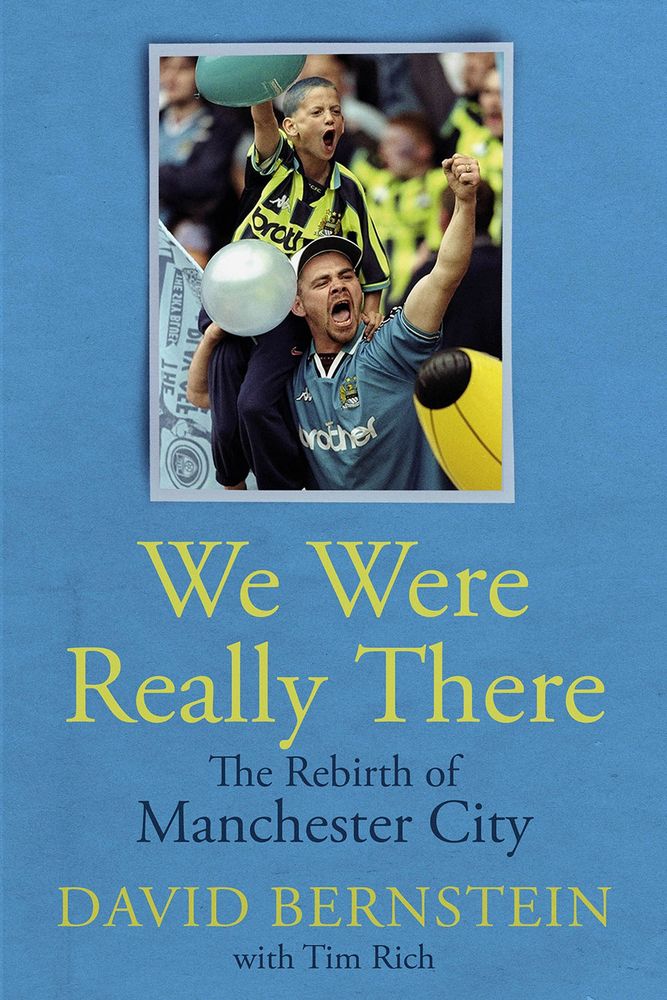
David Bernstein's book "We were really there: The Rebirth of Manchester City" is from Pitch Publishing - which is available here.