
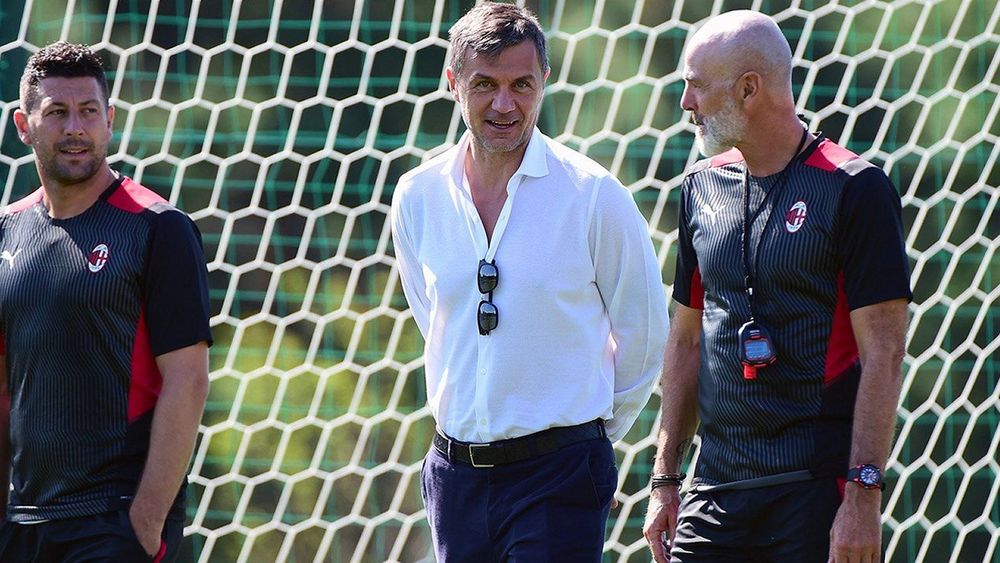
Stattdessen glaubt der ehemalige Rossoneri-Mittelfeldspieler, dass der Klub die Identität wiederentdecken muss, die ihn einst zum Vorreiter des europäischen Fußballs machte -- und nur wenige Menschen verkörpern diese Identität mehr als Paolo Maldini.
Speaking to Football Presse, reflektierte Evani über die aktuelle Situation von AC Milan nach einer weiteren turbulenten Saison, in der der Klub seine Fußballoperationen umstrukturiert und Ruben Amorim als Cheftrainer verpflichtet hat, nachdem er die Champions-League-Qualifikation verpasst hat.
For Evani, the debate surrounding Maldini remains impossible to ignore.
"You can never know for certain what would have happened," he said.
"But Paolo represents Milan completely. A figure like him would certainly have made an important contribution."
The comments come at a time when Maldini's relationship with the club's current ownership remains strained. The former captain recently responded to criticism from owner Gerry Cardinale with a pointed remark, while speculation continues regarding whether he could ever return to the club in an official capacity.
Among supporters, however, his standing remains undiminished, with many continuing to view him as the embodiment of what they call "Milanismo" -- the culture, values and football identity that helped define generations of success.
Evani understands that feeling better than most.
After arriving at Milan as a 14-year-old, he spent 16 years at the club and witnessed first-hand how a struggling side was transformed into the dominant force of the late 1980s and early 1990s.
"When I arrived, Milan was not the Milan people think of today," Evani said.
"We were relegated. Things were difficult."
Everything changed, he says, with the arrival of Silvio Berlusconi.
"The first day he met us, he told us we would become the best team in Italy, then Europe and then the world.
"At that moment it was difficult to believe him. But everything he said happened."
That transformation was built around a clear vision. Berlusconi took the risk of appointing Arrigo Sacchi from Serie B and assembled a team featuring Ruud Gullit, Marco van Basten and Frank Rijkaard.
"It was a risk," Evani recalled. "But he saw something that others didn't."
For Evani, the lesson remains relevant today.
Modern Milan have talent. They have resources. They have ambition. What they are still searching for is the clarity that defined the club during its most successful periods.
That is one reason why Maldini's name continues to dominate discussion around the Rossoneri.
"If you need someone credible, important and capable of helping restart a project, he is certainly one of the best," Evani said.
Milan's hierarchy clearly believes Amorim can provide a fresh football identity after his success at Sporting and his reputation for developing young players and implementing a clear tactical structure.
Whether that proves successful remains to be seen.
But Evani believes the club's future depends on reconnecting with the values that once made Milan the envy of Europe.
Strong leadership. Clear ideas. A sense of belonging.
Those were the foundations of the Milan that shaped his career.
And in Evani's eyes, nobody represents those principles more completely than Paolo Maldini.